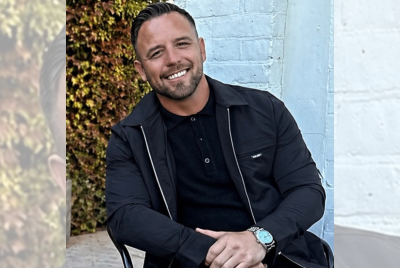
Who Is Mykhailo Viktorovych Polyakov? Youtuber Defies Jail to Leave Diet Coke for North Sentinel Island Tribe for Only a $161 Fine
Arizona YouTuber's Controversial Visit to North Sentinel Island Sparks Debate

A 24-year-old Arizona YouTuber risked five years in an Indian prison to leave a can of Diet Coke on one of the world's most forbidden shores – and walked away with little more than a slap on the wrist.
Mykhailo Viktorovych Polyakov, who runs the YouTube channel Neo-Orientalist, sailed to North Sentinel Island in the Bay of Bengal on 29 March 2025 in a rubber dinghy, blew a whistle for an hour in an attempt to draw the attention of the Sentinelese tribe, and left a can of Diet Coke and a coconut on the sand. Indian police confirmed that Polyakov had made the illegal voyage to North Sentinel Island, a landmass roughly the size of Manhattan in the Andaman and Nicobar archipelago, approximately 1,200 kilometres from the Indian mainland, and that he was spotted by a local fisherman on his return and arrested two days later. On 22 May 2026, he published a video of the visit to his YouTube channel, after escaping a potential five-year sentence with a fine of just £127 ($161).
The Voyage, the Arrest, and the Remarkably Lenient Outcome
Polyakov, an Arizona native, arrived on North Sentinel Island in March 2025 in a small inflatable boat powered by an outboard motor, with the stated goal of meeting the indigenous Sentinelese people, who have largely avoided contact with the outside world for centuries. His journey to the island was not impulsive. He had first attempted to reach North Sentinel Island using an inflatable kayak in October 2024 and again in January 2025, with both attempts proving unsuccessful before his third succeeded.
According to Andaman and Nicobar Islands Police Chief HGS Dhaliwal, Polyakov kept blowing a whistle for about an hour to attract the tribe's attention before he went ashore. 'He landed briefly for about five minutes, left the offerings on the shore, collected sand samples, and recorded a video before returning to his boat,' Dhaliwal said. 'A review of his GoPro camera footage showed his entry and landing into the restricted North Sentinel Island.'
Indian authorities, upon arresting him on 31 March, noted it was a clear violation of Indian law. 'It may be claimed to be an adventure trip, but the fact is that there has been a violation of Indian laws. Outsiders meeting Sentinelese could endanger the tribe's survival,' a senior police officer told the Associated Press. Despite being denied bail and placed in judicial custody, Polyakov ultimately escaped the potential five-year maximum sentence and was ordered to pay a 15,000 rupee fine, approximately £127 ($161), and to leave India, surrendering his video recordings. He managed, however, to retain copies.
The Law He Broke and Why It Exists
The legal framework Polyakov violated is not obscure. The Andaman and Nicobar Islands (Protection of Aboriginal Tribes) Regulation 1956 prohibits anyone, Indian citizen or foreign national, from entering North Sentinel Island or approaching within three miles of its surrounding waters, which are designated as a tribal reserve. The regulation exists primarily to shield the Sentinelese from infectious diseases against which they have no immunological defence, and to prevent violent confrontations that have historically proved fatal.
The case falls specifically under the Andaman and Nicobar Islands (Protection of Aboriginal Tribes) Regulation, which treats the island as a permanently closed zone. Officials have long argued that even well-meaning contact can introduce diseases to which the community has no immunity, or provoke violent confrontations that put both sides at risk.
Polyakov dismissed those concerns outright. 'I am vaccinated against flu and measles, and I never intended to come into direct contact with them,' he said. 'As far as I know, you can't catch diseases just by looking at someone.' His stated motivation was equally provocative: 'I wanted to give them a gift that was representative of our civilisation,' he said, describing his goal as wanting 'to propel them thousands of years into the future.'
A YouTuber who risked his life to give the North Sentinel Island tribe Diet Coke has escaped a prison sentence
— Dexerto (@Dexerto) May 26, 2026
Mykhailo Viktorovych Polyakov received only a fine and has since shared footage of his visit despite being ordered to surrender it pic.twitter.com/gxmex8SFbY
A History of Violence and the Ghost of John Allen Chau
The Sentinelese are not a passive subject for content creation. The tribe numbers an estimated 150 people and has fiercely, often fatally, resisted contact with outsiders across recorded history. In 2004, following the Asian tsunami that devastated the Andaman chain, a tribe member was photographed on a beach firing arrows at a helicopter sent to check on their welfare. In 2006, members of the tribe killed two poachers whose boat had drifted ashore in waters surrounding North Sentinel Island.
The most prominent casualty, however, was American missionary John Allen Chau. In 2018, Chau was killed with arrows after illegally landing on North Sentinel Island, reportedly believing he was on a mission to convert the tribe to Christianity. Authorities later abandoned efforts to recover his body over fears that further contact could endanger or provoke the Sentinelese. Chau's death, far from deterring Polyakov, reportedly intensified his fixation on the island.
Survival International, the indigenous rights organisation, did not mince words over Polyakov's stunt. The group's director, Caroline Pearce, described the YouTuber's actions as 'reckless and idiotic', warning that they placed both the traveller and the Sentinelese community at serious risk.
The case has renewed urgent questions about the adequacy of India's legal deterrents. A fine equivalent to the cost of a weekend flight is an unlikely barrier to the next content creator who mistakes one of the world's last uncontacted peoples for a backdrop.
© Copyright IBTimes 2026. All rights reserved.
- Recommended For You