

US Confidence Collapses before its 250th; US-UK 'Special Relationship' May be Facing Biggest Test since Suez
A new survey reveals deep divisions and nostalgia as the US approaches its 250th anniversary
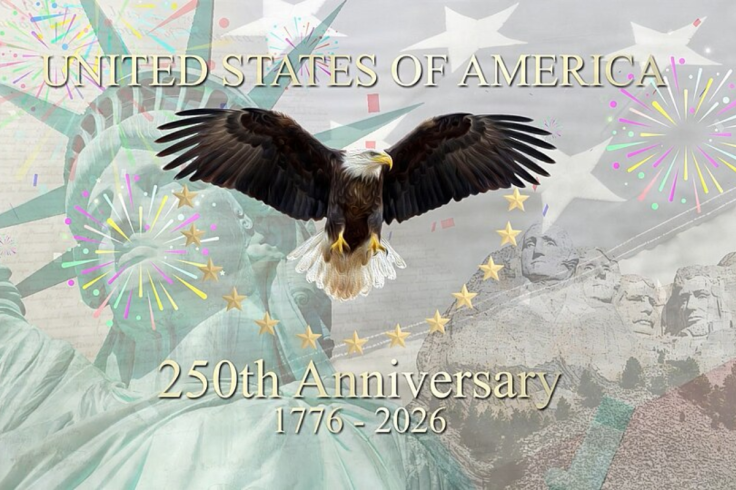
As the United States prepares to mark 250 years as a republic, a sweeping new survey has captured a nation that is proud, pessimistic and profoundly divided — all at once.
Fewer than half of Americans describe themselves as 'very proud' of their nationality, according to a poll commissioned by The Economist and conducted by YouGov, which surveyed more than 1,500 Americans on the eve of the country's semiquincentennial.
The gulf between political parties on the question of national pride is stark. Some 82 per cent of Republicans aged over 45 said they were 'very proud' to be American, compared with just 19% of Democrats in the same age group. Yet the sense that America has drifted from its founding ideals cuts across party lines: nearly 60 per cent of respondents, including majorities from both parties, believe the country has departed from the principles laid out by its founders.
A Nation That Feels It Has Peaked
The data suggests a country gripped by nostalgia. Two-thirds of respondents told YouGov they believe America's finest years are already behind it. When asked to identify the high point of the past century, 39% pointed to the years between 1981 and 2000. One respondent, asked to explain the choice, summed it up simply: 'It's just when I grew up.'
Around 63 per cent of those surveyed said they believe the country is heading in the wrong direction. The finding splits sharply along partisan lines, with 91 per cent of Democrats saying America is on the wrong track, against just 25 per cent of Republicans.
Despite the gloom, 61 per cent of all respondents said they believe the United States has been a force for good in the world, against 17 per cent who disagreed. A further 22 per cent offered the answer: 'It's complicated.'
On presidential rankings, the poll was revealing. Abraham Lincoln, who guided the country through civil war and played a decisive role in abolishing slavery, was named the greatest president in the nation's history. Former President Joe Biden ranked as the worst-regarded leader on the list. Donald Trump, still in office, placed in the bottom three.
The Alliance That Defined the Post-War World
As Americans take stock of their country at 250, one of its most historically significant foreign partnerships is simultaneously under visible strain. The US-UK alliance, long described by both governments as the 'special relationship,' has entered a period of turbulence that some analysts have compared to the Suez Crisis of 1956, the humiliating British withdrawal from Egypt that exposed the limits of its global influence and the fragility of its alliance with Washington.
The breaking point came in early 2026. After the United States and Israel launched military strikes on Iran on 28 February, the British government declined to endorse the offensive action and initially withheld access to the Diego Garcia military base on the Chagos Archipelago.
Trump responded publicly and sharply. At an Oval Office press conference on 3 March 2026, he said: 'This is not Winston Churchill that we're dealing with.' In an interview with the Sun newspaper published the same day, he added: 'It's very sad to see that the relationship is obviously not what it was.'
The tensions have extended beyond rhetoric. A 2026 Gallup survey found that just 76 per cent of Americans held a favourable view of the United Kingdom, the lowest figure on record and down eight points from 84 per cent in 2025. The steepest decline came among Republicans, whose favourable view of Britain fell from 84 per cent to 64 per cent in a single year.
Peter Ricketts, the British government's first National Security Adviser, said that the scale of US criticism of Britain was itself evidence that no particularly exceptional bond underpins the two countries' alliance.
As we celebrate 250 years of American freedom, we must honor the servicemembers who answered the call to defend the blessings of liberty. Their courage, sacrifice, and devotion remind us that freedom is never free. God bless our troops. 🇺🇸 pic.twitter.com/CAtjvL0GOl
— U.S. Ambassador to NATO (@USAmbNATO) June 29, 2026
Britain Looks Eastward Across the Channel
Amid the pressure from Washington, the British government has begun openly recalibrating. Speaking at a press conference in Downing Street on 1 April 2026, Prime Minister Keir Starmer declared that '...our long-term national interest requires closer partnership with our allies in Europe and with the European Union,' a statement read widely as a reorientation of British foreign policy away from its traditional anchor in Washington.
The Institute for Government has noted that whilst both countries remain bound by NATO obligations and decades of shared intelligence infrastructure, the political foundations of the partnership are being tested by deepening divergences on Iran, trade and international law.
A Milestone Marked in Doubt
The 250th anniversary arrives at a moment of dual uncertainty: an America questioning its own greatness from within, and a transatlantic bond showing visible cracks from without.
Macmillan himself acknowledged the limits of the fallout after Suez, telling the British public that 'any partners are bound to have their differences now and then. ... We don't intend to part from the Americans, and we don't intend to be satellites.' Nearly seven decades on, that tension has returned.
© Copyright IBTimes 2026. All rights reserved.