'The American Dream Is Dead': American Pride Plummets to Historic Low Days Before Country's 250th Anniversary
As the US blows out 250 candles, fewer Americans are convinced the country they were taught to believe in is still there.
American pride has fallen to a historic low just days before the United States marks its 250th anniversary, with new polling suggesting deep disillusionment over the country's direction under leaders including Joe Biden and Donald Trump. Two nationwide surveys released on Monday show Americans are markedly less proud of their democracy, less certain about their economic future and increasingly doubtful that the so‑called American dream still exists for people like them.
The latest findings come as the US prepares elaborate commemorations of its semiquincentennial, a moment that might once have been expected to produce a wave of patriotic feeling. Instead, an AP‑NORC poll conducted in April and published this week reports that pride in American democracy has dropped sharply over the past decade, while a separate Gallup survey records the lowest level of intense national pride since it began tracking the question in 2001. The two sets of data do not agree on everything, but together they paint a portrait of a country celebrating a milestone while questioning the story it tells about itself.

The AP‑NORC poll is blunt. Only 28% of respondents said they felt proud of the way American democracy works. In 2017, that figure was 42%, meaning pride in the system has fallen by 14 percentage points in seven years. Researchers found that gloom about government has bled into how people think about almost every pillar of US identity, from its historical narrative to its role overseas.
On the economy, the mood is equally sour. A majority of those surveyed by AP‑NORC said they were not confident about their own financial situation. They did not believe the current labour market would allow them to find what they consider a 'good job.' Many said buying a home felt out of reach. Plenty doubted they would have enough money to retire with any semblance of security. For a country built on the idea that hard work leads to upward mobility, that is an existential wobble.

Donald Trump, Polarisation and the Pride Gap
The shadow of Trump and the country's intense partisan divides hangs over the Gallup findings in particular. On the headline question, just 33% of US adults told Gallup they were 'extremely proud' to be American, the lowest figure since the organisation began asking it in 2001, when 55% chose that option. Another 20% said they were 'very proud,' meaning only just over half the country expressed a deep sense of national pride of any kind.
When the data are broken down by party, the splits are striking. Among self‑identified Democrats, a mere 14% described themselves as 'extremely proud' in 2026. Independents were slightly more upbeat at 28%, though Gallup notes that independents have been on a long, steady decline in national pride since 2004.
Republicans, by contrast, are outliers in the opposite direction. Around 70% told Gallup they were 'extremely proud' to be American when asked this year, a sharp jump from readings taken between 2020 and 2024. Gallup does not spell out the precise causes, but it is hard to ignore how closely Republican pride now appears tied to the Trump‑era rhetoric of reclaiming a supposedly lost greatness.
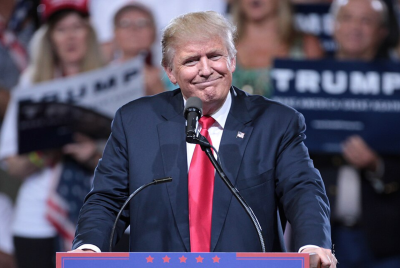
Trump's supporters have often framed their movement as a defence of 'real America' against cultural and political elites, and that narrative seems to be showing up in the numbers. If your chosen political champion promises to 'make America great again' and insists that greatness is already being restored, it is not a huge leap to tell a pollster you feel extremely proud. For many Democrats, who view both the Trump presidency and the current political climate as a threat to democratic norms, such language appears to have the opposite effect.

American Dream Doubts Deepen Under Biden And Trump
The surveys also hint at something less partisan and more corrosive: a shared suspicion that the social contract itself has frayed under successive administrations, from Barack Obama to Trump and now Biden. Asked about the American dream, significant numbers in the AP‑NORC poll said they no longer believe the system will reward their efforts.
The doubts come in several layers. People feel squeezed on wages and prices. They see housing costs climbing faster than their pay. Even those who are working full time tell pollsters they worry about retirement, saying they do not expect to have enough put aside by the time they stop working. That is not a normal background hum of grumbling. It is a message that the promise of 'work hard, get ahead' is starting to sound like a sales pitch from another century.
Officials have not yet offered a comprehensive response to the latest polling. The AP‑NORC and Gallup releases, as reported, do not include detailed reactions from the Biden administration, the Trump campaign or congressional leaders, so the political class's private reading of the numbers remains unverified. Nothing is confirmed yet in terms of what concrete steps, if any, will be taken in response, so all interpretations of how Washington will react should be taken with a grain of salt.
What is clear though is that pride in the abstract idea of America is now unevenly distributed and conditional. Republicans appear to be clinging to a patriotic high, Democrats are increasingly wary of celebrating a system they see as flawed, and millions in the middle are quietly wondering whether the country they were promised still exists. For a 250‑year‑old republic that once exported confidence as one of its main products, that is a sobering birthday present.
© Copyright IBTimes 2026. All rights reserved.
- Recommended For You