The 'Axis of Aggressors': How China, Russia, Iran and North Korea Could Stretch America To Breaking Point
Former military commanders and foreign policy experts argue that the level of cooperation between the four governments presents a mounting challenge for American national security.
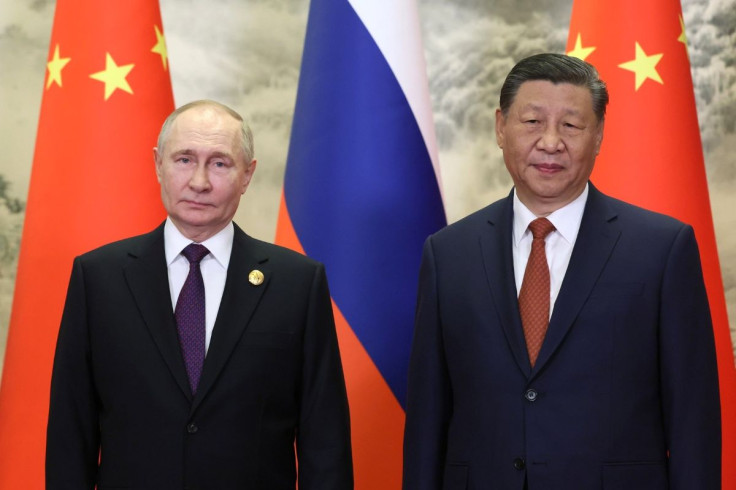
A groundbreaking publication by the 'Foundation for Defence of Democracies' reveals unprecedented cooperation between Beijing, Moscow, Tehran, and Pyongyang as Washington faces simultaneous global flashpoints spanning Eastern Europe, the Middle East, and the Indo-Pacific.
The Foundation released the definitive book Axis of Aggressors: Countering the Cooperation of China, Russia, Iran and North Korea, revealing that a consolidated alliance threatens the United States. with an 'unprecedented national security crisis'.
Authored by national security specialists Bradley L Bowman, Elaine K Dezenski, and Rear Adm. Mark Montgomery, the publication documents over 600 recorded instances of military, economic, and technological coordination between Beijing, Moscow, Tehran, and Pyongyang across a seven-year review period.
It says the authoritarian bloc bypasses formal mutual defence pacts, opting instead for practical economic and military interdependence, such as Chinese financial backstopping, North Korean munitions, and Iranian drone supplies, to sustain wartime capabilities.
The experts urge the White House to overhaul traditional defence strategies immediately, warning that failing to address this integrated multi-front threat risks stretching American military power to breaking point.
Military Cooperation Across Multiple Fronts
The authors stress that the relationship between China, Russia, Iran and North Korea is not built on complete trust or a mutual defence agreement. However, they argue that the practical outcome is much the same, with each country helping the others in ways that strengthen their collective position.
Retired Rear Admiral Mark Montgomery, one of the book's three authors, said the cooperation is already evident in Ukraine.
'I just got back from a couple of weeks in Ukraine, and when I'm sitting in Ukraine, it's really obvious to me that Ukraine is fighting Russia, North Korea, Iran and China,' Montgomery told Fox News Digital.
He said North Korea has supplied ammunition and troops, Iran has provided drones and production expertise, while China has offered economic and technological support to Moscow.
'China is backstopping the whole thing, providing the economic backstop to Russia's economy so they can survive this four-year catastrophic event for Russia,' Montgomery said. 'They're providing microelectronics that we see in ballistic, cruise and hypersonic missiles.'
According to the book, researchers recorded 616 examples of security cooperation between the four governments between Jan. 1, 2019, and Dec. 31, 2025. These included arms transfers, joint weapons development, military exercises, intelligence sharing and military exchanges.
Montgomery said the greatest concern is what the book describes as the 'simultaneity problem'.
'We don't get to handle these with a singularity anymore. We have to handle this with a simultaneity,' he said. 'And I don't think we can handle two problems at once, much less three or four.'
He suggested that if China confronted Taiwan, North Korea could threaten South Korea or launch limited attacks that would tie down American forces. At the same time, a conflict involving Russia and NATO's Baltic members could coincide with hostile activity by Iran.
The book identifies military ties between China and Russia as the most important partnership within the group. It says Chinese dual-use products have helped support Russia's defence industry, while Russia has shared technology and battlefield experience that could benefit China in any future Pacific conflict.
Economic and Cyber Links Raise Further Concerns
The book also argues that economic ties form the foundation of the group's military cooperation.
Co-author Elaine Dezenski described the relationship as a 'fractured alignment'.
'These four players are bound together more by necessity than they are by a specific trust or shared strategy among them,' she told Fox News Digital. 'China needs energy. Russia and Iran need buyers for their oil and gas. And North Korea needs any lifeline that it can get.'
She said China buys discounted Russian and Iranian energy while supplying goods, technology and access to its domestic market.
Although Russia and Iran compete to sell similar products and China has other options for suppliers, Dezenski said the economic relationship remains valuable for all four governments.
'The economics of this very much underpin the foundations for the military engagement that we see,' she said.
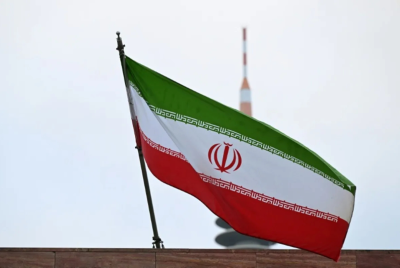
The book states that China purchases as much as 95% of Iran's oil exports, with some sanctioned oil passing through third countries before reaching independent Chinese refineries.
'The export juggernaut that is China today is fueled by sanctioned oil and gas,' Dezenski said.
She also warned that China, Russia and Iran are developing payment systems outside traditional Western banking networks. More trade is now being settled in yuan through China's Cross-Border Interbank Payment System, known as CIPS, which she said could weaken Washington's ability to enforce sanctions through the US dollar system.
'We need to really think about that sooner rather than later, before this alternative payment system becomes too big to tackle,' Dezenski said.
The book also examines growing cyber cooperation among the four countries. Montgomery said governments often rely on criminal hacking groups to carry out operations while distancing themselves from direct involvement.
'These regimes routinely outsource work to criminal groups to keep their own hands clean, and those groups are increasingly networking with each other,' he said.
Outside experts echoed the book's concerns. Carrie Filipetti, executive director of the Vandenberg Coalition, said Chinese components are used in Iranian drones that Russia has deployed in Ukraine.
'Chinese components are used to create Iranian drones, which are then deployed by the Russians against Ukrainian civilians,' she said.
Retired Air Force Lt. Gen. Richard Newton said the growing coordination among the four governments presents an increasing challenge.
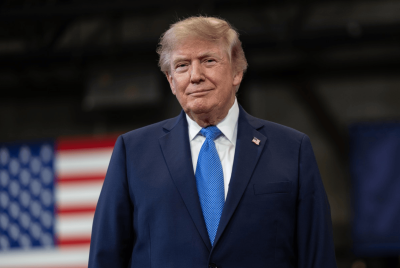
'These nation-states represent extraordinary adversarial challenges for the United States,' he said. 'But a major challenge President Trump is facing in his second administration is the level and degree of integration, synchronization and coordination among these four adversaries.'
Retired Air Force Gen. Philip Breedlove also argued that Washington should view the relationship with greater urgency.
'We often say that we are in "strategic competition" with China and Russia. They are at war with us,' Breedlove told Fox News Digital.
The book concludes by recommending closer coordination with allies, increased defence production, stronger protection of critical infrastructure and tougher enforcement of sanctions.
'We need to treat this axis as a threat, as a combined threat,' Montgomery said, 'that will confront us in every one of our crisis areas.'
© Copyright IBTimes 2026. All rights reserved.
- Recommended For You