Senators Move to Block Trump's Face from US Passports, Calling It 'Anti-Democratic' and a 'Waste of Taxpayer Money'
Senators urge State Department to reconsider plans for limited-edition passports featuring Trump's portrait

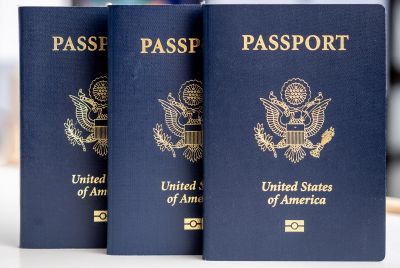
A group of US senators has formally called on the State Department to scrap plans for a limited-edition passport bearing President Donald Trump's portrait, warning that placing a sitting president's image on the nation's travel document sets a troubling precedent. The move came after Trump himself unveiled the new design on Truth Social, sharing images of the commemorative booklet that features him standing over the Resolute Desk with the Declaration of Independence in the background and his signature beneath.
The State Department confirmed it is preparing a limited release of the commemorative passports to mark America's 250th anniversary. Spokesman Tommy Pigott said the documents 'will feature customised artwork and enhanced imagery while maintaining the same security features that make the US passport the most secure document in the world.' The passports are set to become available on 6 July and only while supplies last, with access currently restricted to in-person appointments at the Washington Passport Agency.
Senate Pushback
A group led by Senator Jeff Merkley, Democrat of Oregon, wrote to Secretary of State Marco Rubio urging him to halt the plans. The letter was also signed by Senators Chris Van Hollen, Jacky Rosen, Tim Kaine and Angus King. 'The US passport has never — and should not now — feature an image of a sitting US president. We ask you to halt these plans given the anti-democratic impact this decision will have,' the senators wrote.
In their letter, the senators raised pointed questions about the cost to taxpayers, how the design was selected, and whether applicants would be given the option to decline the commemorative version. 'Using our nation's semiquincentennial to elevate the profile of the current president risks turning a unifying national milestone into a vehicle for personal promotion,' they wrote, adding that proceeding 'could result in unnecessary and wasteful costs to the American taxpayer.'
A Document Taken Abroad
Patrick Bixby, a professor of humanities at Arizona State University and author of 'Licence to Travel: A Cultural History of the Passport', described the redesign as 'entirely novel', adding: 'Of course, it's very much in line with a number of other decisions in the last 15 months or so to put Trump's name on all manner of things where it probably doesn't belong. This kind of complicity with Trump's ego trip is a little bit unsettling — and particularly unsettling in this regard because this is a document that you take abroad.'
According to a State Department official, the commemorative passport 'will be the default passport out of the Washington Passport Agency when available' for those who renew their passports in person at that location, while online options and other locations will maintain the existing design. It remains unclear whether Washington Passport Agency applicants can opt out of receiving the special edition.

Part of a Broader Pattern
The passport is not an isolated move. Trump's name and likeness have appeared with increasing frequency across federal institutions and official documents throughout his second term. The US Mint has announced plans for a commemorative gold coin featuring the president as part of the same anniversary celebration, and Trump is also set to become the first sitting president to have his signature on American banknotes.
Democratic congressman Ted Lieu pointed to the timing of the announcement, citing high gas prices and questioning why Secretary Rubio was focused on putting Trump's face on US passports. Fellow congressman Brendan Boyle similarly argued the administration's priorities were misplaced, though the White House has not publicly responded to the senators' demands.
The dispute has prompted wider questions about the boundaries between a sitting president's legacy and the neutrality of official state documents. Passports serve as a primary form of international identification for American citizens, and the decision to feature a current leader's image on them has no modern precedent in the United States. Whether the State Department responds to the Senate's demands or proceeds with the rollout on 6 July will be closely watched by lawmakers and civil society groups on both sides of the debate.
© Copyright IBTimes 2026. All rights reserved.
- Recommended For You