Gaza War Humanitarian Fallout Wounds Historic Alliance As Experts Warn Israel-United States Alliance's Death
The Gaza war challenges the longstanding US-Israel alliance, sparking political shifts and humanitarian concerns.

The humanitarian wreckage of the Gaza war is straining the historic alliance between Israel and the United States to a point that one prominent former official now frames as the end of an era.
A relationship that held firm for three decades is showing visible cracks, pulled at from Washington to New York by the war's death toll, a wider regional conflict with Iran, and a revolt inside the Democratic Party.
Former Biden and Obama official Andrew Miller argues in Foreign Affairs that the bond cannot survive in its present shape. The claim is contested, yet the pressures behind it are measurable and mounting.
An Alliance Under Visible Strain
Writing in Foreign Affairs, Miller, a former deputy assistant secretary of state for Israeli-Palestinian affairs, calls for an end to what he terms the 'Israel exception,' the long reluctance of US policymakers to apply to Israel the same conditions they place on other allies. He does not argue for abandoning the relationship. He argues instead for normalising it, warning that unconditional support has enabled the worst instincts of Israeli leaders while failing Americans, Israelis and Palestinians alike.
Other analysts describe a more concrete erosion of trust. The Soufan Center noted in its 2026 forecast that some Arab leaders now regard Israel as a greater threat to the region than Iran, a shift it traced partly to Israel's September strike on a Hamas compound in Qatar, a key US ally. The think tank also judged that revulsion at the scale of Palestinian deaths makes it unlikely President Trump can expand the Abraham Accords this year.
The wider region has only deepened the test. Since 28 February 2026 the United States and Israel have been at war with Iran and its allies, a conflict that has drawn missile fire onto US-aligned Gulf states and pushed up the cost of the campaign for Washington.
That war has knotted American military commitments and Israeli war aims together more tightly than ever, even as the political ground beneath the relationship shifts at home.
The Humanitarian Toll Driving The Rupture
The figures underpinning this anger come from the United Nations.
According to the UN humanitarian office, citing the Gaza Health Ministry, the reported Palestinian death toll passed 70,000 during the war, and at least 1,005 more people were killed between the 10 October 2025 ceasefire and mid-June 2026 alone. Israel disputes the ministry's figures, though the UN continues to rely on them as the most complete count available.
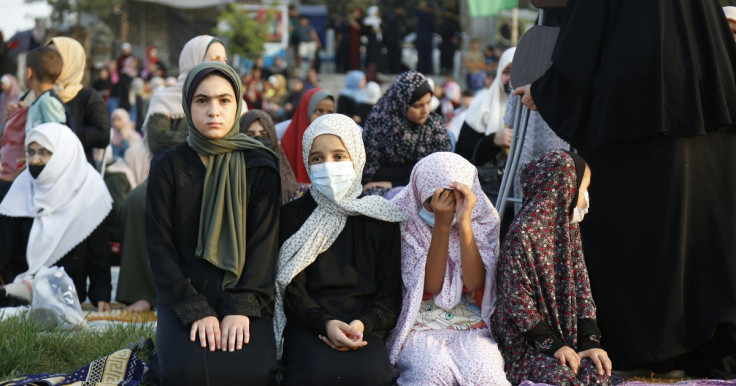
Conditions on the ground remain dire eight months into the truce. Briefing the Security Council on 18 June, UN relief chief Tom Fletcher said Gaza was 'being held together by humanitarian workarounds and Palestinian perseverance,' warning that civilians were deprived of safety, shelter, clean water and health care. Secretary-General Antonio Guterres told the same body on 10 June that violence was rising, that basic needs were going unmet, and that Israel had declared its intent to control 70 per cent of the Strip.
UNRWA, the UN's Palestinian refugee agency, reports that 392 of its colleagues have been killed in Gaza since the war began. In the occupied West Bank, the agency and OCHA record more than 1,100 Palestinians killed since October 2023 and over 1,000 settler attacks in the first half of 2026, an average of six a day.
A Democratic Revolt From New York To Washington
The strain is now reshaping American politics. In New York's June primaries, several candidates backed by Mayor Zohran Mamdani won congressional races in which criticism of Israel was a defining issue. Brad Lander, the former city comptroller, unseated incumbent Dan Goldman after declaring in his victory speech that the party's 'hug Bibi' strategy had been a catastrophic mistake and that voters would no longer pay for Netanyahu's wars with their taxes.
Mamdani himself has sharpened the fight. He has attacked the American Israel Public Affairs Committee for defending what he calls a 'status quo of immorality,' pointing to more than £470,000 ($600,000) in spending by the lobby's super political action committee in a single New York race, a figure confirmed in Federal Election Commission filings.
His critics see something darker in the rhetoric. More than 700 rabbis signed an open letter accusing the mayor of putting 'a target on the backs of American Jews,' an allegation Mamdani rejects while condemning antisemitism.
The dispute exposes a generational split that pollsters have tracked for years, with unfavourable views of Israel among Americans now at record highs across the political spectrum.
For a party heading into the November midterms, the question of how far to back Israel has become unavoidable.
© Copyright IBTimes 2026. All rights reserved.
- Recommended For You