

Tate Brothers Hire Firm That Defended Jeffrey Epstein as Extradition Fight Over 59 UK Charges Deepens
Black, Srebnick, Kornspan and Stumpf, the boutique Florida practice built by the late Roy Black, joined the brothers' legal team.

Facing 59 criminal charges in Britain and a cell in a Miami federal jail, Andrew and Tristan Tate have turned to the law firm whose founder once helped Jeffrey Epstein avoid federal prosecution.
Black, Srebnick, Kornspan and Stumpf, the boutique Florida practice built by the late Roy Black, joined the brothers' legal team this week as they fight extradition to the United Kingdom over allegations including rape, sexual assault, human trafficking and offences involving indecent images of a child.
The pair were arrested by US Marshals on Saturday 18 July on a sealed warrant, appeared in shackles two days later, and were ordered detained ahead of a hearing on 27 July. Both deny every allegation and have cast the British case as politically motivated.
A Miami Boutique With a Chapter in the Epstein Story
The decision was announced on the courthouse steps by Joseph McBride, the brothers' most visible American lawyer. 'These are from Roy Black's prestigious firm,' he told reporters, calling the late attorney 'a legend' and saying the defence had assembled a team capable of securing 'the best possible results under the sun'.
It is that firm's earlier work that gives the hiring its charge. Black represented Epstein during the federal investigation that culminated in the financier's 2007 non-prosecution agreement with the US Attorney's Office in Miami, which spared him federal charges and shielded unnamed potential co-conspirators.
Epstein instead pleaded guilty in 2008 to state offences in Palm Beach County, including procuring a minor for prostitution, and served roughly 13 months of an 18-month sentence under a work-release scheme that let him spend most days at an office outside the jail.

Black worked alongside Alan Dershowitz and Kenneth Starr on that defence. A later Justice Department review concluded that then-US Attorney Alexander Acosta showed 'poor judgment' in resolving the investigation through that agreement and in failing to ensure Epstein's victims were properly notified, though it stopped short of finding professional misconduct.
Black himself died in July 2025 at 80, so the lawyers now acting for the Tates are not the lawyer who acted for Epstein. The practice today centres on Howard Srebnick, a veteran federal defence attorney who has argued defendants' access to legal fees before the US Supreme Court.
The 59 Charges Behind Britain's Extradition Request
The scale of the British case expanded sharply hours before the arrests. The Crown Prosecution Service announced it had authorised 38 further counts covering four additional alleged victims, taking the combined total to 59 alongside the original 21 charges. Andrew Tate, 39, faces 42 in all; Tristan Tate, 38, faces 17.
The new counts against Andrew Tate comprise seven further allegations of rape, three of arranging or facilitating trafficking for sexual exploitation, three of assault occasioning actual bodily harm, and 19 relating to indecent images of a child and extreme pornography.
Tristan Tate faces two further rape counts, one of sexual assault and three of arranging or facilitating trafficking. The alleged offending is said to span July 2010 to August 2017.
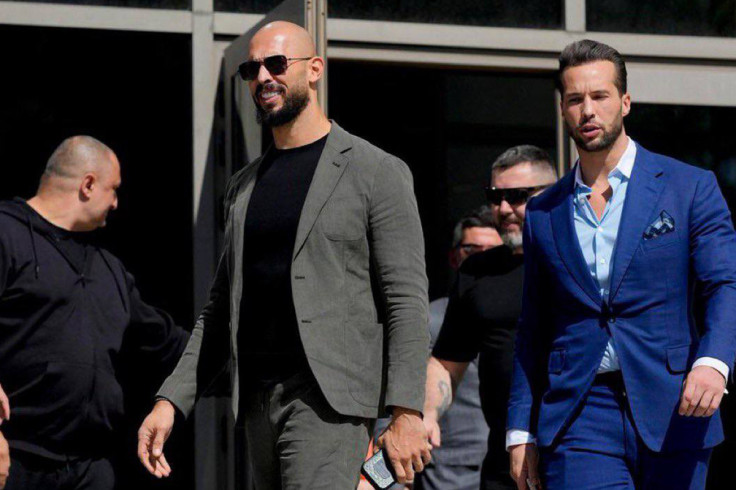
'These charging decisions followed receipt of a further file of evidence from Bedfordshire Police and bring the total number of alleged victims in this case to seven,' said Malcolm McHaffie, head of the CPS Special Crime Division, confirming that the service had requested the brothers' extradition from the United States.
The CPS coupled that with an unusually direct caution, reminding the public that proceedings are active, that both defendants have the right to a fair trial, and that there must be no reporting or online commentary capable of prejudicing the case. Bedfordshire Police assistant chief constable Karena Thomas said separately that there is 'no place for male violence against women and girls in our society'. None of the allegations has been tested at trial, and both brothers are presumed innocent.
A Defence Built on Romania, Politics and Bail
The Tates' lawyers are contesting the request on procedural rather than evidential grounds. McBride has argued that Britain agreed not to pursue extradition while criminal proceedings in Romania remain live.
'Those proceedings are ongoing right now,' he said, adding that the understanding exists because 'no nation gets to trample the judicial sovereignty of another for political convenience'.
In an email to Miami New Times, Srebnick confirmed he had appeared for the brothers by telephone alongside partner Jackie Perczek and attorney Stephen Binhak. 'We are teaming up with Mr McBride and Mr Maniotis to oppose the extradition of the Tate brothers and seek bail, given that the Tates are neither flight risks nor dangers to the community,' he wrote.
McBride has also claimed the brothers were detained over their politics and held in solitary confinement. Romanian prosecutors charged the pair with human trafficking in 2023, allegations they contest, and they left for Florida in February 2025 after travel restrictions were lifted.
What a US Extradition Hearing Can and Cannot Decide
Whatever firepower has been assembled in Miami, the coming hearing is not a trial. A federal judge will consider only whether Britain's request satisfies the US-UK extradition treaty and whether enough evidence supports certifying the brothers for surrender, leaving guilt to a British jury if they are ever returned.
The final call belongs to the executive branch rather than the courts. Under the strengthened treaty that took effect in 2007, the decision to surrender rests with the US Secretary of State, currently Marco Rubio, who retains discretion to refuse. The State Department has granted nearly every British request since.
Extradition specialists expect a long fight regardless. Ben Keith, a British barrister who practises in the field, told The Times the brothers would probably challenge the application through the American courts and could delay matters by months, calling the US process considerably more political than its British equivalent.
Seven women reported the offences that produced 59 charges, and the question now is not whether the Tates can afford the best lawyers in Florida, but whether a treaty signed two decades ago will put them in front of a British jury at all.
© Copyright IBTimes 2026. All rights reserved.