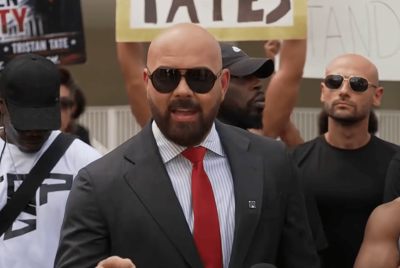
Tate Brothers Demand Names of UK Accusers, Claim They're Being Denied a Fair Chance To Defend Themselves
Andrew and Tristan Tate are challenging a CPS decision to withhold the identities of their UK accusers, arguing it undermines their ability to prepare a defence.

Andrew and Tristan Tate are challenging a decision by UK prosecutors to withhold the identities of people who have made criminal complaints against them, arguing at London's Royal Courts of Justice that the move is preventing them from properly preparing a defence.
The hearing, held on Tuesday, comes as the brothers await extradition from Romania to face 21 criminal charges in the UK, including allegations of rape and human trafficking, which they have repeatedly denied.
The Crown Prosecution Service authorised charges against the brothers in 2024 after receiving evidence from Bedfordshire Police. A European arrest warrant was subsequently issued, although Andrew Tate, 39, and Tristan Tate, 37, will not be returned to Britain until criminal proceedings currently underway in Romania have concluded.
Tate Brothers Say Missing Information Hampers Defence
The brothers argue, in particular, that they should be told who has accused them before formal UK proceedings begin.
Their legal team stated that withholding those identities places them at a disadvantage and departs from the treatment normally afforded to suspects and defendants.
Representing the brothers, barrister Sallie Bennett-Jenkins told the court that the decision was based on what she described as a flawed assessment of risk. In written submissions, she argued prosecutors had assumed the brothers would identify complainants publicly through social media and potentially discourage them from continuing with proceedings.
According to the submissions, that assumption was an 'inflated assumption of risk.'
Bennett-Jenkins also argued that the brothers are being denied what she characterised as basic information about the allegations they face. Without knowing who made the complaints, she said, they are limited in their ability to identify evidence that could support their defence or assess the reliability of claims that may ultimately be tested in court.
The argument goes beyond a procedural disagreement. The defence position is that access to the identities of complainants could affect how evidence is gathered and preserved long before a trial begins.
That issue formed the core of Tuesday's hearing.
CPS Defends Decision Over Tate Brothers' Accusers
Lawyers acting for the CPS and Bedfordshire Police rejected the suggestion that the brothers were being treated unfairly.
Tom Little, representing both parties, told the court that the decision not to disclose names was temporary rather than permanent. In written submissions, he described it as a 'time-limited decision' that would remain in place until proceedings in the UK begin substantively.
The CPS position is that the brothers will have sufficient time to prepare their defence once they are returned to Britain and the case formally progresses through the courts.
Little also argued that the matter is still under review and suggested the challenge may fall outside the scope of what the court should determine through judicial review proceedings.
Where Are The Tate Brothers Now?
The court also heard that the brothers, who hold both British and American citizenship, remain in Romania under judicial control. Their legal team said they had offered to be interviewed under caution in Bucharest with the approval of Romanian authorities, but that proposal was declined by the CPS.
In May 2025, prosecutors publicly confirmed the full list of 21 charges the brothers are expected to face upon their return to the UK. Those allegations relate to events said to have occurred between 2012 and 2016.
Nothing has been determined by a UK criminal court, and the allegations remain contested. The brothers deny wrongdoing.
Mr Justice Chamberlain is expected to decide later this week whether permission will be granted for the judicial review challenge to proceed, a ruling that could determine whether the dispute over the identities of the complainants moves into a new legal phase.
© Copyright IBTimes 2026. All rights reserved.
- Recommended For You