Postmaster General David Steiner Warns USPS Will Refuse to Deliver Mail Ballots Unless States Hand Over Voter Rolls
Postmaster General Steiner's stance on absentee voter lists sparks legal and political battles.

The head of the United States Postal Service has told Congress that mail ballots will not move in states that refuse to surrender lists of their absentee voters to the federal government.
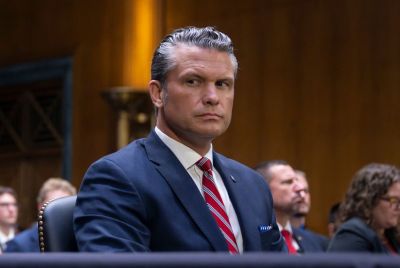
Postmaster General David Steiner gave that answer under questioning on Wednesday, 24 June 2026, before the Senate Homeland Security and Governmental Affairs Committee. His confirmation marked the first time a senior postal official has publicly defended the agency's plan to carry out one of President Donald Trump's election orders.
The exchange handed Democrats, voting rights groups and several state officials fresh ammunition for a fight already moving through the federal courts.
A Yes-Or-No Question and a One-Word Answer
Senator Gary Peters of Michigan, the committee's ranking Democrat, pressed Steiner for a plain answer. He asked whether the Postal Service would still mail a state's ballots if that state declined to turn its absentee voter list over to the federal government.
'Under our proposed regulation, no,' Steiner replied, according to the hearing exchange first reported by Democracy Docket. 'We would tell the state that we need the manifest.'
🚨THIS IS HUGE. Postmaster General David Steiner says that MAIL IN VOTES or abstentee ballots could go UNDELIVERED unless states provide a LIST of abstentee voters to the federal government.
— JoshTheProgressive (@joshforprogress) June 24, 2026
How can you call this anything other than fascism? Trump is trying to rig elections… pic.twitter.com/nmmBEbJDWF
Steiner defended the requirement as an operational safeguard rather than a political weapon. He told the panel the list would simply help ensure that the correct ballots reached the correct voters.
When Senator Elissa Slotkin of Michigan asked whether he would move her state's ballots without its rolls, he leaned on the timing, noting that the agency holds only a proposal for now and that no new rules yet exist.
Senator Maggie Hassan of New Hampshire called the plan 'blatantly illegal' and pushed Steiner to withdraw it at once. He answered that the Postal Service would comply if a court ordered it to stop. Steiner, a lawyer and former chief executive of Waste Management, insisted throughout that USPS does not run elections and stays non-partisan.
From Executive Order 14399 to the Federal Register
The proposed rule did not appear on its own. It flows directly from Executive Order 14399, 'Ensuring Citizenship Verification and Integrity in Federal Elections,' which Trump signed on 31 March 2026. Section 3 of that order instructed the Postal Service to open rulemaking and to bar the transmission of mail ballots to anyone not enrolled on a state-specific list.
USPS published the resulting proposal, titled 'Ballot Mail for Federal Elections,' in the Federal Register on 2 June 2026, with a public comment window that closes on 2 July 2026. The text would require each participating state to file a Mail-In and Absentee Participation List through a new Federal Ballot Mail Portal. Before it accepts outbound ballot mail, the Postal Service would check each mailpiece against that list and return anything that fails the check.
The order reaches well beyond the post office. It directs the Department of Homeland Security, working with the Social Security Administration, to build State Citizenship Lists from federal records and hand them to election officials at least 60 days before each federal election. It also tells the Attorney General to prioritise the prosecution of officials who send ballots to people the federal government deems ineligible.
The Manifest Dispute and the Lawsuits in Waiting
Much of the conflict turns on a single word. Steiner calls the requested data a 'manifest,' the sort of delivery list the Postal Service says it already recommends to states each year. Steve Hutkins, a retired New York University professor who runs savethepostoffice.com, told Democracy Docket that the demand amounts to 'essentially a national voter registration' and 'much more than a mere manifest.' The list is narrower than a full voter roll, yet opponents warn it would still create a federal record of absentee voters under presidential control.
The courts are already engaged. On 3 April 2026, New York Attorney General Letitia James and Massachusetts Attorney General Andrea Joy Campbell helped lead a coalition of 23 state attorneys general and Pennsylvania's governor in challenging the order, arguing it strips states of their constitutional authority over elections.
A separate challenge brought by the League of Women Voters and allied groups has cleared an early hurdle, with a federal judge in Massachusetts allowing the case to proceed for this year's elections. Trump's first election order, EO 14248 from March 2025, was blocked in part by three courts on similar grounds.
The administration is unmoved. White House spokeswoman Abigail Jackson said the government would keep lawfully enacting the agenda voters chose, framing tighter ballot controls as a matter of election security. Trump has long argued that mail voting invites fraud, a claim that election officials in both parties say overstates a rare problem.
With the comment period closing within days and the courts still weighing the order, the fate of millions of mail ballots this November now hangs on a quarrel over a list.
© Copyright IBTimes 2026. All rights reserved.
- Recommended For You