14th Amendment Guarantees Birthright Protection as Supreme Court Crushes Trump Ban on Migrant Children
Court affirms citizenship for children born in the US to undocumented or temporarily present parents

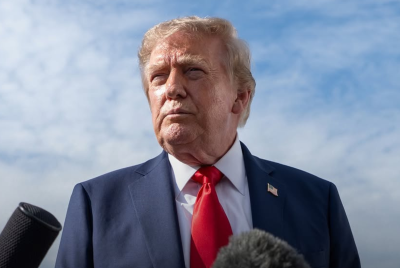
The United States Supreme Court has ruled that children born on American soil to undocumented or temporarily present parents are citizens at birth. The decision delivers a sweeping defeat to President Donald Trump's attempt to rewrite the meaning of the Fourteenth Amendment.
The 5–4 ruling in Trump v Barbara, handed down on 30 June 2026, affirms a lower court injunction that had already blocked enforcement of Executive Order 14160. Chief Justice John Roberts wrote the majority opinion, joined by Justices Sonia Sotomayor, Elena Kagan, Amy Coney Barrett, and Ketanji Brown Jackson. The ruling closes a year-and-a-half legal battle that began the day Trump took office.
What the Executive Order Tried to Do
President Trump signed Executive Order No 14160, 'Protecting the Meaning and Value of American Citizenship', on his first day back in office on 20 January 2025.
The order declared that children born in the United States to parents unlawfully or temporarily present in the country were not 'subject to the jurisdiction' of the United States, and therefore did not qualify for citizenship under the Fourteenth Amendment or the Immigration and Nationality Act.
Parents quickly sued, some on their own behalf and others in the name of their children, arguing the order violated both the Constitution and federal immigration law.
A District Court in New Hampshire agreed, provisionally certifying a nationwide class of children who would be denied citizenship under the order and preliminarily enjoining its enforcement. The Supreme Court then took the unusual step of granting certiorari before judgment, bypassing the appeals court entirely to resolve the question quickly.
🚨 The Supreme Court ruled that the Fourteenth Amendment guarantees birthright citizenship to children born in the United States, including those whose parents are in the country unlawfully or only temporarily, striking down President Trump's executive order. pic.twitter.com/iDns5rmqJF
— SCOTUS Wire (@scotus_wire) June 30, 2026
The Court's Reasoning: Centuries of Precedent Against the Administration
Roberts grounded the ruling in English common law dating back to Blackstone and Calvin's Case, tracing an unbroken line through the abolitionist repudiation of Dred Scott v Sandford to the 1898 case of United States v Wong Kim Ark.
The Court held that children born in the United States to parents unlawfully or temporarily present are 'subject to the jurisdiction' of the United States and are citizens at birth under the Fourteenth Amendment's Citizenship Clause.
Central to the opinion is the meaning of 'jurisdiction' itself. Citing Chief Justice John Marshall's 1812 opinion in Schooner Exchange v. McFaddon, the Court explained that jurisdiction referred to 'the full and complete power of a nation within its own territories', a power 'susceptible of no limitation not imposed' by the nation itself, with narrow exceptions chiefly for foreign diplomats.
The administration's lawyers had argued that some unspecified, heightened form of 'primary' or 'full' allegiance, tied to parental domicile, was required for birthright citizenship to attach.
The Court rejected that theory as lacking historical support, noting that words central to the Executive Order, such as 'mother', 'father', 'lawful' and 'temporary', appear nowhere in the actual text of the Citizenship Clause.
The Court also dismantled the Government's reliance on the 1866 Civil Rights Act's domicile arguments, concluding that the Fourteenth Amendment was intended to settle the question of citizenship 'once and forever' and that no meaningful evidence existed of a domicile-based carve-out being seriously debated by the Reconstruction Congress.
The Supreme Court has voted to uphold birthright citizenship.
— Pop Base (@PopBase) June 30, 2026
Donald Trump filed an executive order to attempt to deny automatic American citizenship to children born to parents that are in the U.S. illegally. pic.twitter.com/kveIZ1svf6
A Fractured Bench and a Forceful Concurrence
The ruling was far from unanimous. Justice Clarence Thomas dissented, joined by Justice Neil Gorsuch. Justices Samuel Alito and Brett Kavanaugh each filed separate opinions, with Kavanaugh concurring in the judgment in part while dissenting in part.
Thomas's dissent argued the Citizenship Clause was a narrower, race-specific remedy aimed at freed slaves rather than a universal guarantee.
Justice Jackson, joined in part by Justice Sotomayor, wrote a pointed concurrence rebutting that framing directly. Jackson argued that Thomas's account 'bears little relationship to the history of its ratification' and elides the broader anticaste, antisubordination purpose of the Reconstruction Amendments.
Jackson drew on records from 19th-century Colored Conventions, where Black delegates explicitly framed their claim to citizenship in universalist terms. One 1853 convention declared: 'We address you not as aliens nor as exiles... but we address you as American citizens asserting their rights on their own native soil.'
The Court's affirmance leaves the New Hampshire injunction fully in place nationwide, meaning Executive Order 14160 cannot be enforced anywhere in the country.
© Copyright IBTimes 2026. All rights reserved.
- Recommended For You