

Who Is Peter Ticktin? Trump's Childhood Pal Pushes 17-Page Executive Order to Seize 2026 Midterms via 'National Emergency'
A once‑obscure Trump schoolmate is trying to turn fringe election fears into presidential emergency rule over America's next midterms.
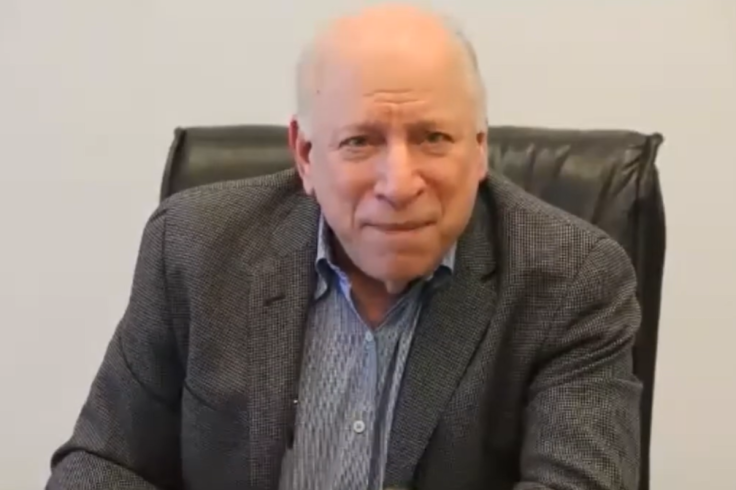
Peter Ticktin, an 80‑year‑old Florida lawyer and longtime friend of Donald Trump, is urging the president to declare a national emergency and assert federal control over the 2026 midterm elections through a sweeping 17‑page draft executive order, according to reports published in recent months.
Trump allies, anchored in unproven claims that foreign governments have infiltrated US voting systems. Ticktin, who attended New York Military Academy with Trump, has moved from the periphery of the president's world into a more visible role in election denial circles, fronting legal efforts for figures such as Tina Peters, the former Colorado county clerk convicted over tampering with election equipment and released from prison last month after Trump personally pressed Colorado's Democratic governor to commute her sentence.
Peter Ticktin's National Emergency Blueprint
The draft order promoted by Ticktin is not a stray memo but a detailed working document that, if signed, would radically reshape how the 2026 midterms are run. Based on the full 17‑page text, the order would let the president declare a national emergency on the basis of alleged foreign interference via electronic voting machines and then claim sweeping powers over the electoral machinery.
Under the proposal, the federal government could require that all ballots be counted by hand, mandate voter identification at polling places nationwide, and sharply restrict mail‑in voting. Each of those steps would collide with existing state‑level authority over elections and, in effect, sideline state and local election officials.
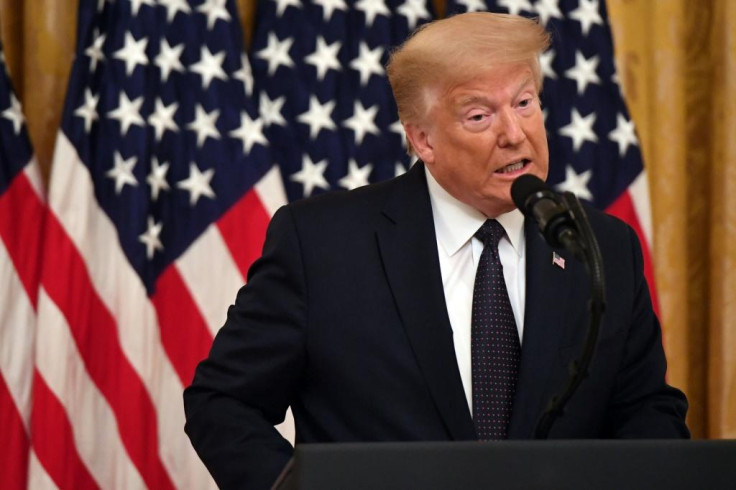
Ticktin said in February that he had been in direct communication with Trump about the plan and had also spoken with unnamed White House and Justice Department officials. He declined to say who those officials were, leaving the precise level of internal buy‑in hazy. Nothing about those reported conversations has been independently confirmed, so claims of his influence inside the administration should be treated with caution.
In an extended interview, Ticktin framed his approach as a response to what he described as a covert assault on American democracy by hostile states. He insisted that evidence of foreign interference in US elections would soon come to light, naming Venezuela, China and Iran among the alleged culprits.
'With the evidence that we've got, and with the evidence that would be forthcoming, that there'll be no question about it,' he told the network. 'It's a surreptitious overtaking of a country.' So far, however, neither Ticktin nor his allies have produced public documentation that substantiates those sweeping claims.
Trump Distances Himself From Ticktin's Plan
In public, Trump has taken a marked step back from the idea. When asked by reporters on 27 February about the emergency‑powers proposal linked to Ticktin, Trump replied: 'Who told you that? No, I've never heard about it.'
A White House official said that while Ticktin is viewed as 'well‑meaning,' he appears to exaggerate the closeness of his current relationship with the president and does not shape the administration's official policy on elections or voting rules.
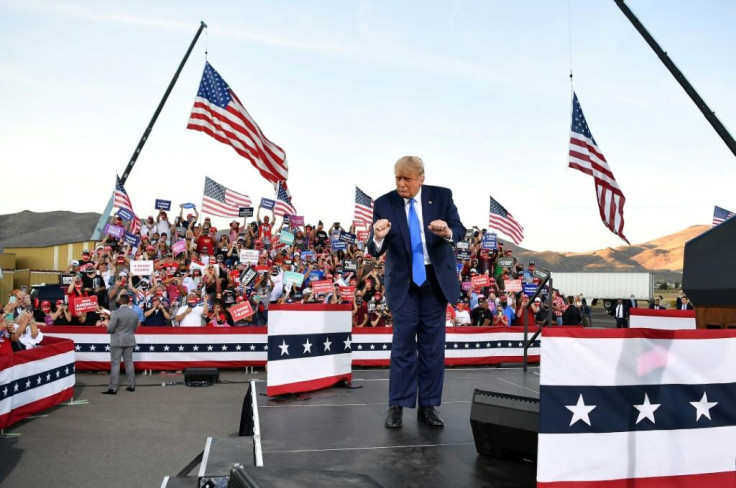
Taken at face value, that message suggests a familiar pattern around Trump: ambitious schemes circulating on the fringes of his orbit, loudly talked up by outside loyalists, yet publicly disowned once they trigger political or legal alarms.
Ticktin's own trajectory underscores how tightly he has bound himself to the election denial movement. Beyond representing Peters, he has appeared alongside other leading figures challenging established results and procedures, turning what once looked like a personal loyalty to Trump into a broader legal crusade built on the narrative that the US system has been compromised from abroad.
Legal Experts Pick Apart Peter Ticktin's Argument
Legal scholars have not been kind to the constitutional theory underpinning Ticktin's proposal. Liza Goitein, a senior director at the Brennan Center for Justice and one of the most closely watched experts on presidential emergency powers, reviewed Ticktin's legal memo and said she could see 'four immediately obvious problems' before even getting into the finer detail.
Central to her criticism is Ticktin's reliance on the International Emergency Economic Powers Act, or IEEPA, as a supposed legal hook for seizing control of voting machines. Goitein pointed out that the statute is largely about economic sanctions and property in which foreign actors have a genuine interest.
'The IEEPA is mostly focused on economic sanctions,' she wrote. 'Nothing in that would allow for the seizure of voting machines owned and operated by state or local election authorities.'
That dovetails with a more basic constitutional objection. Under the US system, states and Congress share responsibility for elections. The president does not have a free‑floating power to intervene in how votes are cast or counted, let alone to unilaterally rewrite the rules for midterm contests years in advance.
The gap between Ticktin's narrative and the public record is visible elsewhere too. A declassified 2021 assessment by the US intelligence community concluded that, while countries including Russia and Iran made efforts to influence political opinion around the 2020 election, no foreign power 'attempted to alter any technical aspect of the voting process in the 2020 US elections, including voter registration, casting ballots, vote tabulation, or reporting results.'
Even so, Ticktin has continued to argue that the Trump administration's criminal charges against Venezuelan president Nicolás Maduro, unveiled in May, will eventually bolster his case about electoral interference. Justice Department officials have pushed back, stating that the Maduro indictment concerns alleged international drug trafficking rather than voting systems or US elections.
Trump Pursues Other Election Changes While Ticktin Waits
While Ticktin presses his emergency‑order theory from the outside, Trump has been busy reshaping election rules through more conventional channels. In March 2025 he signed an executive order requiring proof of citizenship to register to vote and instructing the attorney general to challenge states that count mail‑in ballots received after Election Day. That order is already facing a wave of legal challenges from civil rights groups and state officials.

The president has also turned to Congress, urging lawmakers to pass the SAVE America Act, a bill that would impose strict voter ID requirements nationwide. In his State of the Union address, Trump framed it as a rescue mission for US democracy, telling members: 'Congress should unite and enact this commonsense, country‑saving legislation right now.'
None of those measures goes as far as the emergency‑powers blueprint promoted by Ticktin, which would short‑circuit normal lawmaking and push presidential authority over elections into untested territory. For now, that document remains a draft, circulating in the shadows around a presidency that simultaneously courts and disavows its most radical ideas.
© Copyright IBTimes 2026. All rights reserved.