Apple's Foldable iPhone Final Design Leaks: Kills Face ID For $2,000+ Price Tag
Leaked images suggest Apple's foldable iPhone may feature a unique design and a high price point.

Apple's foldable iPhone appears to have moved a step closer to a settled look after leaker Sonny Dickson shared a more detailed dummy unit on 7 June, offering what the source article describes as the clearest view yet of the design, the apparent shift from Face ID to Touch ID, and a rumoured starting price above $2,000.
The latest images point to a book-style handset with a white finish, and while they are only based on a non-functional dummy model, they add fresh weight to speculation that Apple is preparing a premium foldable for a September 2026 unveiling alongside the iPhone 18 Pro and iPhone 18 Pro Max.
The news came after Dickson previously shared early-production dummy units in April, which were said to provide the first real visual confirmation of the foldable iPhone's passport-style form factor.
This newer model is described as markedly more detailed than the earlier versions, and it follows a separate image circulated earlier in the week by the leaker known as Ice Universe, who also appeared to show a white foldable dummy. Even so, the key point has not changed. Nothing here is official product confirmation, only a more polished glimpse at a device that remains in the rumour stage.
First look at the iPhone Fold dummy unit. It doesn't look like Apple will offer multiple colors, with white currently appearing to be the only option. What do you think? pic.twitter.com/olMzm6t6Ts
— Sonny Dickson (@SonnyDickson) June 7, 2026
Foldable iPhone Design Starts to Settle
What stands out first is the shape. The reported design is book-style and passport-like, with a 4:3 aspect ratio that is wider than it is tall, making it look less like a stretched smartphone and more like a compact tablet that folds shut. If that holds, Apple is not merely entering the foldable market late. It is trying to arrive with a layout that looks distinctly its own.
According to MacRumors, the device is expected to feature a 5.5-inch outer display and a 7.8-inch inner OLED panel, leaving it only slightly smaller than the iPad mini when opened. The latest dummy images also appear to show an edge-to-edge cover screen with gently curved edges, which gives the exterior a cleaner and more finished appearance than some earlier foldable concepts have managed. Around the back, the hardware is said to include a horizontal dual-camera system set into an iPhone Air-style camera plateau, with the flash positioned below the rear microphone.
There are smaller details too, and they are the sort accessory makers care about because they often hint at how far along a design may be. The rear microphone is shown with seven drilled holes, while the front-facing camera on the inner display appears to sit at the top left, a placement the source says could have implications for Dynamic Island. That may sound like fussy design chatter, but on a foldable phone, millimetres and cut-outs tend to tell the real story.
Face ID Trade-Off Meets a Lofty Price
The most striking rumour is not the colour. It is the apparent decision to drop Face ID in favour of Touch ID. According to the source article, the foldable iPhone is expected to use Touch ID instead, while also losing the Action Button and moving the volume controls to the top edge of the device. For a handset tipped to sit above the $2,000 mark, that trade-off is unlikely to pass without scrutiny.
The same report points to an ultra-thin 4.5mm titanium frame, which helps explain why Apple may be making harder choices about internal space and hardware priorities. Thinness has always been one of those specs that looks elegant on a slide and turns complicated in the hand, particularly when buyers are also being asked to accept feature compromises. If this is the final direction, Apple seems to be betting that novelty, engineering and screen size will matter more than preserving every familiar flagship feature.
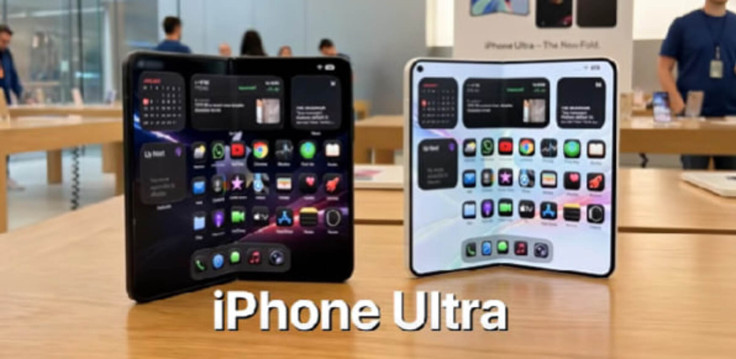
Colour may become part of that positioning as well. Dickson's observation that the device could launch only in white is said to line up with a report from Instant Digital suggesting there may be no black finish, while Mark Gurman had previously reported that Apple planned to avoid bold colours and stick to traditional finishes. The article notes that Apple has done something similar before with major premium launches including Apple Watch Ultra and Vision Pro, and it also points to the iPhone X, which arrived in 2017 in just Silver and Space Gray at a then-record $999 starting price.
That history does not prove Apple will repeat the formula, but it does make the strategy look familiar. A foldable iPhone sold as an expensive first-generation showcase, offered in a restrained finish and trimmed to the essentials, sounds very much like the kind of controlled rollout Apple prefers when it wants the product to do the talking before the colour palette does.
© Copyright IBTimes 2026. All rights reserved.
- Recommended For You