Bryan Kohberger Trial Update: Psychologist Claims Idaho 4 Murders Were 'Psychosexual Fantasy'
Behind the statistics of 150 stab wounds lies a portrait of Bryan Kohberger as a man whose violent fantasy collided with real lives in a Moscow student house.
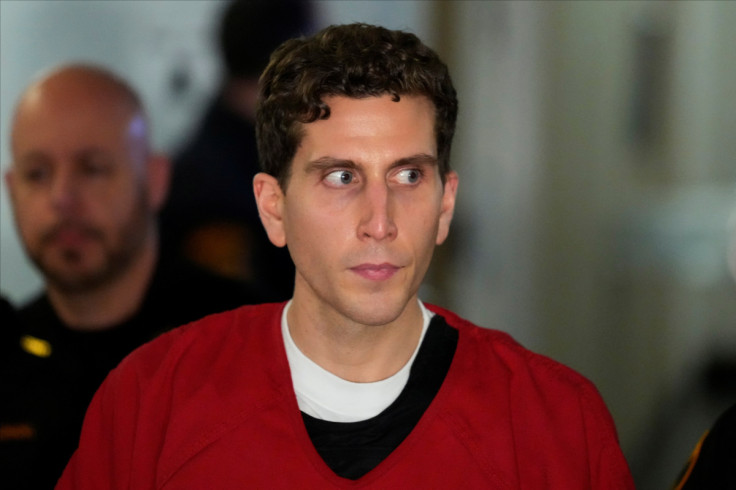
Bryan Kohberger, the former criminology student sentenced in Idaho to spend the rest of his life in prison for murdering four University of Idaho students in 2022, is now being described by a forensic psychologist as having carried out a 'targeted psychosexual fantasy' killing in the victims' off‑campus home in Moscow.
The claim, based on newly released autopsy findings and other case evidence, was made by Dr Gary Brucato, who has examined the case in light of his work on mass murder patterns.
Those autopsy reports, and Brucato's interpretation of them, offer one of the most detailed attempts yet to explain why Kohberger attacked that house in the early hours of 13 November 2022 and what might have been happening in his mind as he stabbed four young people more than 150 times.
None of it changes the legal outcome; Kohberger has already pleaded guilty and been ordered to serve four consecutive life sentences. But it does begin to sketch a psychological portrait that is as bleak as it is chilling, and it raises uncomfortable questions about obsession, misogyny and the thin line between fantasy and action.
Bryan Kohberger And The 'Targeted Psychosexual Fantasy'
On the surface, the outline of the crime is grim but straightforward. In the early hours of 13 November 2022, Madison Mogen, 21, Kaylee Goncalves, 21, Ethan Chapin, 20, and Xana Kernodle, 20, were killed inside their shared rental home in the small college town of Moscow, Idaho. Investigators later concluded that all but Kernodle were likely asleep or in bed when Kohberger attacked.
The brutality only becomes fully visible in the autopsy numbers. Collectively, the four students were stabbed more than 150 times. Kernodle alone suffered more than 67 wounds. Goncalves was believed to have been stabbed nearly 40 times.
According to a report obtained by ABC 7 News, she had been stabbed so many times that 'her facial structure was extremely damaged', and had additional injuries connected with asphyxiation and blunt force trauma.
Pattern Beyond 'Rage Killing'
For Brucato, who helped create the Columbia University Mass Murder Database, the pattern suggested something far beyond a simple 'rage' killing. Speaking to the Daily Mail, he argued that the evidence pointed to 'a targeted psychosexual fantasy probably aimed at one individual in the house'.
In his view, Kohberger did not go there to kill four people. He went there to enact a private, sexualised script on a single victim.
'His intel failed him,' Brucato said, suggesting that Kohberger's planning was detailed but flawed. When that plan collided with the messy reality of a shared student house, the psychologist believes the fantasy fractured and the body count soared. 'He overestimated himself and underestimated women,' Brucato added, in one of the more cutting lines of his assessment.
Nothing in Brucato's reading has been presented in court as formal evidence about motive, and there is no independent confirmation of his theory in the official documents so far released.
His conclusions, however, are grounded in the autopsy data and the known layout of the house, not in pure speculation. They should still be taken with a grain of salt until or unless investigators endorse them.
Who Was The Target In The Idaho 4 Murders?
Ever since Kohberger's arrest, true‑crime forums and commentators have argued over who, if anyone, he fixated on before the murders. Some have theorised that Kaylee Goncalves was the intended victim because she had the second highest number of stab wounds and suffered catastrophic facial injuries.
Brucato does not agree. He believes Madison Mogen was the central target of Kohberger's 'psychosexual fantasy'.
One detail has become crucial to that theory. On the night of the killings, Goncalves decided to share a single bed with Mogen. To friends it was an ordinary, almost cosy choice at the end of a night. To Brucato, it was the twist that ruined Kohberger's plan.
The psychologist suggested that Kohberger expected to find one woman alone in that room. Instead, he found two. In his words, 'You punish the ones who see you – the people who interrupt your fantasy.' His belief is that Kohberger 'went in and made a beeline for Maddie [Mogen], who was his target, and found Kaylee unexpectedly there'.
The result, in this telling, was not a calculated serial killing but a chaotic escalation by a man whose carefully nurtured mental script had just collapsed. Once multiple people were awake, able to see him and potentially identify him, Brucato argues that the logic of the fantasy shifted from possession to annihilation.
Again, none of this has been formally confirmed by investigators, and there is no definitive public proof that Mogen, rather than Goncalves or Kernodle, was the intended focus. But it does fit the strange cruelty of the scene, where one decision to share a bed may have changed the course of events in that house.
'Profound Insecurities' And Destroyed Faces
Perhaps the most disturbing part of Brucato's analysis lies in what he sees in the location of the wounds. Both the sheer number of stab injuries and their concentration on the victims' heads and faces, he suggested, may reflect Kohberger's rage at female beauty itself.
Brucato argued that the strikes to the women's faces suggested that their 'beauty' was 'infuriating' to the killer. He went further, saying that Kohberger appeared to have 'profound insecurities about his looks' and believed that 'beautiful women are rejecting him'. In that reading, the destruction of their faces is not incidental. 'So he decimates the physical appearance in that way,' Brucato said.
It is a grimly familiar pattern to anyone who has studied misogynistic violence. The attack becomes a way for an insecure man to assert control over the very thing that makes him feel small: the perceived power of attractive young women to ignore, reject or humiliate him. Here, though, that resentment was allegedly armed with a knife and four sleeping students instead of staying online or in fantasy.
Even if Brucato is broadly right, it does not tell the whole story. Many people carry deep insecurities without ever harming another person. What his commentary does is highlight the psychology that can sit underneath some of the most extreme crimes, and place the Idaho 4 murders within a wider pattern of gendered violence.
From Arrest To Life Without Parole
Kohberger was arrested more than a month after the killings, taken into custody on 30 December 2022 and charged with four counts of first‑degree murder and one count of felony burglary. Prosecutors had the option to pursue the death penalty, which remains legal in Idaho, and there was little doubt that public pressure would have supported that route.
Instead, Kohberger eventually agreed to plead guilty to the murders as part of a deal that may have been designed to avoid the risk of execution. On 23 July 2025, he was sentenced to life in prison without the possibility of parole, with the judge ordering four consecutive life sentences.
For the families of Madison Mogen, Kaylee Goncalves, Ethan Chapin and Xana Kernodle, that sentence locks Kohberger away but does little to clarify the why. Experts like Brucato are now trying to fill that void, reading meaning into every wound and decision.
The danger, always, is that in trying to understand Bryan Kohberger, we risk giving his fantasy more coherence than it ever truly had.
© Copyright IBTimes 2026. All rights reserved.
- MOST POPULAR IN Crime