Charlie Kirk Murder Case: Tyler Robinson's Defence Says FBI and ATF Are Withholding 'Crucial Electronic Data Files'
Robinson's legal team claims missing forensic data is vital for a fair trial in the Charlie Kirk murder case
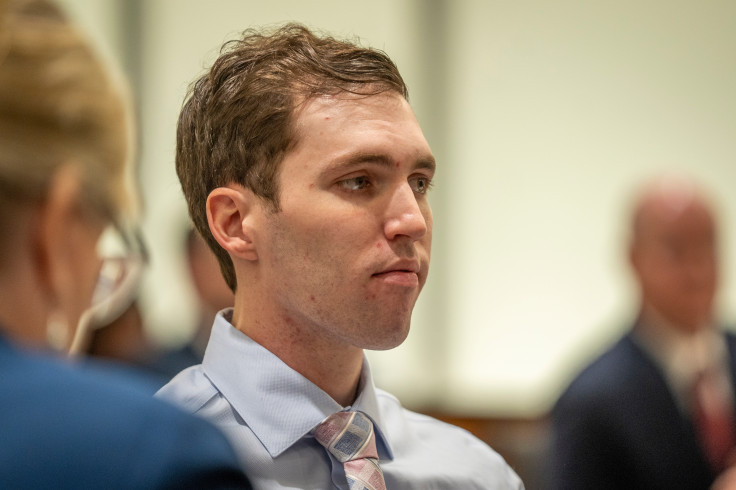
Tyler Robinson's defence team has publicly declared in a court filing that neither the FBI nor the ATF have handed over their DNA analysis data files in the case, despite multiple formal requests. Robinson's lawyers state they are still awaiting what they describe as 'crucial electronic data files' tied to the federal agencies' forensic work.
Robinson, 22, of Washington, Utah, is charged with capital murder over the shooting death of conservative activist and Turning Point USA founder Charlie Kirk on 10 September 2025 at Utah Valley University in Orem, Utah. He faces the death penalty if convicted. His legal team filed a motion on 27 March 2026 requesting that the preliminary hearing, scheduled for May, be vacated or delayed by at least six months, citing an overwhelming and incomplete volume of discovery. Conservative commentator Candace Owens amplified the filing on X on 17 April, where the post had garnered over 196,000 views by that afternoon.
'We Know These Data Files Exist'
According to the motion, 'both the Utah County Attorney's Office and Mr Robinson continue to await a vast amount of information relevant to a review of the FBI's and the ATF's DNA analysis, including but not limited to validation studies and crucial electronic data files, the report and case file for a comparative bullet analysis and bullet lead analysis that is still in progress at the FBI, and the case file and protocols for a comparative bullet analysis conducted by the ATF.'
Owens, citing the defence team's own words from the filing, wrote on X: 'We know these data files exist because we have summary ATF and FBI reports summarising the analysis which go back to September... so why hasn't the FBI turned over this data yet? Why hasn't the ATF communicated why it has not?'
The defence also revealed that they have received approximately 20,000 files with over 700 hours of video files and 31 hours of audio files, with a further 600,000 files disclosed on 12 March — a volume the team says will take a minimum of 60 days just to begin reviewing. Amid that, the federal forensic data not yet provided remains a central concern.
BREAKING: An ATF report in the Charlie Kirk murder case is out — and it found that the bullet that killed Kirk was a .30-caliber class fragment — consistent with Robinson's Mauser 98.
— KanekoaTheGreat (@KanekoaTheGreat) April 16, 2026
But it was so deformed that analysts couldn't make a definitive match.
Result: inconclusive.… pic.twitter.com/s3z3xsdN1t
The Ballistics Question
At the heart of the evidence dispute is an ATF ballistics report that has already drawn significant national attention. The ATF report is dated 17 September 2025, and it included results from a Light Comparison Microscopy analysis. In that report, examiners were not able to link the rifle to the bullet fragment recovered during the autopsy of Charlie Kirk.
Forensic experts caution against reading too much into that result. According to independent forensic science and criminology experts, an 'inconclusive' finding on a bullet fragment is not uncommon, and it does not rule out that the weapon used in Kirk's killing was the same one linked to Robinson. Bernard Zapor, a faculty associate at Arizona State University's School of Criminology and Criminal Justice, noted that ATF firearms examiners are required to have two points of confirmation — they have to identify two marks to confirm that the projectile came from the round and was fired from the firearm, and they typically have to bring in another ballistics examiner to agree with their findings. 'So it's a very high threshold to be able to say conclusively that the recovered projectile came from that shell casing, came from that firearm,' Zapor said.
Retired FBI supervisory agent Jason Pack echoed that view. 'It is not a win for the defence,' Pack said. 'It is simply a gap the prosecution is now working to address by bringing in the FBI with more advanced technology.'
Prosecutors Push Back
The Utah County Attorney's Office has firmly contested the defence's characterisation of the evidence situation. Prosecutors stated: 'To be more precise, as of 1 April 2026, counsel for the state had provided approximately 100% of discoverable material in its possession to the defence. In other words, the defence has what the state has.' The prosecution further argued that most of the evidence to be presented at the preliminary hearing, including the DNA report regarding the rifle found at the scene, had been provided to the defence as far back as October 2025.
BREAKING NEWS🚨 Tyler Robinson's defense team has just explosively revealed that neither the ATF nor the FBI will hand over their DNA analysis files for the case despite multiple requests.
— Candace Owens (@RealCandaceO) April 17, 2026
Defense team:
“We know these data files exist because we have summary ATF and FBI reports… https://t.co/s5RT6Y2piz
Prosecutors have said DNA consistent with Robinson's was found on the trigger of the rifle, the fired cartridge casing, and two unfired cartridges. Defence attorneys note that forensic reports indicate multiple people's DNA was found on some items, which they say requires a more complex analysis. Robinson reportedly texted his romantic partner that he targeted Kirk because he 'had enough of his hatred,' according to prosecutors.
The dispute over withheld federal forensic files goes beyond procedural wrangling — it strikes at the fundamental question of whether Tyler Robinson can receive a fair preliminary hearing in May with what his own lawyers describe as constitutionally inadequate access to evidence. The court has yet to rule on the defence's request to vacate or reschedule those hearings. Robinson appeared in court on 17 April 2026 for a separate hearing on whether cameras would be permitted in the courtroom. The outcome of the evidence access dispute is expected to shape the timeline and conduct of one of the most closely watched trials in recent American history.
© Copyright IBTimes 2026. All rights reserved.
- Recommended For You