

Bryson DeChambeau Penalty: How Moving Tall Grass Derailed His British Open Charge
DeChambeau's penalty for breaching Rule 8.1 reshapes the leaderboard at Royal Birkdale.
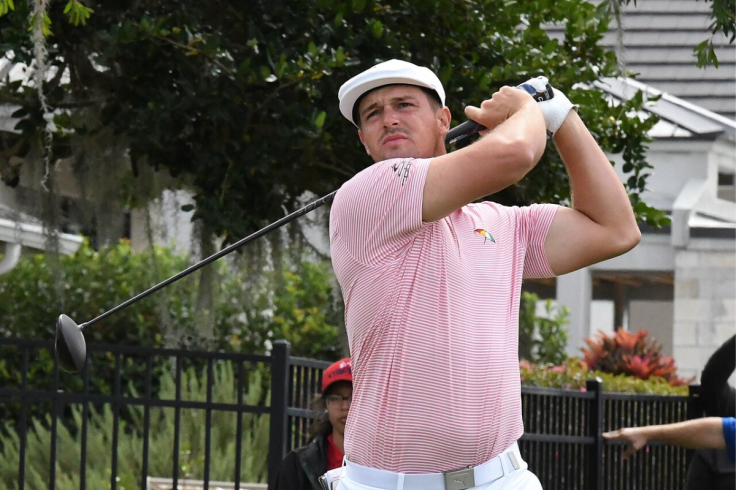
Bryson DeChambeau's bid to seize control of The Open Championship took an unexpected turn on Friday after a two-stroke penalty wiped away part of an outstanding second round and reshaped the leaderboard at Royal Birkdale.
The R&A assessed Bryson DeChambeau a two-stroke penalty following his second round in the 164th Open Championship for allegedly improving his lie in the tall grass before his second shot on the fifth hole.
— ESPN (@espn) July 17, 2026
More: https://t.co/4ZFv35LuR1 pic.twitter.com/TsplG9GrDC
The American had finished the day at seven under par after firing one of the strongest rounds of the championship. But hours later, the R&A ruled that he had breached Rule 8.1 by improving the area of his intended swing on the fifth hole, reducing his score to five under and dropping him back into a tie for fifth heading into the weekend.
The decision left DeChambeau within striking distance of the leaders, but it transformed what had looked like a momentum-building round into one of the tournament's biggest talking points.
The Rules Decision
The incident centred on DeChambeau's second shot from thick rough on the par-four fifth hole. Television footage showed him moving long grass behind his ball before making his swing, prompting officials to review whether he had improved the conditions affecting his stroke.
After examining the evidence, the R&A concluded that he had breached Rule 8.1, which prohibits players from deliberately improving the conditions affecting a stroke, including the area of an intended swing.
R&A chief executive Mark Darbon described the ruling as a 'clear-cut decision', emphasising that officials applied the Rules of Golf rather than making a subjective judgement about the player's intentions.
According to Reuters, the penalty was confirmed around 13 holes after the incident occurred, creating the unusual spectacle of DeChambeau's completed round being revised long after many spectators believed his score was settled.
A Costly Setback
The ruling immediately altered the complexion of the championship.
Instead of finishing Friday at seven under and firmly in contention near the top of the leaderboard, DeChambeau slipped back to five under, leaving himself with more work to do over the final two rounds.
Although the penalty did not end his title hopes, it significantly narrowed his margin for error.
The timing also amplified its impact. DeChambeau had produced one of the day's standout performances, only for the post-round decision to overshadow much of the discussion about his golf.
Speaking afterwards, DeChambeau accepted the ruling without dispute.
'It is what it is,' he said. 'I have to move on.'
That response reflected the reality facing players at major championships, where even minor infractions can carry significant consequences under golf's strict rules.
Leaders Capitalise
While DeChambeau's score moved backwards, others strengthened their positions.
Sam Burns surged into contention after matching the championship scoring record with a brilliant second-round 62, while Scottie Scheffler remained among the leading challengers as the tournament approached the weekend.
After Ryan Fox's 62 today, he joins Lucas Herbert and Sam Burns yesterday in tying the all-time major championship scoring record.
— ESPN (@espn) July 18, 2026
There were five rounds of 62 in major golf history entering this week ⛳
There have been THREE in the last two days 🤯 pic.twitter.com/BN6JjQyP16
The revised standings meant DeChambeau entered Saturday tied for fifth rather than occupying a stronger position closer to the lead, changing both the leaderboard and the psychological landscape of the championship.
Instead of building on an almost flawless Friday, he now faced the challenge of recovering from one of the tournament's most significant rules decisions.
Why The Penalty Matters
The episode also highlighted one of golf's defining characteristics: championships can turn not only on spectacular shots but also on meticulous adherence to the rule book.
Rule 8.1 is designed to prevent players from improving the conditions surrounding a stroke, even when any advantage gained appears marginal. Because the rule focuses on whether the conditions were improved rather than whether an advantage was intended, officials determined that the penalty had to be applied once the breach was established.
That strict interpretation has long been part of elite golf, where competitors are expected to protect the integrity of the game by playing under the same standards regardless of circumstance.
For DeChambeau, the ruling became another reminder that success at The Open often depends as much on precision and discipline as power.
Weekend Still Within Reach
Despite the setback, DeChambeau remains firmly in contention.
The two-stroke penalty narrowed his path rather than ending it, leaving him close enough to challenge if he can produce another low round over the weekend.
His third-round pairing with Burns promises to be one of Saturday's most closely watched groups, with both players pursuing their first Claret Jug under very different circumstances.
For DeChambeau, the focus now shifts from the controversy to the golf itself. The penalty may have derailed his charge, but with 36 holes still to play at Royal Birkdale, his hopes of lifting the Claret Jug remain alive.
© Copyright IBTimes 2026. All rights reserved.