

FIFA Opened The Door For Trump And Balogun, Now France And Britain Are Walking Through
Nations Demand Equal Treatment After FIFA's Suspension Leniency
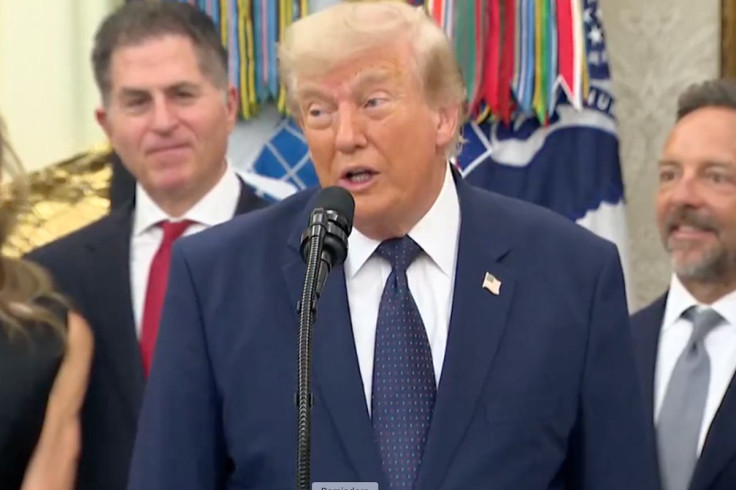
FIFA is facing a wave of formal appeals from France and Britain after its decision to suspend a one‑match ban for United States striker Folarin Balogun at the reported request of US President Donald Trump.
On Monday, the French Football Federation lodged an official appeal asking FIFA to rescind a tournament booking for playmaker Michael Olise, while British lawmaker Noah Law submitted a formal letter urging the governing body to delay a ban for England defender Jarell Quansah.
Britain Demands Equal Treatment From FIFA Disciplinary Committee
The fallout has been immediate, with rival nations now demanding the exact same leniency that was handed to the tournament hosts. Law explicitly cited the American intervention in a sternly worded letter sent directly to FIFA president Gianni Infantino on Monday morning.
FIFA triggered global outrage just days ago when it invoked Article 27 of its disciplinary code to suspend a one‑match ban for Balogun for a full year. The United States forward had been sent off against Bosnia and Herzegovina, but his punishment was miraculously paused after Trump reportedly applied direct political pressure on the world football leadership.
Quansah received a straight red card during England's clash against Mexico. While the Labour Member of Parliament conceded that the refereeing rules must be applied consistently and that the red card was technically correct, he argued that the resulting suspension must be paused so the defender can face Norway in Saturday's quarter‑final, maintaining a strictly level playing field.
Law pointed out that the integrity of any major international tournament depends entirely on rules being applied equally to all participating nations. He told Infantino that it would be impossible to justify a situation in which one player benefits from a delayed suspension while another in materially similar circumstances does not.
The politician even elevated a sporting dispute to a matter of global diplomacy, noting in his letter that 'at a time when our multilateral system and the international rules‑based order is under threat, I urge you to treat this matter with the utmost seriousness.'
🚨🏴 NEW: Labour MP Noah Law has asked FIFA President Gianni Infantino to delay Jarell Quansah’s red card suspension until after the World Cup pic.twitter.com/NQJ2Nn1URm
— Politics Global (@PolitlcsGlobal) July 6, 2026
France Pushes FIFA To Revisit Olise Yellow Card
Across the English Channel, the French camp is battling its own disciplinary issue ahead of a crucial quarter‑final tie with Morocco in Foxborough, Massachusetts. The French Football Federation formally approached the world governing body to rescind a yellow card handed to Olise during a tense last‑16 victory over Paraguay on Saturday.
The Bayern Munich forward was booked following an altercation with Matias Galarza. Replays clearly showed the French player grabbing his opponent's shirt. The Paraguayan then fell to the ground holding his face in apparent agony.
Should Olise pick up another booking against Morocco, he would automatically miss a potential semi‑final against either Spain or Portugal. French officials maintain that their appeal is not a direct response to the American situation and simply seeks to correct an isolated injustice, but the timing is striking given the recent leniency shown towards the United States.
The Royal Belgian Football Association has released a statement regarding the decision to allow USA's Folarin Balogun to play. #FIFAWorldCup pic.twitter.com/O7SNVXCzeg
— TSN (@TSN_Sports) July 6, 2026
UEFA Warns FIFA Over Erosion Of Tournament Integrity
The volume of appeals now flooding into Infantino's office highlights the wider consequences of the governing body's decision. European football officials are increasingly vocal as these disciplinary disputes threaten to overshadow the latter stages of the tournament.
The Royal Belgian Football Association immediately appealed the ruling that allows Balogun to face their national team in Monday's knockout tie at Lumen Field in Seattle. UEFA escalated the situation by releasing a strong statement on Monday afternoon that accused global executives of crossing a definitive red line.
The European governing body declared that the integrity of the game is now fundamentally at stake. They expressed disbelief at what they described as an 'unprecedented, incomprehensible and unjustifiable' decision to bend the rules for a host nation.
The controversy raises questions over how Infantino plans to govern a tournament where disciplinary calls risk being viewed as the subject of political negotiation rather than the conclusion of a referee's judgement.
© Copyright IBTimes 2026. All rights reserved.