

Wimbledon Defaults 15-Year-Old for Racket Bounce, But No One Was Hurt: Other Players Escaped Default for Same Offense
Young German player Ida Wobker disqualified for unsportsmanlike conduct after racket enters stands.
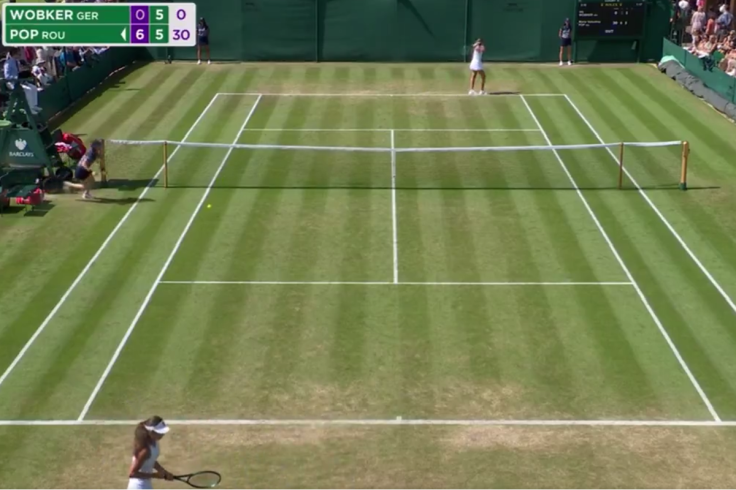
LONDON, July 5, 2026 – Wimbledon defaulted 15-year-old German junior Ida Wobker on Court 11 after her racket bounced off the grass and into the stands during a girls' singles first-round match, even though no injury was reported. The All England Club said the player was disqualified for unsportsmanlike conduct after the incident against Romania's Maria Valentina Pop, who had led 6-0, 5-5 when the match was halted.
Wobker had missed a backhand long before losing her temper and throwing the racket towards the court. It skipped up into the first few rows, and while it was not clear whether anyone was struck, officials took a strict line after what was described as a lengthy delay for a verdict. There was no prize money in the junior draw, so no fine followed, only the default.
Why Wimbledon Took A Hard Line On Court 11
The ruling turned on the sport's most unforgiving instinct: player safety, not just whether someone was visibly hurt. Wimbledon's referees acted because the racket went into the spectator area, and the club confirmed the default on Sunday, not because the moment looked dramatic on television. That distinction matters, because in tennis the line between a warning and a default is often drawn by how close an object comes to fans, not only by the player's intention.
For context, the debate around the decision is not only about one teenager losing her match. Tennis has seen similar crowd-related incidents before, including Stefanos Tsitsipas at Wimbledon in 2022, when he hit a ball into the Court One crowd and was fined rather than defaulted. Alex Michelsen also avoided a default after striking a spectator with a ball at the 2024 Winston-Salem Open, a case that drew fresh scrutiny over how such incidents are punished.
— Cristian (@tennisclips28) July 4, 2026
Wimbledon, The Rule Book And 'Unsportsmanlike Conduct'
The Wimbledon call was rooted in unsportsmanlike conduct, and the chair umpire announced the default after officials reviewed the incident. There was no suggestion that Wobker meant to hit anyone, but tennis officials do not need proof of injury to act when behaviour crosses into what they view as unacceptable risk. In a sport that prizes control, a racket leaving the court and entering the stands is the sort of incident that can turn a junior match into a disciplinary example in seconds.
It is also worth noting how young this stage was, and how thin the margins were. Wobker had already been fighting from a set down and was level at 5-5 in the second when the point went wrong, the frustration spilled over and the match effectively ended there. Pop, the Romanian opponent, moved on, while Wobker was left with a default that will likely follow her longer than the scoreline.
Teenager's Default Sparks Questions Over Consistency
For a 15-year-old, the episode is the sort of thing that can become much bigger than the match itself, especially at Wimbledon, where junior incidents can be magnified by the setting. The incident also underlines a basic feature of elite tennis, which is that officials tend to treat anything involving spectators with extreme caution. That caution, in this case, brought a swift end to Wobker's run, even though no one appears to have been hurt.
The All England Club's decision now sits alongside other recent examples where the same act, or something close to it, did not always lead to the same outcome. That is the difficult part of tennis discipline, and it is why players, coaches and fans keep arguing over where frustration stops and punishment begins. In Wobker's case, the answer came quickly, and it was final.
© Copyright IBTimes 2026. All rights reserved.