

Lewis Hamilton Blames Ferrari Engineers And Himself For Front Wing Setup Error At British Grand Prix
Hamilton's third-place finish marred by setup errors and penalties at Silverstone
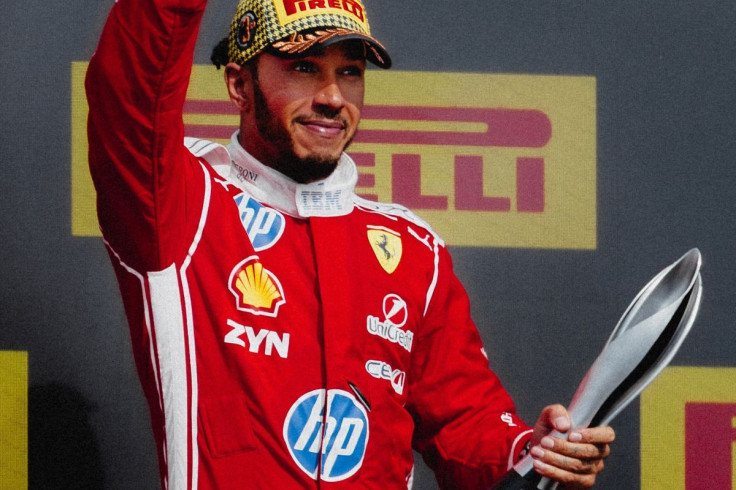
Lewis Hamilton's hopes of a home podium higher than third at the British Grand Prix were undone by what he called a 'massively' misjudged front wing setting, with the seven-time world champion openly blaming both himself and his Ferrari engineers for the error that left his car 'lacking front-end' grip at Silverstone.
The 41-year-old endured a turbulent Sunday that included a false start, a poorly timed pit stop and a post-race summons to the stewards over a yellow-flag incident. Although he lost what he believed could have been second place to Mercedes driver George Russell, Hamilton said an underlying set-up mistake, rather than the race-day drama alone, was at the heart of his frustrations.
'Magic' Pace Vanishes After Front Wing Misjudgement
Hamilton was candid about the contrast between his strong practice pace and the race itself. While his team-mate thrived, he struggled with a car that felt fundamentally different once the lights went out.
'Congrats to Charles, Charles did a great job today,' Hamilton said, after Charles Leclerc took victory. His own race, however, was defined by a front-end balance that never returned to what he had felt earlier in the weekend.
'All the magic that I had on Friday just disappeared through the weekend,' he told reporters. He then pinpointed the aerodynamic miscalculation. 'I was just lacking front-end and we massively under-egged it with the front wing. That's my fault and the engineering fault.'
It was a rare public admission from a veteran who usually keeps technical matters within the garage and underlined how disappointed he and Ferrari were at letting a stronger result slip away.
🚨 Lewis Hamilton has been given a five-second penalty for a false start
— Formula 1 (@F1) July 5, 2026
Here's the moment 👇#F1 #BritishGP pic.twitter.com/2aI6Hvoc5C
Penalties, Pit Calls And A Lost Shot At Second
Alongside the set-up setback, Hamilton's race was shaped by a series of incidents. He was handed a five-second time penalty for a false start early in the afternoon, which he served at his first pit stop. That left him on the back foot strategically.
Later, under a late Safety Car, Hamilton and Ferrari chose to pit, dropping him behind Russell, who stayed out and went on to secure second place.
Asked afterwards about the decision and his inability to make full use of fresher tyres, Hamilton stood by the call. 'Yeah, we could have predicted that. We did what we thought was right,' he said, adding that the closing laps were 'all a bit of a blur'.
His afternoon then took another twist when he was summoned to the stewards for a possible yellow-flag infringement on Lap 38. Speaking to Sky Sports F1 before the verdict, he said he was braced for more sanction.
'I'm probably going to get a penalty right now as well,' he admitted in the paddock. 'I went through a yellow flag and I didn't [see] it. Jumped the start, yellow flag, when it rains, it pours.'
P3 for Lewis! 👊
— Formula 1 (@F1) July 5, 2026
Podium No. 15 at the British Grand Prix 👏#F1 #BritishGP pic.twitter.com/UMbaSdN1nu
Why Stewards Opted For A Reprimand, Not A Harsher Penalty
In the end, the governing body issued Hamilton with a formal reprimand, his first of the season, for 'failing to slow for a single yellow flag at Turn 9'. The stewards' documents, however, highlighted several mitigating factors that counted against a time penalty.
They found that Hamilton entered the relevant sector before any yellow lights or flags were displayed trackside. The yellow warning on his steering wheel only appeared once he was already on the straight towards Turn 10, by which point he was well inside the yellow-flag zone. Evidence also showed there was no light panel directly in his line of sight at that moment, limiting the time available to react.
The stewards further noted the on-track context. Hamilton was in the middle of a battle with Max Verstappen as he approached the sector, and, expecting a counter-attack, he was paying close attention to his mirrors rather than to the green light panel at the end of the sector.
The official records described a driver focused on the threat behind, even as the usual safety rules still applied.
Despite these considerations, the stewards concluded that once the warning appeared on his steering wheel, Hamilton did not make a clear reduction in speed.
As a result, they found he had not fully met the safety requirements and confirmed the reprimand, closing a difficult weekend at Silverstone that began with strong promise and ended with Hamilton reflecting on a costly set-up call and the margins that decided his race.
© Copyright IBTimes 2026. All rights reserved.