

'Legalised Property Theft': Squatters Seize Murdered Uni Professor's Villa As Orphans Fight Back
The Jeziorski family's legal battle highlights the challenges of California's property laws.
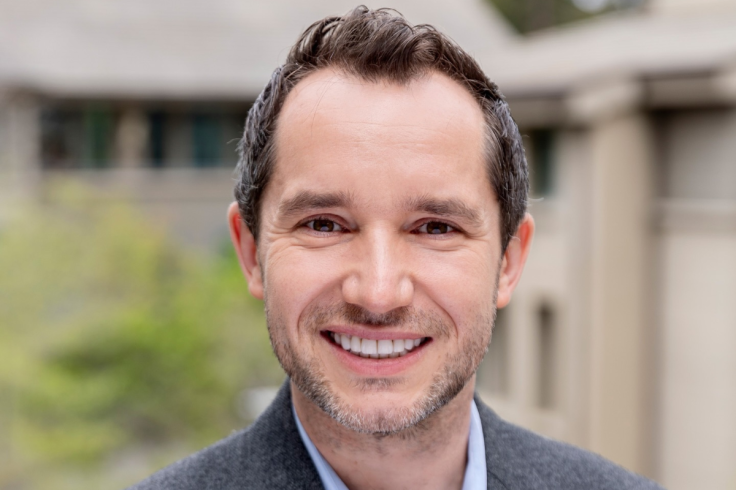
A year after UC Berkeley professor Przemyslaw Jeziorski was murdered in Greece, his Berkeley villa is now occupied by alleged squatters, and his orphaned children are locked in a grinding legal fight that critics say shows how California's rules on 'legalised property theft' can leave grieving families powerless.
Jeziorski, a respected academic at the Haas School of Business, used to rent out the Berkeley property as an Airbnb. After his death last year, the home was meant to pass to his two children.
Instead, according to the family and their lawyer, people moved in without permission, claimed tenant status and have allegedly sold his personal belongings and caused thousands of dollars' worth of damage, all while the case crawls through the courts.
A System Stacked Against Owners
The news came after the family discovered that, under California law, the people now living in Jeziorski's home could not simply be removed by police, even though the legal owner was dead and his ex‑wife, who had previously handled the property, was in jail overseas at the time and later died by suicide.
The alleged squatters insist they have a lease. The family insist that is impossible because no one with the authority to rent the place out was in a position to sign anything. That is the standoff, and it is precisely where the state's rules on so‑called squatters' rights kick in.
Their lawyer summed it up bluntly, saying the 'problem with the law in California as to squatters is that there's no legal mechanism to remove squatters from the house in a situation where they claim they have a lease, even when it's clear that the claims the squatters are making are legally impossible.'
In other words, the mere assertion of a tenancy forces a formal eviction process, even when the paperwork looks absurd on its face.
Under standard procedures in California, removing an unauthorised occupant takes at least three to four months, with legal and court fees often running between $3,000 and $4,000 (£2,231 and £2,975), not counting mortgage payments, lost rent or utility bills that keep coming in.
That is for ordinary cases. For a bereaved family, outmanoeuvred in their own inheritance, the costs are not just financial.
Property owners and their lawyers argue that what sounds like a technical housing rule has real human fallout. Once individuals have been in a home for 30 days, they can claim protections as occupants.
If they manage to stay in continuous, uncontested possession for five years, California law allows them to seek legal ownership. Some US states, by comparison, require thirty years of uninterrupted occupation for a similar claim. Five years versus thirty is the sort of detail that turns a niche legal concept into a very expensive nightmare.
The rules also sharply limit what owners can do to defend what is theirs. It is illegal to change the locks, shut off utilities or otherwise 'self‑evict' someone, even if you are convinced they are there unlawfully. Break that rule, and suddenly the person you consider a squatter can claim to be the victim.
It is not hard to see why some locals have started calling the situation 'legalised property theft.' The Jeziorski case, in particular, has become shorthand among critics for a system that, in their view, bends over backwards for people who know how to game it while leaving orphans in limbo.
A Berkeley Tragedy That Taps A Deeper California Fear
A university professor is murdered abroad. His ex‑wife ends up imprisoned in another country and later dies by suicide. His children, the intended heirs, are minors.
Into that vacuum step strangers who, according to the family, begin treating the Berkeley villa as their own, allegedly selling furniture and belongings the professor left behind.
Law enforcement has a limited role once a civil claim of tenancy is made. Officers cannot simply walk in and drag people out, even if family members are standing on the pavement saying this is their dad's house.
Police are bound to respect the civil process, which means directing owners to court rather than physically intervening.
Court filings and statements from the family's legal team describe a drawn‑out process in which every delay benefits the people inside the house.
The longer they stay, the more entrenched their claim becomes. Even if they ultimately lose, the damage to the property and to the children's sense of security is already done.
There is also the awkward politics. California's political class has spent years talking about 'land acknowledgements' and historic injustices over stolen land.
Critics of the current laws argue that this rhetorical focus sits uncomfortably alongside a present‑day system that appears to make it extremely hard for some owners, especially those without deep pockets or legal savvy, to quickly reclaim their homes when they are targeted.
Behind the emotion sits an uncomfortable policy debate about homelessness, poverty and crime. The state has poured around $24 billion (£17.85 billion) into homelessness programmes between 2019 and 2024, at an estimated cost of roughly $160,000 (£119,000) per person, only to see the homeless population rise by about 20 per cent over the same period.
Those are the numbers, and they have become a stick with which opponents batter almost every housing policy coming out of Sacramento, fair or not.
Housing advocates argue that robust tenant protections are necessary to stop wrongful evictions and abuse by landlords.
Property advocates fire back that the balance has swung too far, pointing to cases like Jeziorski's as evidence that well‑intentioned protections have morphed into a playbook for organised home‑jacking. Both sides talk about justice. One side is staring at a locked front door that used to be home.
In Berkeley, Jeziorski's villa remains in the hands of the alleged squatters while the lawyers keep filing motions. His children, who once might have imagined moving back into their father's house, are watching the legal clock tick, aware that time in this system favours the people inside.
If there is a clearer illustration of how abstract rules can upend real lives, California's property courts have not produced it yet.
Nothing is confirmed yet so everything should be taken with a grain of salt, and it cannot be independently verified, so take everything lightly.
© Copyright IBTimes 2026. All rights reserved.