

COP31 Climate Deal Fails as Fossil Fuel Rift and Finance Row Leave Poorer Nations Without Funds
The Antalya summit ran into Sunday as negotiators failed to agree on a draft lacking explicit fossil-fuel language and a clear financial target for adaptation support
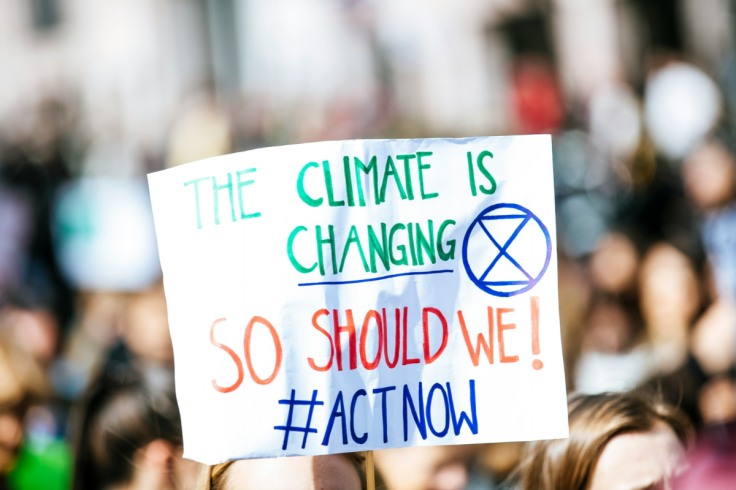
For the first time since Copenhagen in 2009, countries failed to agree an overarching political decision at a UN climate summit, as COP31 talks in Antalya, Turkey, ran into Sunday. The EU and several climate-vulnerable countries rejected a proposed text that made no direct mention of coal, oil or gas, with divisions over fossil fuels and climate finance proving impossible to bridge.
Talks extended beyond their scheduled Friday finish. Many developing countries wanted clearer and more substantial commitments from wealthier nations to finance adaptation to climate impacts, while others insisted any agreement must explicitly address fossil fuels, the main driver of human-caused global warming.
Fossil Fuel Rift Leaves Draft Without Clear Commitment
Delegates received a revised draft in the early hours of Sunday. It omitted explicit references to fossil fuels and referred only indirectly to the COP28 commitment in 2023 to 'transition away' from them in energy systems.
Irish minister Darragh O'Brien, speaking on behalf of the EU, said the bloc strongly objected to the proposed text. He said the decisions fell far short of the ambition needed to tackle climate change and described the absence of any reference to fossil fuels as 'unconscionable'. Panama and the Marshall Islands also criticised the draft, arguing that it failed to deliver the ambition required.
Russia opposed language calling for a move away from coal, oil and gas, warning that doing so too quickly could threaten energy affordability and security. Saudi Arabia's delegate, Mohammad Ayoub, said Arab countries had 'continued to engage in good faith'. He argued that the region bore a relatively small share of historical greenhouse gas emissions.
UN Secretary-General António Guterres said he was 'deeply disappointed'. In his 22 November closing statement, he said powerful fossil fuel interests continued to 'take a page from Big Tobacco's playbook' by distorting science, delaying policy, blocking action and accumulating huge profits. Former US vice-president Al Gore said a small number of oil-producing countries had blocked progress on fossil fuel language. Writing on X, he called for 'significant reform' of the COP process and said most countries wanted to move forward.
Finance Pledge Lacks a Funding Target
At COP30 in Brazil, countries agreed a goal of tripling adaptation finance. The proposed COP31 text, however, did not specify a dollar figure or a baseline for measuring the pledge. Developing countries said this left richer nations too much room to delay or dilute it.
'Rich nations and polluting governments cannot keep arriving empty-handed,' said Mohamed Adow of Power Shift Africa, an African climate and energy think tank.
Limited Progress Elsewhere, Calls for Reform
Some separate efforts advanced. More than 80 countries backed a target to raise electricity's share of global final energy consumption to 35% by 2035. Negotiators also made progress on proposals for a 'just transition mechanism' to support workers and communities as economies move towards cleaner energy.
UK Energy Secretary Miatta Fahnbulleh called the failure to reach an overarching agreement 'immensely disappointing'. She said the UK would keep working with international partners to build on progress made at the summit, and that its commitment remained 'unwavering'.
Turkey hosted the summit, while Australia led the negotiations under the two countries' joint arrangement.
UN climate chief Simon Stiell said the consensus process needed to evolve, with scope to improve, modernise and reform it. He told the BBC it had worked in the past, including at Paris, but acknowledged that it 'fell short' in Antalya. The next summit, COP32, is scheduled for Addis Ababa, Ethiopia, in November 2027.
Nearly 200 countries adopted the Paris Agreement in 2015, committing to hold warming to well below 2°C above pre-industrial levels while pursuing efforts to limit it to 1.5°C. The UN says current government policies point to about 2.8°C of warming by 2100.
© Copyright IBTimes 2026. All rights reserved.