

Elon Musk Debunks Viral SpaceX Story: Antonio Gracias 'Did Not Receive Any Equity' For $1 Million Loan
Here's a look at business relationship between Elon Musk and Antonio Gracias, and its impact on SpaceX and other ventures

Billionaire investor Antonio Gracias of Valor Equity Partners extended a $1 million loan to Elon Musk in 2008, a time when SpaceX was widely reported to be under severe financial pressure and facing potential bankruptcy. The episode has since become part of the company's early history, often cited as an example of the precarious conditions surrounding SpaceX's formative years.
More than a decade later, renewed attention on SpaceX's private market valuation and initial public offering plans has revived discussion around early investors and long-term returns. However, while SpaceX's valuation has risen substantially in private markets over time, any precise calculation of individual gains tied to early financing arrangements remains unverified due to the company's private structure.
Antonio Gracias lent Elon Musk $1 million in ‘08 to save SpaceX from bankruptcy for 7.2% of the company.
— SMB Attorney (@SMB_Attorney) June 6, 2026
It’s now worth $90 billion, making it the single greatest investment in the history of the world.
People over focus on Musk and forget the wealth he’s created for others. pic.twitter.com/dxMvEqFzG5
Despite renewed speculation about early financial support, Elon Musk has previously pushed back on narratives suggesting that the 2008 loan translated directly into equity ownership for Gracias. Instead, Musk has indicated that Gracias' exposure to SpaceX and related ventures came through broader investment activity linked to Valor Equity Partners across multiple funding rounds, rather than a single rescue transaction.
Because SpaceX remains a privately held company, ownership percentages and individual stake claims circulating in public discussion are not independently verifiable and should be treated as estimates rather than confirmed holdings.
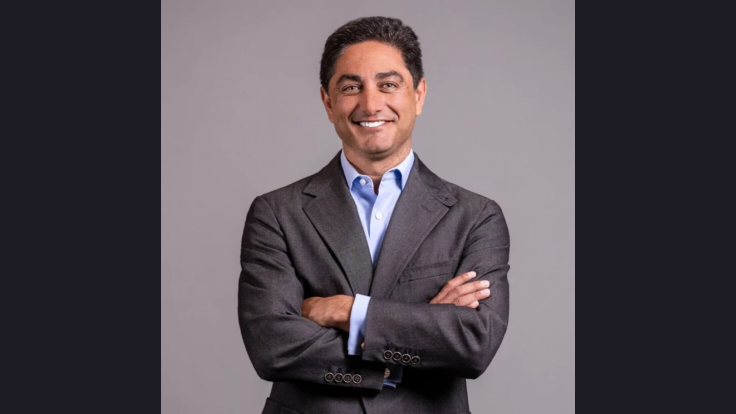
Musk and Gracias' Long-Standing Business Relationship
To fully understand the history of the $1 million loan given to Musk, let's first look at the financial relationship between Elon Musk and Antonio Gracias, which extends beyond SpaceX. Gracias has worked alongside Musk for more than two decades and has been involved in multiple Musk-affiliated ventures, including Tesla, SolarCity, Neuralink, and The Boring Company in advisory and governance roles.
In a post shared on the social media platform X in January 2025, Gracias described his long professional relationship with Musk, highlighting collaboration across several companies over time.
I have worked closely with Elon for over 20 years. His heart is pure, and his sole mission is to help humanity. During the darkest moments, he has shown me the path to choose courage and compassion over fear and hate. To believe anything else is absurd.
— Antonio Gracias (@AntonioGracias) January 23, 2025
That long-running association has also included coordinated investment activity, with Valor Equity Partners participating in multiple funding rounds across Musk-led companies. These investments have generally tracked Musk's expanding portfolio across electric vehicles, energy, infrastructure, and deep technology sectors.
The relationship has also included cross-investment activity. Musk has previously invested in funds associated with Valor Equity Partners, contributing capital to early fund structures that helped establish the firm's investment base.
Valor's portfolio has included companies across technology and defence-related sectors, reflecting a broader investment strategy beyond Musk-linked ventures.
This mutual participation has resulted in a sustained business relationship characterised by repeated alignment across overlapping investment cycles, rather than reliance on a single financing event.
Broader Context of Early Support
The 2008 SpaceX loan remains a frequently cited example of early-stage financial support during a period of uncertainty for the company. Musk has publicly acknowledged that early backing from investors and partners played a role in sustaining operations during its formative years.
However, available reporting and Musk's own comments indicate that the loan should not be interpreted as a direct mechanism for equity ownership or a guaranteed pathway to participation in SpaceX's long-term valuation growth.
That was a short-term loan when I ran out of money in 2008. He did not receive any equity for it.
— Elon Musk (@elonmusk) June 6, 2026
Antonio’s ownership stems from absolute support, even when it looked like SpaceX would fail, and many investments over 2 decades.
One could not ask for a better friend. He is a…
Instead, the Musk–Gracias relationship is better understood as a long-term investment and governance partnership spanning multiple companies and funding cycles, with outcomes shaped by broader participation in private market financing rather than isolated early-stage transactions.
Recent reporting on SpaceX's planned initial public offering by The New York Times indicates that the company is targeting a reference price of $135 per share, implying a valuation of approximately $1.75 trillion based on the reported structure of the offering. The figure reflects institutional IPO pricing mechanics rather than publicly traded market activity, and has been cited in financial reporting covering the listing process.
© Copyright IBTimes 2026. All rights reserved.