

'Is This a One-Time Deal for Musk?': Judge Slams SEC for Letting Elon Keep $150M in Twitter Profits"
A US judge reluctantly approved Elon Musk's $1.5m SEC settlement over his late Twitter disclosure.
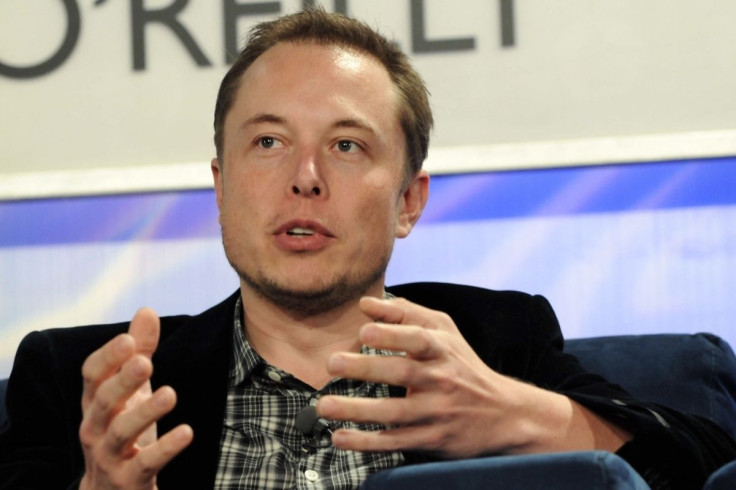
A US federal judge in Washington approved a settlement on Wednesday that will see Elon Musk pay $1.5 million (£1.12 million) to the Securities and Exchange Commission for failing to promptly disclose his 2022 Twitter share purchases, but warned in blunt terms that the deal lets him keep about $150 million (£111 million) in alleged illicit profits and may be a 'one-time deal for Musk.'
The SEC sued Musk in January last year over his rapid accumulation of Twitter stock in early 2022. Under the Securities Exchange Act of 1934, any investor who crosses the 5 per cent ownership threshold in a public company must notify the SEC within 10 days.
Regulators alleged that Musk waited 21 days before filing, all while continuing to buy shares, and that this delay allowed him to purchase additional stock at artificially low prices while other investors sold in the dark.
Judge Questions 'One-Time Deal for Musk?' Settlement
In her written order from the District Court for the District of Columbia, Judge Sparkle Sooknanan said she was 'constrained' to sign off on the SEC's agreement with Musk but laid out her 'significant misgivings' about what the agency had accepted.
Under the settlement, a trust in Musk's name will pay a $1.5 million (£1.12 million) civil penalty to the SEC. According to the judge, that figure represents 'literally one percent' of the $150 million (£111 million) the regulator alleges Musk saved by dragging his feet on disclosure.
The structure of the payment, she noted, appeared designed 'for the sole purpose of Mr Musk being able to say that no relief was entered against him in his personal capacity.'

Sooknanan stressed that the court's job in an SEC settlement is limited. It can only decide whether the agreement meets 'minimum standards of fairness and reasonableness,' not rewrite the terms or dictate enforcement strategy.
'The Court may not step in the shoes of the SEC, notwithstanding that the SEC's decision-making in this case raises red flags,' she wrote. 'So mindful of that principle and, as always, its proper role, the Court is constrained to accept the Parties' agreement despite its significant misgivings.'
Sooknanan asked whether 'the SEC will afford other alleged securities-law violators such solicitude. Or is this a one-time deal designed for Mr Musk negotiated without the involvement of the SEC lawyers litigating this case?'
In other words, the judge signed the paperwork, but she also fired a flare in the direction of the agency's leadership.
How Musk's Twitter Trades Led To A $150m Question
To recall, the SEC's complaint centred on Musk's stealth build-up of Twitter stock in March 2022. Regulators say he crossed the 5 per cent ownership line, which triggered the 10‑day reporting clock, but failed to file on time. Instead, over a 21‑day period, he kept buying, ultimately lifting his stake to around 9.2 per cent and spending an additional $500 million (£373 million) on Twitter shares during the delay.
When Musk finally disclosed his holdings, Twitter's share price jumped sharply as the market digested the arrival of its largest outside shareholder. According to the SEC's lawsuit, the value of his stake surged to $2.89 billion (£2.16 billion) once his involvement became public.
The regulator alleged that Musk's late filing allowed him to buy stock for far less than he would have paid in a properly informed market, and that he 'saved at least $150 million (£111 million)' as a result.
The SEC also claimed that investors who sold during the undisclosed buying spree suffered 'substantial economic harm,' since they missed the price bump that followed his eventual filing. Those are the people one might expect to see some money in a securities case like this. They will not receive a cent under the deal.
Initially, the SEC had asked the court not only to fine Musk but to force him to disgorge, meaning hand over, the profit he allegedly made by violating the rules. Somewhere between that opening position and Wednesday's order, the regulator shifted from trying to claw back $150 million (£111 million) to accepting 1 per cent of that sum and no compensation for investors.
'The SEC has decided not to press for relief that could compensate Mr Musk's alleged victims, instead settling on a form of relief that would go into the government's pocket,' Sooknanan wrote.
SEC Under Fire As Musk Keeps Profits
In case you missed it, this is not Musk's first run‑in with the SEC. He has a long and messy history with the regulator, and has repeatedly cast it as a political or personal foe.
This backdrop made Wednesday's outcome even more striking to legal watchers, who are used to the SEC insisting that violators give up their gains.
Sooknanan stopped short of accusing the agency of favouritism, but her language about 'red flags' and a 'one-time deal for Musk' pointed to a deeper discomfort over whether a high-profile billionaire was being handled more gently than a lesser known trader might be.
Her order also nudged the debate into overtly political territory. 'Whether the Executive Branch through the SEC has done enough to hold Mr Musk to account for his alleged violation is, like many other issues, for our citizenry to decide at the ballot box,' she wrote.
That is an unusually direct way of saying, if voters think regulators are going soft on powerful figures, they can punish the politicians who oversee them. It is also a reminder that, for all the legal technicalities, enforcement priorities are ultimately set by people appointed in Washington.
The SEC, for its part, has not publicly expanded on why it shifted from seeking full disgorgement to a relatively modest fine that Musk can route through a trust. There is nothing in the court order to suggest new evidence that weakened the case. Instead, the record simply shows that the regulator changed its mind on what was worth pursuing.
It cannot be independently verified why the SEC scaled back its demands or whether internal disagreements shaped the final deal, so take any speculation on motive lightly. What is clear from the judge's own words is that she sees a gap between what the law would allow the agency to ask for and what it actually took.
For investors who sold Twitter shares in those three weeks in 2022, that gap will feel more than theoretical. Musk walks away having paid a relatively small sum, keeps what the SEC itself called at least $150 million in savings, and gains another story for his running battle with regulators.
Whether it is really a 'one-time deal for Musk' is now a question for the next person who crosses that 5 per cent line and decides to play fast and loose with the clock.
© Copyright IBTimes 2026. All rights reserved.