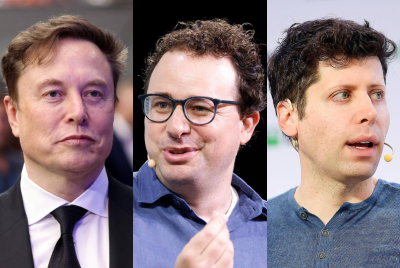
'You're Not Going to Intimidate Me': House Dem Refuses to Back Down From Elon Musk's Threat of Prison
Musk and Khanna's Dispute Highlights Tensions Over Foreign Aid and Accountability

Elon Musk and Democratic Representative Ro Khanna have escalated a dispute over foreign aid cuts, with Khanna accusing Musk's Department of Government Efficiency (DOGE) reforms of putting millions of lives at risk and Musk responding with threats of legal action.
Elon Musk promising a lawsuit over Congressman Ro Khanna's claim that DOGE cuts resulted in the deaths of millions of children. @jasoninthehouse & @lh_carter sound off with @dagenmcdowell @brianbrenberg pic.twitter.com/6PktyPjKC5
— The Bottom Line (@BottomLineFBN) June 22, 2026
The confrontation began after Khanna criticised DOGE's role in reducing United States Agency for International Development (USAID) programmes and funding, arguing that the cuts could lead to millions of preventable deaths. Musk rejected the accusation and said it was 'time to sue this liar', later adding that the lawmaker 'should be in prison'.
The clash has moved beyond a disagreement over government spending, becoming a wider argument over accountability, the consequences of foreign aid reductions and the influence of wealthy individuals in shaping public policy.
Khanna Targets Musk Over Aid Cuts
Speaking on the 'I've Had It' podcast, Khanna said there 'needs to be accountability' for Musk over his involvement in DOGE's efforts to reduce federal spending and reshape government programmes.
The California Democrat argued that public attention had focused on government efficiency efforts while overlooking the potential consequences for people who depend on US-backed humanitarian programmes. He said Musk had 'possibly sentenced to death' 4.5 million children around the world by helping to dismantle USAID support.
Khanna's remarks referred to a July 2025 study published in The Lancet, which estimated that proposed USAID cuts could contribute to as many as 14 million additional deaths by 2030, including 4.5 million children under the age of five.
Researchers behind the study warned that reductions in funding for health programmes, disease prevention and emergency assistance could reverse progress made in improving public health outcomes in vulnerable countries.
Khanna later repeated his criticism in a video posted online, challenging Musk to debate him over the consequences of DOGE's decisions.
'The world's richest person has spent all day... going after me,' Khanna said. 'Why? Because I cited an academic study that his DOGE cuts may lead to the deaths of millions of children overseas.'
'You know, Elon, I thought you were a free speech guy. Why not debate me on these issues instead of threatening lawfare?' he added.
'You're not going to be able to intimidate me,' Khanna said.
Musk Responds With Legal Threats
Musk responded directly to Khanna's comments on social media, writing that it was 'time to sue this liar'.
He later escalated his response, saying Khanna 'should be in prison'.
Time to sue this liar
— Elon Musk (@elonmusk) June 22, 2026
Musk did not identify any specific offence or explain what legal basis would support criminal action against the lawmaker. Khanna's comments were linked to published academic research, which could make any potential defamation argument more complex.
The exchange reflects a broader pattern in Musk's public disputes, with the entrepreneur frequently responding directly to critics through his social media platform rather than traditional political channels.
The Debate Over USAID
At the centre of the dispute is the future of USAID, the US agency responsible for delivering humanitarian assistance and development programmes around the world.
Supporters of DOGE's cuts have argued that government spending requires greater scrutiny and that some programmes were inefficient or unnecessary. Critics have warned that reducing foreign aid could disrupt essential services, particularly in countries dependent on US-backed health, nutrition and emergency assistance.
The The Lancet study cited by Khanna estimated that reductions in USAID funding could result in millions of additional deaths over several years. However, the findings represent a projection based on modelling, rather than a record of confirmed deaths caused by the cuts.
That distinction has become central to the political dispute. Khanna argues that the research demonstrates the human cost of dismantling aid programmes, while Musk and his supporters argue that reducing government spending is necessary to improve efficiency and accountability.
The disagreement therefore extends beyond the two men involved. It reflects a larger debate over whether government efficiency initiatives can reduce waste without damaging programmes that support vulnerable populations.
Democrats Rally Behind Khanna
Khanna's decision to challenge Musk directly has drawn support from some progressive commentators, including journalist Mehdi Hasan.
Hasan argued that Democrats should be willing to confront powerful figures and pointed to Musk's response as evidence that Khanna had taken on a significant political opponent.
It's funny that Musk wants to sue @RoKhanna over his speech because:
— Mehdi Hasan (@mehdirhasan) June 22, 2026
1) Musk claimed to be a free speech champion and absolutist, which of course he isn't.
2) Khanna simply linked to an academic study of deaths from USAID cuts, which Musk presided over.
3) Musk just called… https://t.co/oIHvh0Y7PG
The reaction highlights Musk's growing role in political debate beyond his business interests, particularly after becoming involved in efforts to reshape government spending and federal operations.
For now, the dispute remains a public confrontation rather than a legal battle. Khanna has called for a debate over the consequences of USAID cuts, while Musk has responded with threats of litigation and accusations against the lawmaker.
The immediate argument is about foreign aid and government spending, but the broader questions are larger: who should be accountable for policy decisions, how far efficiency campaigns should go and what responsibility comes with extraordinary influence over public institutions.
© Copyright IBTimes 2026. All rights reserved.
- Recommended For You