'Pathetic Crash-Out': Elon Musk Dragged for Childish Reaction to Journalist's 'Loathed' Comment
Tech billionaire sparks viral backlash during a high-profile interview after lashing out at Zanny Minton Beddoes over questions regarding his widespread unpopularity.
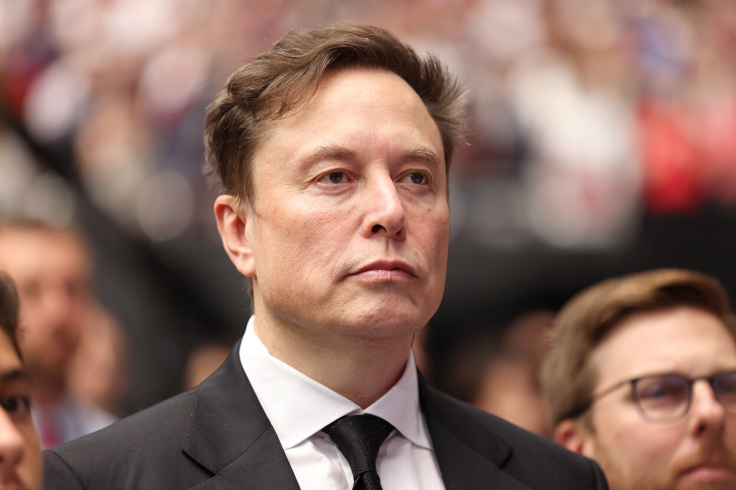
Billionaire tech executive Elon Musk clashed sharply with The Economist editor-in-chief Zanny Minton Beddoes during a wide-ranging interview at the Texas Gigafactory.
The high-profile confrontation erupted on 23 July 2026 when the veteran journalist challenged the Tesla and SpaceX chief executive regarding his controversial commentary on European politics, immigration, and public image, explicitly stating that certain segments of the 'public loathe him'.
Musk dismissed the critique instantly, declaring that he does not care about personal hostility while weaponising his massive follower metrics on X to claim broad public support.
He then launched a direct verbal counterattack against institutional media, asserting that journalists suffer from abyssal approval ratings and are despised far more than corporate tech titans.
Why Do Some People Loathe You?
The session began as a fairly standard high-profile interview with Musk in his capacity as X's chief executive, touching on his popularity, his ownership of the platform and his public image.
Minton Beddoes then put to him what many observers might see as an obvious question after years of online controversy, asking: 'Some people do loathe you, but do you understand why?'
What followed was less a careful unpacking of that hostility than a defensive pivot, with Musk insisting he did not care and attempting to turn the scrutiny back on the journalist sitting opposite him.
He initially acknowledged the premise in passing. 'Maybe some people do loathe me, and that's probably true. I don't care,' he said. Almost immediately, though, Elon Musk redirected the conversation towards his follower numbers on X, citing his vast online audience as proof that the balance of opinion was in his favour. 'The fact that, as you pointed out, a quarter of a billion people follow me, is that I think a lot more people actually like me than don't,' he argued.
The exchange has since gone viral, with critics accusing Musk of a 'pathetic crash-out' and elevating an otherwise routine question into a spectacle of personal grievance.
Absolute crash out from Musk after he’s presented with the reality that many, many people fucking hate him pic.twitter.com/W1MCPIr1uC
— Rachel Gilmore (@atRachelGilmore) July 24, 2026
Elon Musk Turns His Fire on the Media
When the line of argument about follower counts failed to end the matter, Musk shifted into a more familiar posture, attacking the media itself. Directly addressing Minton Beddoes, he said: 'I think a lot more people hate you, and the media, more than you realise.'
He then claimed that journalists are widely despised by the public, asserting that 'the favourable view of journalists is, like, 15 percent.'
He did not cite a specific survey for that figure on stage, and the precise percentage could not be verified from the material available. Even so, the sentiment itself is not new. Musk has repeatedly framed himself as locked in a struggle with traditional media and has promoted X as a kind of alternative public square where, in his telling, journalists no longer enjoy automatic deference.
'The shoe is on the other foot. They hate you. They hate you far more than they hate me,' he said, sounding less like a corporate executive than a man intent on evening a score. It was this playground-style reversal that prompted some viewers to compare the exchange to an argument between schoolchildren rather than a serious discussion about public accountability.
Throughout the back-and-forth, Minton Beddoes largely declined to rise to the bait. On stage, she simply noted that her own profile was far lower than his, telling him: 'I think very few people know who I am relative to you, so I don't think I play in the same game.' The remark undercut his attempt to personalise the issue and drew quiet praise online for its understated delivery.
Elon Musk Extends the Row on X
The confrontation might have ended there, but Musk took the dispute back to his own platform, posting disparaging comments about Minton Beddoes to his tens of millions of followers. At one point, he referred to her as having a 'little bird brain' in a post that was quickly screenshotted and shared by critics who felt it underscored the thinness of his skin.
Reaction on X was swift and, for the most part, unforgiving. Users mocked what they saw as Musk's inability to handle even gently phrased criticism, especially when the question had been framed as an attempt to understand, not to insult. Several commentators noted the irony of a man so fixated on free speech appearing so rattled by a single line about being 'loathed.'
Supporters of Musk, many of them part of the hardcore community that regards him as a visionary, defended his stance and echoed his attacks on the press. But the louder chorus came from those who regarded the episode as another example of a powerful tech figure conflating journalistic scrutiny with personal persecution.

In their view, no amount of money or follower counts can quite disguise how bruised he still appears when confronted with the simple fact that a great many people, online and off, now find him deeply unappealing.
Nothing in this latest flare-up changes the fundamentals of Musk's position. He still runs X, still commands a huge audience and still shapes public debate almost at will. Yet the scene of a billionaire arguing about who is more hated, the platform owner or the person asking the questions, offers a sharp, if unflattering, snapshot of how brittle that power can look under the lights.
© Copyright IBTimes 2026. All rights reserved.
- Recommended For You