

Elon Musk's DOGE Allegedly Planned to Mark 2.7 Million Living People — Including US Citizens — as Dead
When a government can declare you 'dead' with a keystroke, the line between paperwork and power suddenly looks very thin.
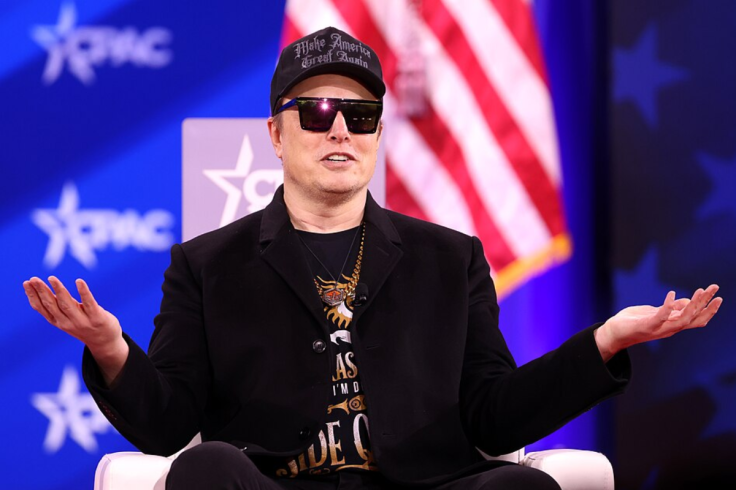
Elon Musk's Department of Government Efficiency, known as DOGE, allegedly backed a Trump-era plan in Washington that would have marked 2.7 million living people as dead in Social Security records, according to a whistleblower disclosure made public this week. The proposal, which never went ahead, was described as part of an immigration enforcement push overseen by the Department of Homeland Security.
The disclosure centres on a little‑known corner of the federal bureaucracy that briefly carried Musk's brand. DOGE was touted as an efficiency drive, borrowing the billionaire's name and rhetoric about disruption for government use. The whistleblower report now suggests that, behind that glossy framing, officials were considering a tactic that would have used Social Security's Death Master File to exert pressure on migrants inside the United States.
The allegations come from Jeremiah Schofield, a former senior Social Security Administration (SSA) executive who spent more than 25 years at the agency. In a 49‑page submission, first reported by The Washington Post and later obtained by NewsNation, Schofield describes an extraordinary request from DHS that he says landed on his desk during the Trump administration.
At the heart of it was a list of 2.7 million names. According to Schofield, DOGE and DHS officials wanted those individuals recorded as dead in the SSA's Death Master File. That database is used widely by banks, insurers and government agencies to verify that a person has died. When the system gets it wrong, it can freeze a person's ability to work, collect benefits or access their own money.
Schofield alleges that this risk was not an unfortunate side-effect but part of the strategy. The plan, as he outlines it, was to push targeted individuals into what amounted to a bureaucratic choke point. Either they would give up and leave the US voluntarily, or they would be forced to appear in person at Social Security offices to fix their records, where immigration officers could find them.
In an interview with The Washington Post, Schofield recalled his reaction to an internal call about the idea. 'That call was one of the most disappointing calls I've been in in my 25-year career. I was shocked. I couldn't believe what I was hearing,' he said.
Elon Musk has altered his birth certificate to change his name to “Dogeus Maximus” pic.twitter.com/jcfuvrnxKw
— Daily Noud (@DailyNoud) June 5, 2026
DOGE, Elon Musk and the 'Death' List
The involvement of Musk's DOGE team is not laid out in fine bureaucratic detail, but Schofield's disclosure links the project directly to that unit. DOGE had been set up as a kind of in‑house consultancy focused on cutting red tape and rethinking how agencies shared data. On paper, that mission sounds dry. In practice, the whistleblower material suggests, it was being harnessed for far more aggressive immigration tactics.
To test DHS's request, Schofield says he pulled a sample of 25 names from the 2.7 million‑strong list. According to his filing, most of those he checked were either US citizens or lawful permanent residents. 'At a minimum, none of the 25 people were dead,' the document states.
If that small sample is representative, it would mean the vast majority of people earmarked for digital 'death' might have had a legal right to remain in the country. That is one of the reasons, Schofield says, that he refused to implement the plan. Lawyers for the SSA, he adds, subsequently advised that carrying it out would be unlawful.
The SSA has since confirmed to NewsNation that it did not add the 2.7 million names to the Death Master File. In other words, the worst‑case scenario never materialised. But the fact that such an option was discussed at senior levels is now under scrutiny.

Social Security Data and the Reach of Musk's DOGE
A DHS spokesperson, responding to questions from NewsNation, did not address the specific accusations about DOGE or the push to mark people as dead. Instead, the department issued a broader defence of inter‑agency data sharing, saying it was 'essential to identify who is in our country, including violent criminals, determine what public safety and terror threats may exist so we can neutralize them, and identify what public benefits these aliens are using at taxpayer expense.'
Read charitably, that is the standard homeland security line. Read against Schofield's account, it sounds like a justification in search of limits. The disclosure lands on top of separate concerns already swirling around DOGE's use of Social Security data.
In March, The Washington Post reported on a different whistleblower complaint involving a former DOGE employee. In that case, the allegations focused on access to two highly sensitive Social Security databases and claims that information from one system had been kept on a thumb drive. The handling of that data is now part of an ongoing review.
None of the new claims about DOGE, Musk's role in its branding, or the 2.7 million‑name list has been confirmed by an independent investigation, and no court has weighed in. For now, they remain whistleblower allegations, backed by documents but contested in spirit by the agencies involved, and should be treated with caution until tested further.
Yet even at this stage, the picture is unsettling. A supposedly technocratic efficiency project, stamped with the name of one of the world's most famous entrepreneurs, appears to have been used to float a plan that would have 'killed off' millions of Americans and legal residents on paper to smoke out a smaller number of immigration cases. It raises a blunt question that goes well beyond one administration or one billionaire's branding experiment: how far the state should be allowed to weaponise the invisible files that quietly decide whether a person is, in practice, allowed to exist.
© Copyright IBTimes 2026. All rights reserved.