

Fact Check: Did Ángel Di María Say Lionel Messi Hid the Truth Behind Argentina's World Cup Final Defeat?
Exploring the viral claim allegedly made by Ángel Di María linking the AFA corruption scandal to Argentina's World Cup final defeat.
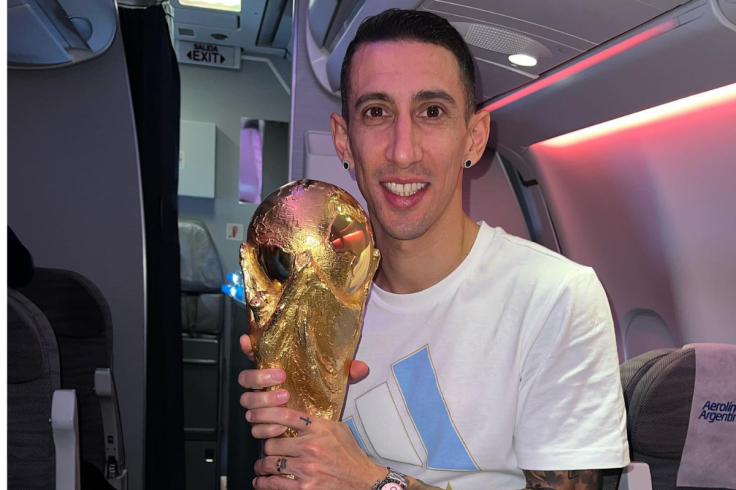
A quote is doing the rounds online, and it is explosive. A viral social media clip purports to show former Argentina winger Ángel Di María suggesting that Lionel Messi is sitting on a secret about what really went wrong in the 2026 World Cup final.
There is just one problem: no reputable outlet has reported or corroborated these remarks. However, the claim quickly gained traction on social media, with many users speculating that something had distracted Argentina before the final.
Did Di María Really Accuse Messi of Hiding the Truth?
The claim stems from a viral social media video that attributes the following remarks to Di María — none of which have been verified by IBTimes or any other reputable outlet:
I really do think something went down behind the scenes before the final, and I've asked Leo about it, but he refused to tell me what went down.
The clip continues with Di María supposedly speculating about a link to the Argentine Football Association controversy and the team's poor performance, saying: Because that performance was really weird. I've never seen our team play like that in a friendly, let alone in a crucial World Cup final match.
The video also attributes the following remarks to him: 'I probably think it might be down to the AFA corruption scandal. Maybe something big came up that mentally disbalanced the team because, for me, I just find what happened weird.'
Crucially, this alleged interview has not been verified. No mainstream broadcaster, newspaper or wire agency has published or corroborated these remarks, and Di María's own public statements since the final tell a markedly different story.
Ex-Argentina player Ángel Di María revealed in an interview that something actually happened behind the scenes before the final, which he said Leo Messi refused to tell him about, prompting the poor performance that ultimately led to Argentina losing to Spain in the World Cup… pic.twitter.com/v46H2OtLgo
— SIR1⭐️ (@sa10nee) July 22, 2026
Di María's Actual Words: A Tribute, Not a Controversy
Rather than casting doubt on his former teammates, Di María posted a heartfelt tribute on his Instagram Story shortly after the final whistle. "You are history, you are legends, and no one can ever take that away from you', he wrote.
He continued: 'The best national team in the history of our country. Five consecutive finals, no one will ever be able to take that away from you. THANK YOU SO MUCH FOR EVERYTHING.'
The message came after Spain edged Argentina 1-0 in extra time at MetLife Stadium in New Jersey. Substitute Ferran Torres struck the only goal of the game in the 106th minute, finishing from close range to deny Messi a second consecutive World Cup and hand Spain their second title.
Argentina, reduced to ten men after Enzo Fernández's second-half sending-off, never registered a shot inside 90 minutes, ultimately falling to a Spanish side that dominated possession throughout.
Inside the AFA Corruption Scandal Overshadowing Argentina
The Di María rumour is separate from the AFA investigation, but the two have been conflated online.
The Argentine Football Association (AFA) is facing scrutiny after reports that the FBI is investigating alleged money laundering linked to the federation's US operations.
Argentine outlet La Nación has reported that at least £195 million ($260 million) moved through the American financial system, alongside a further £43 million ($57 million) in transfers with no clear purpose.
'This is a textbook example of how viral rumours operate in the modern sports media landscape', said Nick Harris, a media law lecturer at City, University of London. 'The public should treat such claims with extreme caution unless they are backed by a credible source or verified by a major outlet. A rumour that spreads on social media is not news — it is content that requires verification before it can be reported responsibly.'
However, there is no publicly available evidence that the reported investigation affected Argentina's preparations or performance during the tournament. Off-the-pitch, investigators are examining the AFA's dealings, but on the pitch, many pundits instead pointed to Spain's midfield dominance as the true reason for Argentina's downfall.
Unless a credible source produces evidence that Di María made these remarks, the claim should be treated as unverified — and readers should treat any suggestion of a conspiracy with extreme caution.
© Copyright IBTimes 2026. All rights reserved.