

Did FIFA Break Its Own Rules? World Cup Final Halftime Duration Sparks Questions
Controversy arises as FIFA's first-ever World Cup halftime show extends break beyond standard regulations
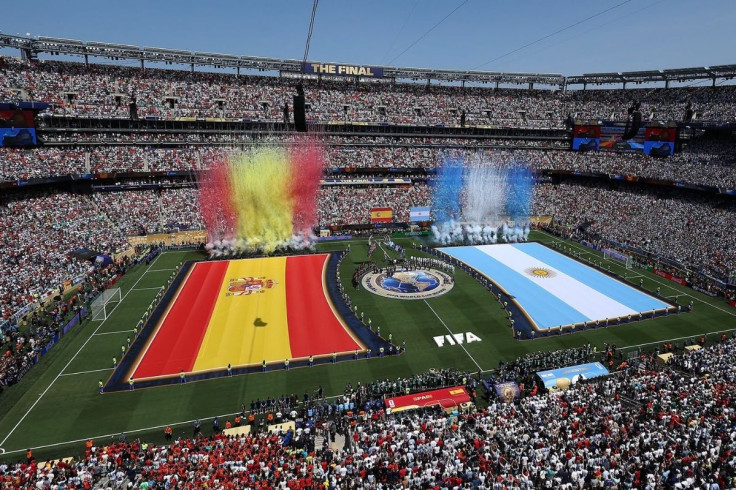
Questions have emerged over whether FIFA followed its own competition regulations after the halftime break during the 2026 World Cup final between Argentina and Spain appeared to exceed the standard interval permitted under football's Laws of the Game.
The final, played on 19 July at MetLife Stadium in East Rutherford, New Jersey, featured FIFA's first-ever Super Bowl-style World Cup halftime show. While the performance itself reportedly lasted around 11 minutes, reports suggested the full interval stretched beyond 27 minutes, significantly longer than the traditional 15-minute break.
The extended pause quickly became one of the most discussed moments of the final, with supporters questioning whether football's governing body had applied different standards during its biggest match.
What FIFA's Regulations Say
Under the Laws of the Game maintained by the International Football Association Board (IFAB), halftime intervals are generally limited to 15 minutes.
FIFA's World Cup regulations also state that players are entitled to a 15-minute break. However, organisers reportedly made special arrangements to accommodate the tournament's inaugural halftime show, which required staging and equipment to be installed directly on the pitch.
The issue attracted attention because the final was the first World Cup to embrace a halftime entertainment format similar to major American sporting events.
Why the Break Lasted Longer
Unlike previous tournaments, the 2026 final included a large-scale performance that required extensive logistical preparation.
Organisers had to assemble and remove equipment before play could resume. The delay also followed pre-match ceremonies that reportedly affected the event schedule.
FIFA has increasingly embraced entertainment-driven presentations as it seeks to expand the tournament's global appeal. While many fans welcomed the spectacle, others questioned whether commercial considerations were beginning to influence football's traditional structure.
Fans Question Consistency
The controversy sparked a broader debate about consistency in football governance.
Some supporters argued that if players, coaches and clubs are expected to follow strict regulations, governing bodies should be held to the same standards. Others dismissed the issue as largely symbolic, noting that the extended break had no direct impact on Spain's 1-0 extra-time victory over Argentina.
Even so, the discussion highlighted growing concerns about the balance between sporting regulations and commercial entertainment.
Football governance experts note that similar debates have emerged in other major competitions whenever commercial or broadcast requirements appear to conflict with established regulations. While organisers often argue that exceptional events require additional flexibility, critics contend that transparency is essential if supporters are to maintain confidence in how the game is managed. The World Cup final's extended interval has therefore become part of a wider discussion about how football balances tradition with the demands of a global entertainment industry.
Why the Debate Is Unlikely to Disappear
There is no indication that FIFA faces any formal disciplinary consequences over the halftime duration.
However, the episode demonstrates how closely supporters scrutinise every aspect of modern football. As tournaments continue to grow in scale and commercial value, questions about scheduling, entertainment and regulatory consistency are likely to remain part of the conversation.
For FIFA, the halftime show may be remembered as a milestone moment in World Cup history. For many fans, it has become a test of whether football's governing bodies are prepared to follow the same rules they expect everyone else to obey.
© Copyright IBTimes 2026. All rights reserved.