

MAGA Alliance Fractures Over Toxic Talc As Donald Trump Allegedly Abandons Asbestos Checks To Please Billionaire Execs
The FDA's unexpected withdrawal of a talc testing rule exposes tensions between Trump's MAGA base and Kennedy's health movement.
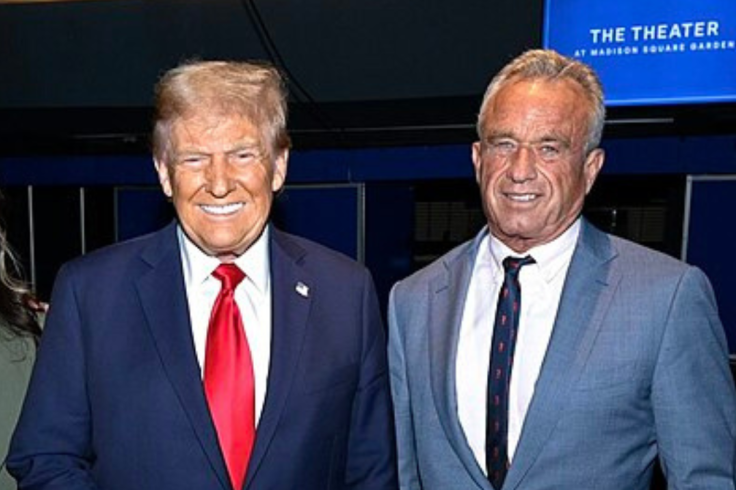
A little-noticed federal rule that would have forced companies to test talc powders for asbestos vanished the day before Thanksgiving, and its quiet death has become the sharpest fault line yet in the fraying alliance between Donald Trump's MAGA base and Robert F. Kennedy Jr.'s Make America Healthy Again movement.
On 25 November 2025, the Food and Drug Administration withdrew a proposed rule requiring manufacturers of talc-based cosmetics to screen them for asbestos, a document that carried Kennedy's name at the bottom. Yet Kennedy and his senior deputies appeared to have no idea it was coming, according to an investigation built on more than 35 sources and internal records.
Within hours, a Johnson & Johnson lawyer was using the withdrawal in a California courtroom to fight one of the tens of thousands of cancer claims against the company.
A Thanksgiving-Eve Withdrawal That Blindsided Kennedy's Own Team
The rule had roots in the Biden era. The FDA first proposed it on 27 December 2024 under the Modernisation of Cosmetics Regulation Act of 2022, which directs the agency to set standardised methods for detecting asbestos in talc products.
As the withdrawal notice in the Federal Register confirms, the plan would have required companies to test their talc, or the raw ingredient, before manufacturing and to keep records proving it.
The withdrawal, signed in Kennedy's name, argued that scrapping the testing requirement actually served his Make America Healthy Again priorities and would help ensure safe additives in the food and drug supply. Few people inside the department seemed to know where the directive came from, citing five sources. Kennedy's top deputy, Stefanie Spear, scrambled to work out who was behind it.
According to two of those sources, White House lawyers and the Office of Management and Budget pushed the reversal through after Johnson & Johnson executives visited the White House. Two senior administration officials pushed back, saying the withdrawal 'went through the process it's supposed to go through' and that the OMB routinely rewrites rules. One source familiar with the events called it a 'heavily coordinated pharma job.'
How the Timing Handed Johnson & Johnson a Courtroom Win
The document surfaced on the FDA's public inspection list on the morning of 25 November 2025. A little more than three hours later, and three days before it appeared in the Federal Register, a Johnson & Johnson lawyer raised it in a California trial, using it to challenge a plaintiff's expert on the health effects of inhaling talc, according to a court transcript reviewed by sources.
The stakes for the company are enormous. Johnson & Johnson faces tens of thousands of lawsuits alleging that asbestos in its talc baby powder caused ovarian and endometrial cancers, and it has spent close to £740 million ($1 billion) defending the litigation. The withdrawal allowed its lawyers to argue that the company had complied with every testing rule, proposed or final, and the jury found it had not been negligent.
Johnson & Johnson maintains that its powder is safe. On its company-run facts page, it states that decades of independent testing confirm its products 'do not contain asbestos and do not cause cancer,' and notes that most juries have sided with it.
A company spokesperson said that the withdrawn rule was flawed and had been published without a proper assessment of its impact on the public. Because talc turns up in baby powder, cosmetics, medicines, and even some sweets, the reversal offered relief well beyond a single firm.
A Pattern of MAHA Priorities Bending to Corporate Muscle
The talc episode fits a wider pattern that has strained the MAGA-MAHA marriage. In February 2026, Trump signed an executive order declaring glyphosate, the main ingredient in the weedkiller Roundup, essential to national defence and agriculture, and instructing officials not to put the 'corporate viability' of its producers at risk. Kennedy had spent years as an environmental lawyer fighting the chemical, which the World Health Organisation classifies as a probable carcinogen, so his later endorsement of the order struck allies as a capitulation.
Then came tobacco. In early May 2026, the White House pushed the FDA to approve fruit-flavoured vapes, days after a subsidiary of R.J. Reynolds donated about £3.7 million ($5 million) to a pro-Trump super PAC, as the New York Times first reported. The pressure prompted FDA Commissioner Marty Makary, a Kennedy ally, to resign, followed out the door by other officials loyal to him.
The White House insists the two movements are indivisible, with spokesman Kush Desai casting MAHA and MAGA as the same. Even so, Kennedy's revamped vaccine schedule was blocked by a federal judge in March, measles has come roaring back, and his standing inside the department has visibly shrunk. Insiders told sources the reform era is fading, one describing the partnership as a marriage of 'damaged trust.'
As one health-department insider put it, even in a marriage, there comes a point when 'it's time to separate.'
© Copyright IBTimes 2026. All rights reserved.