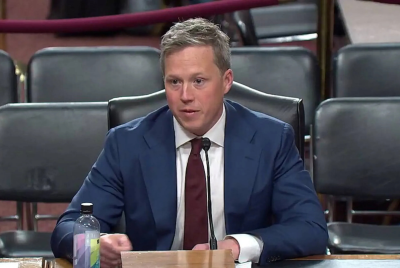
Pete Hegseth 'Ragdolled' In Court As Lawmaker Calls Him 'Unfit to Lead' And 'Embarrassment' In Heated Legal Clash
Judge Leon's ruling highlights constitutional implications and ongoing controversies surrounding Pete Hegseth's tenure.

A federal judge handed Pete Hegseth one of the most stinging courtroom rebukes of his tenure, ruling the Pentagon chief had 'trampled' on a sitting senator's constitutional rights in an unprecedented attempt to punish a military retiree for political speech.
The ruling, issued 12 February 2026 by US District Judge Richard Leon, came after Senator Mark Kelly of Arizona sued Hegseth on 12 January 2026 in the US District Court for the District of Columbia, charging that the defence secretary's effort to censure him and reduce his military retirement rank and pay was 'unlawful and unconstitutional.'
The lawsuit and its outcome did not arrive in isolation. By the time Leon issued his 29-page injunction, lawmakers from both chambers had placed Hegseth at the centre of what critics described as a cascade of constitutional violations, security failures, and leadership breakdowns stretching from his first months in office.
The words chosen to describe Hegseth in those same months, by senators, retired generals, and his own inspector general, have been pointed: 'unfit to lead,' 'national embarrassment,' and 'unqualified yes man.'
The Censure Letter and the Lawsuit That Followed
The legal clash originated in a video released in November 2025, titled 'Don't Give Up the Ship,' in which Kelly and five other Democratic lawmakers with military or intelligence service backgrounds urged active-duty personnel and intelligence officers to 'refuse illegal orders' amid concerns about Trump administration directives.
Hegseth responded in early January 2026 by issuing a formal Secretarial Letter of Censure against Kelly, a retired Navy captain who served 25 years before entering the Senate, initiating proceedings under 10 US Code to reduce his retirement grade and pay, and warning that Kelly could face 'criminal prosecution or further administrative action' if he continued making similar statements.

The censure letter, obtained by CNN, stated: 'When viewed in totality, your pattern of conduct demonstrates specific intent to counsel servicemembers to refuse lawful orders. Your conduct has had, and continues to have, a detrimental impact on military discipline and good order.' Kelly did not retreat.
'Pete Hegseth is coming after what I earned through my twenty-five years of military service, in violation of my rights as an American, as a retired veteran, and as a United States Senator whose job is to hold him accountable,' Kelly said in a statement on 12 January.
Kelly's lawsuit, filed simultaneously with five co-defendants including the Defence Department, the Navy, and Navy Secretary John Phelan, argued that Hegseth's actions violated his First Amendment rights and the Constitution's Speech or Debate Clause, which grants legislators immunity for official acts.
The filing stated the administration had responded to Kelly's remarks 'with extreme rhetoric and punitive retribution,' with both Hegseth and President Trump labelling his statements as 'sedition' and 'treason.'
A grand jury empanelled in Washington to consider potential charges against Kelly and the five other lawmakers in the video declined to indict any of them on 10 February 2026, two days before Leon issued his ruling.
This is absolute Box Office 🔥🤣
— Roshan Rai (@RoshanKrRaii) April 6, 2026
🇺🇸 Rep. Carbajal : You are an embarrassment to this country, Get the hell out and let someone competent lead.
🇺🇸 War Monger Pete Hegseth : Mr Chairman, where is the decorum 😭
Man almost started crying. pic.twitter.com/FSH80B7lmE
Judge Leon's 29-Page Rebuke and Its Constitutional Implications
At a preliminary hearing on 3 February 2026, Judge Leon appeared visibly sceptical of the administration's position, telling the Justice Department's attorney: 'You're asking me to do something the Supreme Court and the DC Circuit has never done.'
The administration had argued that existing restrictions on First Amendment protections for active-duty members should be extended to cover retired officers; the government's lawyer could not cite a single law, regulation, or relevant case to support the position. Nine days later, Leon issued the injunction.
The 29-page ruling stated plainly: 'This Court has all it needs to conclude that Defendants have trampled on Senator Kelly's First Amendment freedoms and threatened the constitutional liberties of millions of military retirees.'
Leon invoked Bob Dylan and two centuries of US constitutional tradition to reject Hegseth's position, writing that the administration should 'reflect and be grateful for the wisdom and expertise that retired servicemembers have brought to public discussions.'
A friend-of-the-court brief filed by former senior military officials had warned that serving members were already declining to speak on public matters out of fear of retaliation. Leon called that 'a troubling development in a free country.'
This will be immediately appealed.
— Pete Hegseth (@PeteHegseth) February 12, 2026
Sedition is sedition, “Captain.” https://t.co/dKrvhqy1a5
Hegseth said he would 'immediately' appeal and posted on social media: 'Sedition is sedition, "Captain."' Kelly responded by posting a highlighted excerpt from the ruling. His attorney, Benjamin Mizer, had argued throughout the case that the Pentagon's actions threatened not just Kelly but every retired service member in the United States, 'senator or not.'
https://t.co/saHrSw5xK6 pic.twitter.com/ElMcksn5bQ
— Captain Mark Kelly (@CaptMarkKelly) February 12, 2026
Classified Signal Leaks and the Inspector General's Findings
The Kelly case unfolded against a backdrop of separate and compounding controversies. In March 2025, The Atlantic's editor Jeffrey Goldberg reported he had been inadvertently added to a Signal group chat in which Hegseth shared operational details of imminent US airstrikes on Houthi targets in Yemen, including aircraft types, launch times, and attack sequencing.
The National Security Council confirmed the chain 'appears to be authentic.' A second Signal group, which Hegseth himself created, was later reported by The New York Times and confirmed by the Associated Press: it included his wife Jennifer Rauchet, a former Fox News producer; his brother Phil Hegseth, a Pentagon adviser; and his personal lawyer, none of whom held security clearances for real-time war plans.
The Pentagon's acting inspector general released findings in December 2025 concluding that information Hegseth sent on his personal device 'matched the operational information USCENTCOM sent and classified as SECRET/NOFORN,' violated Defence Department policies on device use, and violated federal law on records retention.
The report stated that had the information been intercepted by a foreign adversary, it would 'clearly' have endangered US service members and the mission. Senate Armed Services Committee Chairman Roger Wicker said the information was 'of such a sensitive nature that, based on my knowledge, I would have wanted it classified.'
With the appeal pending and a federal court record now describing his actions as an unconstitutional trampling of free speech, Pete Hegseth's most consequential legal battle may only be beginning.
© Copyright IBTimes 2026. All rights reserved.
- Recommended For You