US-Iran Peace Deal: How It Shook Oil and Gold Markets Overnight
US-Iran peace agreement impacts oil and gold prices amid inflation concerns

Gold climbed about 0.6% on Thursday. Oil dropped sharply. A new US-Iran agreement changed the inflation calculus for markets overnight.
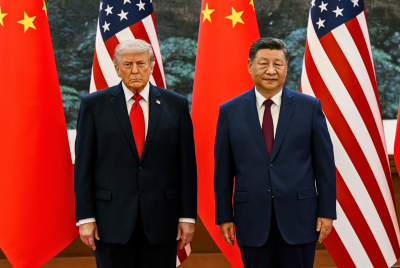
US President Donald Trump signed a memorandum of understanding (MoU) with Iran to end the war while at Versailles, stating, 'It's signed.' A US official said both Trump and Iranian President Masoud Pezeshkian signed the deal on Wednesday, though Iran has not confirmed it.
🚨 President Donald J. Trump has SIGNED the Iran Memorandum of Understanding at Versailles in France. 🇺🇸 pic.twitter.com/JQ6qlbvFAF
— The White House (@WhiteHouse) June 17, 2026
The United States and Iran released the text of their interim peace agreement, a 14-point document that extends an April ceasefire by 60 days to allow for final truce negotiations. The deal's immediate market effect was blunt: Brent crude fell to around $77.96 a barrel, while West Texas Intermediate (WTI), the US benchmark for oil prices, dropped to roughly $74.96, Reuters reported. For gold traders, cheaper oil carried a specific implication—lower energy costs reduce broad inflationary pressure, which in turn reduces the likelihood that the Federal Reserve will raise interest rates further. Lower rate expectations make gold, which pays no yield, more attractive relative to interest-bearing assets.
Spot gold rose about 0.6% to $4,284.67 per ounce, while US gold futures settled roughly 0.5% higher at $4,304.30 per ounce.
What the US-Iran Deal Actually Contains
The agreement is structured around immediate and phased concessions from both sides. Under its terms, the US Treasury Department will issue waivers for exports of Iranian crude oil, petrochemical products, and derivatives immediately after the memorandum is signed. The US will also lift its naval blockade, and both countries committed to restoring traffic in the Strait of Hormuz, the narrow waterway through which roughly a fifth of global oil supply passes, to pre-war levels within 30 days. The deal also includes the unfreezing of certain Iranian funds and the suspension of oil sanctions.

The agreement's geopolitical backdrop matters for understanding why gold had already begun moving. Gold futures rose sharply before the formal announcement as markets increasingly priced in the prospect of a deal after the US, Iran, and mediator Pakistan all signalled that a deal was nearly complete. That pre-announcement move suggests markets had begun pricing in the outcome before the text was published.
The oil price reversal also carried a political backstory. President Trump had warned earlier in the week that he could resume a US bombing campaign if Iran's leaders 'don't behave,' a statement that had temporarily pushed crude prices higher. The formal deal reversed those gains in full.
The broader equity market was weaker. The Dow Jones Industrial Average fell 507 points, or 0.98%, to close at 51,492.55 after earlier touching a fresh intraday record high. The S&P 500 declined 1.21% to 7,420.10, while the Nasdaq Composite lost 1.34% to close at 26,021.66.
Crude's decline, meanwhile, does the heavier lifting for gold's inflation argument. When energy prices fall, the consumer price index components most sensitive to oil, including transportation and utility costs, follow. That chain reaction reduces the Fed's incentive to tighten monetary policy, and a less aggressive Fed is historically one of gold's most reliable tailwinds. The deal's provision to normalise Strait of Hormuz traffic within 30 days, if honoured, would add a structural downward weight on crude prices beyond the initial reaction.
© Copyright IBTimes 2026. All rights reserved.
- Recommended For You