

Italian Catholic Church Admits 'Shame' as Over 38% of Priests Accused of Child Sex Abuse Remain in Ministry
A reported culture of silence and barriers to disclosure continue to complicate efforts to confront clerical abuse in Italy
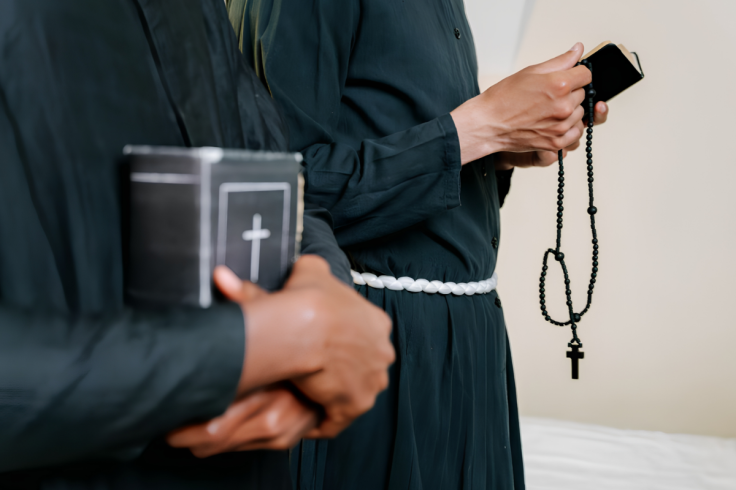
Italy's Catholic Church has acknowledged the scale of reported clerical sexual abuse involving minors in its first major study of the issue. The report examined 378 complaints involving 880 reported incidents, 356 alleged perpetrators and 385 alleged victims between 2001 and 2021. More than 38% of the clergy members named in the reports were still actively exercising their ministry, according to the findings.
Presenting the report in Assisi, Umbria, Cardinal Matteo Zuppi, head of the Italian Bishops' Conference, described the findings as deeply shameful and an 'open wound' that had damaged the Church's reputation and credibility.
'We feel shame, and we do not wish to hide it,' Zuppi said, acknowledging the scale of the abuse and the harm it had caused.
Report Details Patterns of Abuse and Investigations
The Italian Bishops' Conference found that 24.2% of reported incidents took place in ecclesiastical settings, including churches, sacristies, oratories and seminaries, while one-fifth involved abuse lasting more than two years. Approximately 70% of the reported victims were male, with boys aged 14 to 17 representing the most exposed group.
Zuppi condemned the abuse, saying it 'reveals an evil that has permeated the Church: we must call it by its name and acknowledge its atrocity'.
The accused priests had an average age of 43, and the vast majority were Italian. Of the 356 clergy members named in the complaints, 123 were referred to Italian judicial authorities, while 57 were convicted and sent to prison.
Separately, the Church adopted precautionary measures against 218 of the 356 clergy members named in the reports. In ecclesiastical proceedings with a known outcome, approximately 70% resulted in convictions, according to the study.
Church Faces Questions Over Accountability
The Italian Bishops' Conference said 87 of the 356 accused clergy members had been defrocked or temporarily suspended from ministry, while 39 had retired and 67 had died.
Zuppi said the findings should help the Church identify where action was needed and improve safeguards against further abuse.
'Understanding the phenomenon helps us to intervene where necessary. We want the Church to be a safe place,' he said.
Italy Faces Scrutiny Over Abuse Investigations
The report comes amid longstanding criticism of the Catholic Church in Italy over its handling of clerical sexual abuse allegations. While scandals have affected the Church in countries including the US, Ireland, Germany and Australia, Italy has faced particular scrutiny over what the Telegraph described as a longstanding sense of 'omertà', or a code of silence.
Reports of abuse by priests received by Italian dioceses more than doubled in twenty years, according to the first pilot study commissioned by the Italian Bishops' Conference (CEI) and presented today to the bishops gathered in Assisi.
— Vatican Report (@VaticanReportIt) November 25, 2026
The study, carried out by the Istituto… pic.twitter.com/f39nYgmY25
The Italian Church has been accused of reluctance to investigate abuse allegations, in contrast with Spain, Portugal, France and Germany, which commissioned independent reports into sexual crimes by clergy.
Last year, the Pontifical Commission for the Protection of Minors, a Vatican department, said Italy showed 'considerable cultural resistance' to investigating abuse. It also described a 'cultural taboo' surrounding victims and survivors speaking about their experiences.
Report Warns of Underreported Abuse
Despite the figures documented, the report's authors, the Istituto degli Innocenti di Firenze, a child protection agency, and the University of Bologna, cautioned that their findings did not provide a complete picture of clerical abuse in Italy.
The information gathered, they said, 'does not represent the full extent of the events that occurred and does not allow for a precise estimate of the actual number of abuses'.
The limitations have also drawn criticism from Rete l'Abuso, an association known as the Abuse Network. In its October 2025 report, the organisation said its observatory had recorded 4,395 survivors attributed to Catholic priests in Italy between 2000 and 2025, among 4,625 survivors recorded across all categories. The figures were based on cases handled directly by the association, survivors' accounts and documentation it had obtained.
The organisation dismissed the Church's report as inadequate and questioned what structural reforms and mandatory reporting obligations would be introduced 'to ensure that all victims have access to prompt and impartial justice'.
© Copyright IBTimes 2026. All rights reserved.