

Japan's Royal Family Is Running Out of Heirs, But Women Are Still Barred From Becoming Emperor
A leading scholar brands Japan's ban on female emperors 'plainly misogyny' as the world's oldest monarchy faces a growing succession crisis with just three eligible heirs remaining.
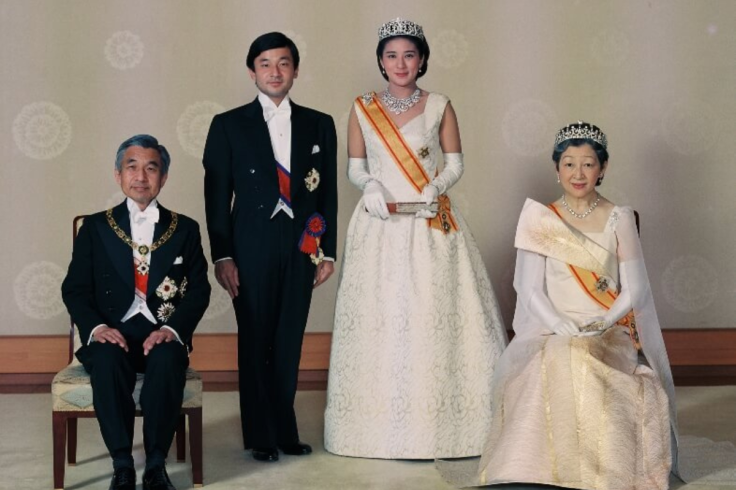
Japan's royal succession crisis is no longer a distant constitutional debate; it is an increasingly urgent question about the future of the world's oldest hereditary monarchy.
The Japanese monarchy now has just three eligible heirs to the Chrysanthemum Throne. Two are already over the age of 60, leaving 19-year-old Prince Hisahito as the only young male expected to carry the imperial line into the next generation.
Yet despite the shrinking pool of successors, Japan is not considering its most obvious solution. Instead of allowing a female emperor in Japan, the government is pressing ahead with proposals that preserve the country's centuries-old male-only succession system.
The approach has drawn fierce criticism from constitutional scholars, with one describing the continued ban on women inheriting the throne as 'plainly misogyny'.
#Japan is running out of #royals. So why won’t it let women become #emperor? @HanakoMontgome1, Junko Ogura, and @hkchrislau have the story.https://t.co/sTk30kWb1p
— CNN Asia Pacific PR (@cnnasiapr) July 14, 2026
A Monarchy Running Out Of Heirs
The succession problem is stark.
The current line of succession consists of Prince Hitachi, Emperor Naruhito's 90-year-old uncle, Crown Prince Fumihito, better known as Prince Akishino, who is 60, and Akishino's son, Prince Hisahito.
Hisahito's coming of age was a landmark moment because he became the first male royal to reach adulthood in 40 years. Rather than signalling stability, however, it highlighted just how few Japan's royal family heirs remain.
As the imperial family has grown smaller and older, even carrying out official engagements has become increasingly difficult.
With only three men eligible to inherit Japan's throne, the world's oldest hereditary monarchy is confronting a succession crisis. Its proposed solution: restore male descendants of former royal families, while continuing to exclude women from the throne. CNN's Hanako Montgomery… pic.twitter.com/0mq3Xq5BUM
— Dew You (@Dewyou239) July 14, 2026
Why Princess Aiko Cannot Inherit The Throne
At the heart of the debate is Princess Aiko, the only child of Emperor Naruhito and Empress Masako.
Popular with many members of the public, Aiko is widely viewed as a natural future representative of the imperial family. But under Japan's Imperial House Law, she cannot become empress simply because she is a woman.
If she marries a commoner, she would also lose her royal status under the current rules. Even any future son she might have would remain outside the line of succession.
That reality has become one of the clearest examples of why critics say women are barred from becoming emperor despite the monarchy's growing shortage of heirs.
Scholar Calls Ban 'Plainly Misogyny'
Among the strongest voices calling for reform is Professor Makoto Okawa of Chuo University in Tokyo.
'It is difficult to find any rational basis for refusing to allow a woman to become emperor,' he said.
Okawa argues that excluding women from succession should 'be understood plainly as misogyny', adding that the practice is neither required by Japan's Constitution nor as deeply rooted in history as many people assume.
His criticism cuts to the centre of the current debate. If the priority is ensuring the monarchy survives, why eliminate half the imperial bloodline before succession is even considered?
History Tells A Different Story
Supporters of reform often point to one overlooked fact: Japan has already had eight female emperors.
Although many ruled while male heirs were too young to ascend the throne, their reigns demonstrate that women have previously occupied the imperial throne.
The outright ban arrived much later through the Imperial House Law introduced during the Meiji era in 1889, establishing the modern system of male-only imperial succession.
For critics, that distinction matters. They argue today's restrictions are legal and political choices, not an unbroken national tradition.
The Government's Controversial Plan
Rather than opening succession to women, Prime Minister Sanae Takaichi's government wants to expand the pool of male heirs.
The proposal would allow certain unmarried men from former collateral branches of the imperial family to rejoin the royal household. Their future children would then become eligible to inherit the throne.
Princesses would also be allowed to remain members of Japan's imperial family after marrying commoners so they could continue carrying out official duties.
What the reforms do not do is change who can become emperor.
Okawa believes that makes the proposals little more than a temporary fix.
'As long as women remain excluded as subjects of imperial succession, it will be difficult to secure the fundamental stability of the imperial succession,' he said.
Tradition Or Reform?
Not everyone agrees that the law should change.
Tsuneyasu Takeda, a descendant of a former collateral imperial branch, argues that maintaining the paternal bloodline is essential to preserving the legitimacy of the throne.
'Tradition should not be overturned by a popularity contest,' he said, warning that changing succession rules could undermine public respect for the emperor.
Yet opinion polls have consistently shown that many Japanese people support allowing a female emperor, leaving a growing gap between public opinion and government policy.
For now, lawmakers appear determined to preserve tradition by finding more male heirs rather than allowing women to inherit the throne. But with only three eligible successors remaining, critics argue time is running out.
© Copyright IBTimes 2026. All rights reserved.