

Kim Jong Un Revives Grandfather's Diplomatic Playbook in Shock Move To Welcome 10 Foreign Envoys
Kim Jong Un revives his grandfather's diplomatic approach, but tensions with Switzerland raise questions about North Korea's openness
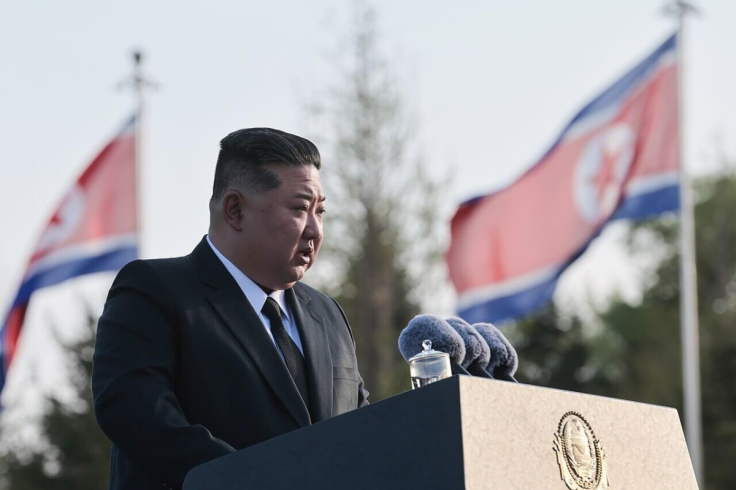
Kim Jong Un is reviving his grandfather's diplomatic playbook in a striking departure from his father's approach, as North Korea's leader attempts to reshape his international image and establish a political identity of his own.
The North Korean leader personally received the credentials of 10 newly appointed foreign ambassadors on 22 November at the Workers' Party of Korea Central Committee headquarters in Pyongyang. It was the first time in more than 30 years that North Korea's top leader had personally performed the ceremony, reviving a tradition associated with his grandfather, Kim Il Sung.
🇰🇵 Kim Jong Un just broke more than 30 YEARS of North Korean diplomatic protocol.
— Mario Nawfal (@MarioNawfal) November 24, 2026
For the first time in decades, North Korea's supreme leader personally received diplomatic credentials from foreign ambassadors.
Representatives from 10 countries, including Russia, Sweden,…
The ambassadors represented Russia, India, Indonesia, Sweden, Vietnam, Brazil, the Czech Republic, the Philippines, Thailand and Bangladesh. Foreign Minister Choe Son Hui also attended the gathering, where Kim posed for photographs with each representative and outlined his approach to international relations, according to state-run Korean Central News Agency (KCNA).
Kim Jong Un Breaks With His Father's Diplomatic Legacy
The ceremony marks a significant departure from the approach of Kim's father, Kim Jong Il, under whose leadership responsibility for receiving foreign ambassadors was transferred to the chairman of the Standing Committee of the Supreme People's Assembly.
Professor Frederick Carriere, who teaches the Politics of North and South Korea at Syracuse University, believes Kim is deliberately drawing on his grandfather's diplomatic approach while establishing a distinct leadership identity.
'Everything Kim Jong Un does rhymes more with the image of his grandfather than his father,' Carriere observed.
The move follows a March 2026 constitutional amendment granting the chairman of the State Affairs Commission, a position held by Kim, authority to receive diplomatic credentials. Carriere believes Kim's personal involvement reflects his decision to assume a higher-profile role in foreign relations.
South Korea's Unification Ministry offered a similar assessment, saying the ceremony appeared intended to demonstrate Kim's standing as head of state both domestically and internationally. Spokesperson Yoon Min Ho described it as a display of Kim's position at home and abroad.
Kim's Bid To Reopen North Korea to the World
The gathering of 10 ambassadors represents a notable diplomatic development after North Korea's near-total isolation following its border closures during the Covid-19 pandemic.
Carriere described the simultaneous accreditation as a striking departure from that period, suggesting Kim's message to foreign governments was that 'we are open for business once again'.
Yang Moo Jin, an adjunct professor at the University of North Korean Studies, said the gathering was intended to improve North Korea's image as a normal state and strengthen relationships with friendly countries.
Kim insisted that his foreign policy did not pursue supremacy or expansion, but argued that the unstable security environment in East Asia required North Korea to strengthen its defensive capabilities.
A Diplomatic Opening With Strict Limits
Kim's outreach comes against a backdrop of confrontation. During a military parade on 10 October 2020, he became tearful while acknowledging his shortcomings and thanking troops for their efforts during the pandemic. Carriere said he could recall no comparable public display from either Kim Il Sung or Kim Jong Il.
Meanwhile, North Korea has ordered Swiss diplomatic representative Sylvain Astier to leave within 48 hours and demanded the closure of Switzerland's newly reopened diplomatic office in Pyongyang.
The 25 November order followed Swiss sanctions against the Songdowon International Children's Camp over its alleged involvement in transferring Ukrainian children from Russian-occupied territories. Kim's sister, Kim Yo Jong, had condemned the sanctions as an 'open hostile act' and an infringement of North Korea's sovereignty.
The confrontation erupted less than a month after Swiss Foreign Minister Ignazio Cassis attended the reopening of the diplomatic office.
Carriere has warned that foreign representatives in Pyongyang must avoid words or actions their North Korean hosts might perceive as offensive.
Kim may be reviving his grandfather's diplomatic traditions, but the escalating Swiss dispute shows that his invitation to the outside world comes with considerable political conditions.
© Copyright IBTimes 2026. All rights reserved.