

Former Russian General Who Called for Putin's Resignation Tells Him 'You Lost' in Ukraine War
A Soviet-era commander says Moscow is burning the country's future to save one man's grip on power
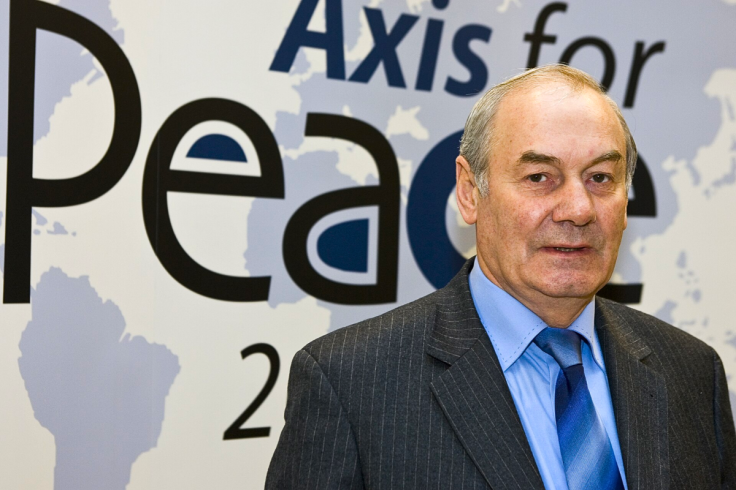
A decorated Russian general who once helped run Moscow's military diplomacy has told Vladimir Putin in a public address that he has 'lost' the Ukraine war, demanding an immediate halt to hostilities during an online broadcast in early November.
Retired Colonel General Leonid Ivashov, 83, made the remarks during a live stream with Russian blogger Pavel Ivanov, according to reports published on 9 November. Ivashov, who leads the All-Russian Officers' Assembly, said the operation the Kremlin promised would be quick had failed, and called for negotiations.
'You Lost', Says the General
Ivashov did not soften the blow. He told Putin he had 'lost' and 'didn't foresee a thing', adding that the president 'didn't have the wits' to see the invasion would not be quick, according to published English translations.
He ridiculed the idea that the army could dash in, win fast, and leave. Coming from a Soviet-era officer who spent years inside Russia's defence establishment, the criticism carries particular significance.
An Insider, Not an Exile
This is not a critic whose opposition began with the invasion. Ivashov condemned Putin's 'criminal policy of provoking a war' and called for his resignation in early 2022, weeks before the full-scale invasion, warning of a threat to Russia's very existence.
His latest criticism warns of the consequences of continuing the war. His group represents retired and reserve officers, and his military background distinguishes him from many of Putin's other critics.
A Country Sacrificed for One Man
Ivashov argued that dragging out the war is destroying Russia's future to protect one man's grip on power. The figures behind that warning are stark even by historical military standards.
A July assessment by the Center for Strategic and International Studies estimated roughly 1.4 million Russian battlefield casualties, including up to 450,000 soldiers killed, from February 2022 through June 2026, the highest battlefield death toll for any major power since the Second World War.
For much of the war, Russian casualties outnumbered Ukrainian casualties by two or three to one, a ratio the researchers estimate rose to nearly eight to one in the first half of 2026.
Independent trackers at Mediazona and the BBC Russian Service have identified more than 279,000 of the dead by name, and the losses have disproportionately affected regions such as Buryatia and Tuva. Behind each figure is a family dealing with the loss.
Why Washington Is Watching
The timing matters for Americans. The outburst came as a US-backed push for a ceasefire faced obstacles, Russian refineries came under Ukrainian drone strikes, and fuel shortages spread across Russian regions.
Talks between American, Ukrainian, and Russian officials in Abu Dhabi on 10 and 11 November produced a prisoner exchange agreement but no peace deal. Such criticism raises questions about Putin's political position, with potential implications for peace talks and energy markets.
Ivashov has no formal power to remove Putin, and one broadcast will not end the war. But when a general who helped build the system says out loud that the fight is lost and the country is being bled for nothing, it points to dissent within Russia's military establishment over the direction of the war.
© Copyright IBTimes 2026. All rights reserved.