

Tax Refund Warning as Millions Risk Losing COVID-Era Money They Never Knew They Were Owed
Deadlines were deferred, meaning millions of citizens were wrongfully charged interest and penalties from 2020–23

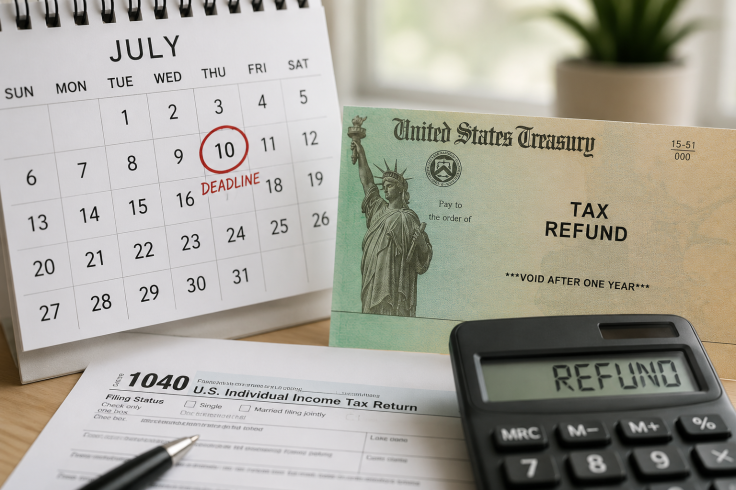
Millions of Americans have less than a week to secure a surprising financial windfall that many do not even realise exists.
A looming federal deadline means anyone who misses this final window will permanently forfeit their right to a massive pool of unclaimed relief funds. With tens of millions of taxpayers potentially eligible, time is rapidly running out to clear the final administrative hurdle and secure what could be a significant payout.
Final Deadline Fast Approaching
Time is quickly running out to secure funds that the Internal Revenue Service (IRS) could owe you. A crucial federal deadline has been set for 10 July, marking the final opportunity for individuals to submit claims for potential pandemic-related IRS rebates. Estimates from the IRS Taxpayer Advocate office suggest the scheme could have a huge reach, with tens of millions of taxpayers potentially qualifying for refunds or penalty rollbacks.
July 10 is 5 days away. If you filed taxes in 2019-2022, you may qualify for a COVID disaster relief refund. It's not automatic. You have to file Form 843. Tens of millions could be eligible. Check https://t.co/vlt4Z2NRkP before the deadline.
— BON Credit (@BONcreditai) July 6, 2026
'This issue is widespread and not limited to a small or specialised group of taxpayers. As noted, tens of millions of taxpayers have been assessed penalties or interest for late filings or payments during these years,' the office said in a statement.
Since the authorities will not automatically distribute these rebates, securing your payout requires a formal application.
How the Court Changed the Rules
These payouts are a direct result of the Kwong v. United States case. In the landmark federal court ruling issued in February, judges widened the scope of a specific tax rule governing deadline extensions during major crises, including the COVID-19 pandemic.
The court ruled that the IRS had no right to charge interest on underpayments or impose penalties until a full 60 days after the emergency period had officially ended.
The ruling established that, under the law, both payment and filing deadlines are automatically deferred throughout any active federal disaster declaration, with an additional 60 days added to the end of that period.
'Based on the court's reasoning in Kwong, filing and payment deadlines were postponed during that entire period, and as a result, tax returns and payments due at any time within that window were not late until after July 10, 2023. By the court's logic, the IRS should not have assessed penalties for late filing or payment during that 3.5-year period, nor charged interest on those amounts,' the taxpayer advocate wrote.
Who Could Be Eligible for a Refund
A refund may be available for any interest charges or penalties levied between the start of the public health crisis and the 10 July 2023 cut-off.

You could potentially claim a rebate or have various charges imposed during the pandemic era cancelled, including:
- Financial penalties for filing tax returns late, making overdue payments or missing estimated tax payment deadlines.
- Interest charges that started building up prematurely or should not have been applied to your account in the first place.
- Additional interest owed on over-payments made during the 2020–2023 emergency period.
Why 10 July Matters
The official COVID-19 public health emergency lasted from 20 January 2020 until 11 May 2023. When the 60-day legal extension is taken into account, the adjusted filing deadline for the 2019, 2020, 2021 and 2022 tax years effectively shifts to 10 July 2023.
What Happens if You Miss It
Taxpayers now face a final deadline of 10 July 2026 to submit reimbursement claims. This deadline is based on the standard statutory limitation period, which generally expires either three years after a return is filed or two years after the tax is paid, whichever comes later.
© Copyright IBTimes 2026. All rights reserved.