'Dangerous Journalism': Mehdi Hasan Condemns Viral Post Article on Anthony Fauci's Leaked Texts
Mehdi Hasan has criticised the New York Post over a viral report about Anthony Fauci's alleged vaccine and miscarriage warning
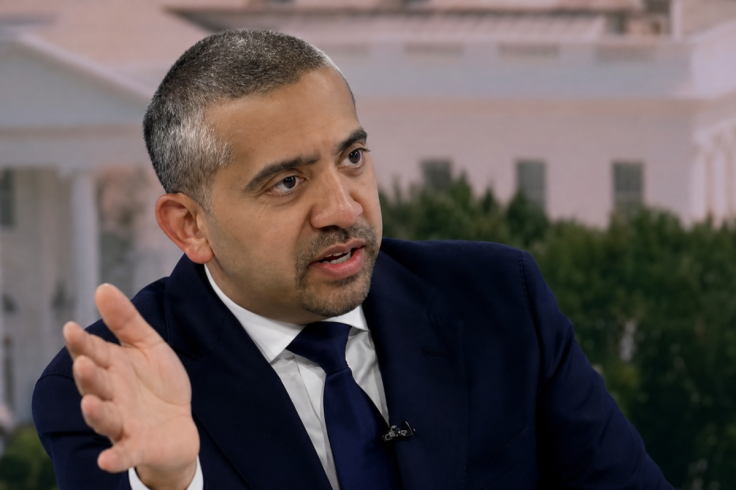
Mehdi Hasan has accused the New York Post of 'dangerous journalism' after the newspaper published an article about leaked texts allegedly showing Anthony Fauci discussing a possible theoretical link between COVID-19 vaccines and miscarriages.
The dispute unfolded on X after the Post's article gained more than 24 million views, while Hasan's response also drew substantial attention.
The news came after the New York Post shared a report centred on an apparent text exchange between Fauci, then director of the National Institute of Allergy and Infectious Diseases, former Centers for Disease Control and Prevention director Rochelle Walensky and US Surgeon General Vivek Murthy.
According to the report, the exchange took place in January 2021, when the safety of COVID-19 vaccination during pregnancy was still being closely examined.
The Post said Fauci warned that fever and an immune response after a second vaccine dose could, theoretically, be associated with miscarriage during the first trimester. The report then contrasted that private discussion with Fauci's public comments, in which he said there were no warning signs connected to the vaccines.
'Dangerous Journalism' and Fauci's Reported Warning
The message attributed to Fauci was reportedly sent on 25 January 2021. It read, 'I asked around a bit more and another issue came up that you need to be aware of.' He reportedly continued, 'Since many people have significant cytokines storm and fever after the 2nd dose, this theoretically could be associated with miscarriage in the 1st trimester.'
Crucially, the message as reported described a hypothetical concern rather than evidence that vaccination caused miscarriage. It did not identify clinical data demonstrating an increased risk or establish that officials had detected a confirmed vaccine safety signal.
That distinction formed the basis of Hasan's criticism. The journalist described the article as 'Just reckless, inflammatory, irresponsible, dangerous 'journalism' from the Murdoch-owned Post here.' He added, '11m views for BS, there is no miscarriage risk from the COVID vaccines, as countless studies since show. Even at the time, this was just unproven speculation being discussed.'
Subsequent research broadly supports the central medical point in Hasan's response. An NIH-funded prospective study published in 2023 found no association between COVID-19 vaccination before conception and an increased miscarriage rate. A separate systematic review and meta-analysis covering 21 studies and 149,685 women similarly found no evidence of an increased miscarriage risk among vaccinated women.
View counts cited on X can change rapidly and should be treated as snapshots rather than fixed figures. The Post's original post was reported to have attracted more than 24 million views, while Hasan referenced an earlier count of 11 million views in his criticism. Those figures are not necessarily contradictory because they may reflect counts taken at different times.
What the Fauci Texts Do and Do Not Show
For context, the report said Fauci appeared on a question-and-answer livestream with the Journal of the American Medical Association on 3 February 2021, days after the reported text exchange. During that appearance, he reportedly said there were no 'red flags' associated with the vaccines.
In August 2021, Fauci also reportedly said the CDC had monitored women who were pregnant when they received a COVID-19 vaccine. He said there was no indication of an increase in 'adverse issues' among those women compared with pregnant women who had not been vaccinated.
A 2023 NIH-funded study involving 1,815 women who conceived during the study period found no association between COVID-19 vaccination before conception and an increased risk of miscarriage. Researchers also found no increased risk associated with vaccination of male partners.
That later evidence does not mean officials were wrong to examine potential risks during the early vaccine rollout. It does, however, underline an important distinction between discussing a biologically plausible concern and identifying an actual safety problem.
The wording of the reported exchange has nevertheless become politically charged. US public health authorities ultimately maintained that available evidence did not show COVID-19 vaccination increased miscarriage risk, while several conservative politicians have argued that officials were not sufficiently transparent about concerns discussed internally.
The broader scientific evidence accumulated since the vaccine rollout has not established an increased miscarriage risk from COVID-19 vaccination. That clash has made the Post's framing especially combustible. A private message containing the words 'theoretically could' can be read as evidence of officials considering and discussing a potential safety concern.
Presented without the surrounding uncertainty, however, the message could be interpreted as evidence that Fauci knew vaccination increased miscarriage risk, a conclusion the text itself does not establish.
The broader controversy around Fauci has added to the attention. Senate Homeland Security and Governmental Affairs Committee Chairman Rand Paul has accused Fauci of improperly handling federal records and sought further information about the origins of COVID-19 and the government's pandemic response.
During a 29 July Senate hearing, Fauci invoked his Fifth Amendment rights against self-incrimination and declined to answer the committee's questions on the advice of his attorneys. The committee subsequently voted 8-7 on 6 August to hold him in contempt of Congress.
Fauci's decision to invoke the Fifth Amendment does not itself establish wrongdoing or substantiate claims concerning vaccine safety. None of that establishes that the reported text proves a link between COVID-19 vaccines and miscarriage. Available research has instead found no increased miscarriage risk associated with vaccination.
What can be said from the available evidence is narrower, and less dramatic, than some of the online framing suggests. Fauci reportedly raised a theoretical concern during an internal discussion in January 2021, subsequent research found no increased miscarriage risk associated with COVID-19 vaccination, and the latest dispute centres largely on whether the Post fairly characterised what that early discussion represented.
© Copyright IBTimes 2026. All rights reserved.
- Recommended For You