

Social Media's 'Big Tobacco Moment': Meta Faces $1.4 Trillion Fine for Allegedly Fueling Teen Suicide and Addiction
At stake in the Meta teen mental health fight is not just one company's balance sheet but who carries the blame for a generation raised online.
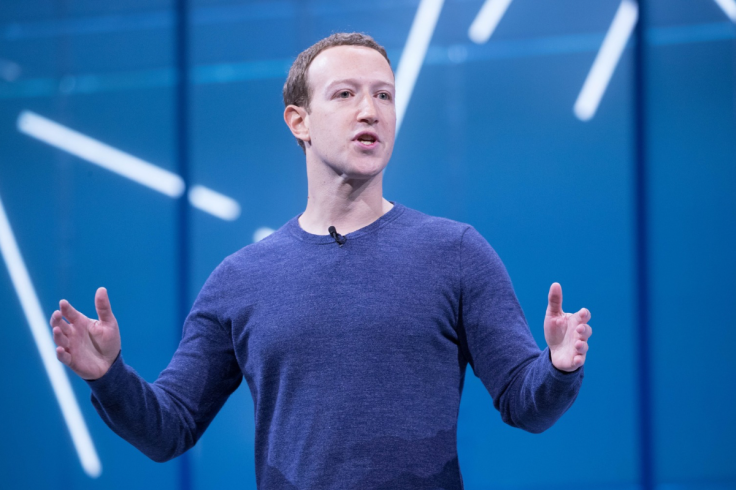
Meta has warned a federal court in California that it could face up to $1.4 trillion in penalties in a landmark teen mental health lawsuit, arguing in an Oakland filing on Monday that the states' proposed sanction is 'outlandish' and unprecedented in US consumer protection history.
The tech giant, led by chief executive Mark Zuckerberg, is being sued by 29 US states that accuse Meta of fuelling a youth mental health crisis through the design of Facebook and Instagram and of violating the Children's Online Privacy Protection Act by collecting data from under‑13s without parental consent. The multi-state case is due to go to trial in US District Court in Oakland on 18 August.
Teen Mental Health Case Pits States Against Silicon Valley Giant
The news came after Meta detailed how it arrived at the $1.4 trillion figure, which is roughly equivalent to the company's entire stock market valuation. According to the filing, Meta extrapolated the potential penalties from the way four lead states, California, Colorado, Kentucky and New Jersey, said damages should be calculated if they prevail at trial.
Those four states are at the sharp end of the teen mental health case, and have told the court that penalties should reflect both local consumer protection laws and the estimated number of underage users allegedly harmed in each jurisdiction. The precise proposals remain under seal, but Meta says the methodology multiplies penalties in a way that sends the numbers into the stratosphere.
'A sanction of that size has no analog in the history of consumer protection enforcement,' Meta's lawyers wrote, describing the remedies as 'unsubstantiated' and 'outlandish.' The company also accused the states of improperly double or even triple counting teen users by stacking penalties based on how long minors used Facebook and Instagram each day.
At the heart of the sprawling litigation is a simple but highly charged claim. The attorneys general say Meta deliberately engineered its platforms to be addictive for children and teenagers, and in doing so helped drive rising levels of anxiety, depression, self-harm and even suicide among young users. California, Colorado, Kentucky and New Jersey additionally accuse the firm of misleading parents and the wider public about the safety risks on its apps.
Meta, for its part, has 'strenuously denied wrongdoing' and insists its products include extensive safety tools and controls for young people. In its latest brief, the company argued that the proposed sanctions 'have no basis in the record in this case, are entirely unmoored from the claimed deceptive statements or unfair practices' and rest in part on product features that a court has already ruled are immune from liability under Section 230 of the Communications Act of 1934, which broadly shields platforms from being sued over user content.
Why the Lawsuit Is Being Called Social Media's 'Big Tobacco Moment'
The teen mental health lawsuit is only one front in Meta's legal war. Court records show the company faces more than 2,400 pending cases brought by school districts, parents and government entities across the United States, a wave of litigation that critics have framed as social media's 'Big Tobacco moment.'
The comparison is not subtle. Just as American states once accused cigarette makers of knowingly addicting smokers and hiding the dangers, today's attorneys general argue that Meta knew its recommendation systems and engagement features were hooking children and damaging their wellbeing, but chose growth and profit. Meta rejects that narrative, but the framing has clearly stuck.
In June, US District Judge Yvonne Gonzalez Rogers, who is overseeing the Oakland teen mental health case, refused Meta's bid to have the states' lawsuit thrown out. In her 30 June order, she said there were still material factual disputes over whether Facebook and Instagram were designed to be addictive, a question that will now be tested in front of a jury.
The legal setbacks have already begun to bite. Earlier this year, a California state court jury found Meta liable for fuelling social media addiction in a case involving a woman identified only as KGM. Meta and co-defendant Google were ordered to pay $6 million in damages, with Meta responsible for 70 per cent of that sum, according to the judgment.

In a separate New Mexico case, a jury concluded that Meta failed to protect children from online sexual predators and misled the public about safety risks on its platforms. The company was ordered to pay $375 million in penalties. Spokesman Andy Stone later noted that the award was 'just a fraction of what the state sought,' an indication of how wildly high some of the starting figures in these suits can be.
If that pattern holds, the $1.4 trillion Meta is publicly bracing for may be more of a worst-case headline number than a realistic outcome. Even so, it is a wild figure to see in black and white in a court filing from a company that is not on the verge of bankruptcy, and it underlines the scale of jeopardy now facing Silicon Valley's biggest social media player.
Officials in the lead states are keen to project confidence. 'Our lawsuit alleges Meta has prioritised profits over the safety of kids and fuelled the mental health crisis we see impacting a generation of American children,' a spokesperson for the California attorney general's office said in a statement, adding that the state 'looks forward to holding Meta fully accountable at trial in August.' Representatives for the attorneys general of Colorado and New Jersey declined to comment, while Kentucky's office did not immediately respond to requests, according to the court record.
Investors, at least for now, appear unshaken. Meta's shares were up about 3 per cent in trading on Tuesday, a reminder that markets tend to discount the most eye-catching penalty estimates in early legal posturing and focus instead on what judges and juries have actually ordered in similar cases.
Still, the teen mental health case lands at a moment when public anxiety about children's lives online is high and legislators in Washington and state capitals are under pressure to be seen doing something. A $1.4 trillion threat focuses minds. It also raises a blunt question for Meta and its peers that no amount of slick safety messaging can fully dodge, namely how much of their core engagement machinery they are really prepared to change if a court eventually agrees that it harms kids.
© Copyright IBTimes 2026. All rights reserved.