

The Simulation Exposed: Why Experts Say 'Aliens' Only Attack Christian Doctrine in UFO Encounters
Behind the UFO folklore, a small band of Christian investigators believes the real battle is not over aliens at all, but over who gets to define God.
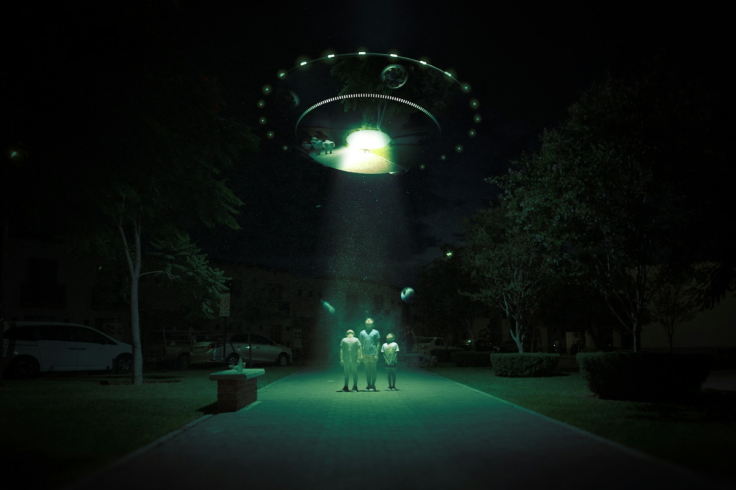
Aliens that appear in alleged abduction encounters overwhelmingly undermine Christian belief while largely ignoring other faiths, according to a group of Christian researchers in the United States who say the experiences are not extraterrestrial at all, but spiritual simulations designed to pull people away from Jesus. Their claims, rooted in decades of case studies, present a starkly different reading of UFO lore from the one that dominates popular culture.
The argument comes out of a long-running subculture where UFO sightings and alien encounters are interpreted through a biblical lens rather than a scientific one. It is a world that sits well outside mainstream theology and is often dismissed by secular researchers, yet it has built up its own small library of testimonies, specialist ministries and recurring motifs. At the centre of it is a provocative contention: that what many Americans describe as 'alien abductions' are closer to demonic visitations than to science fiction.
Joseph Jordan, a researcher who says he has investigated more than 600 abduction testimonies, insists the experiences are 'a simulation rather than a real situation.' In his account, these are not physical kidnappings aboard spacecraft but 'spiritual, visionary experiences' that convince people something physical has happened.
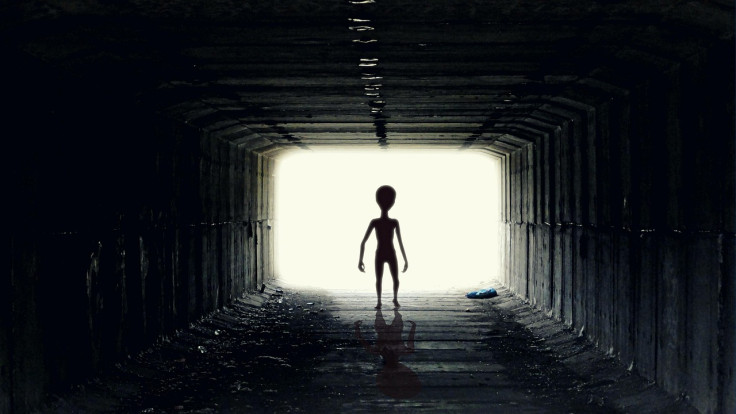
He argues that the encounters carry a specific agenda, claiming their purpose is 'to draw people away from Jesus Christ through the denigration of Christianity,' and that those most open to them tend to have some involvement in New Age spirituality or the occult.
Crucially, Jordan says there is one reported way out. According to his research, 'the only thing that stops the abduction simulation is when the experiencer calls upon Jesus Christ for help.' It is a pattern echoed by other Christian figures working in the same field, though it remains wholly anecdotal and unsupported by independent verification. Nothing is confirmed yet, so everything should be taken with a grain of salt.
Retired FBI special agent and UFO researcher John DeSouza goes further in his language. He argues that such encounters 'are stopped by only one thing ... by claiming the blood and the authority of Jesus Christ,' adding that, in his experience, they 'get stopped dead in their tracks.' Again, there is no external documentation that would pass scientific scrutiny, but within Christian UFO circles these accounts function as case law.
Aliens, Abductions And Anti-Christian Messages
Beyond the claimed power of the name of Jesus, Christian researchers point to the content of messages allegedly delivered by these 'aliens.' They argue that, when entities speak, they tend to promote ideas that directly contradict core Christian doctrine.
The late Dr Walter Martin, who founded the Christian Research Institute in 1960, warned decades ago that people reporting UFO contact 'invariably say that the occupants of these ships talk to them about the truth of reincarnation and about universal salvation for all mankind'. In his view, this is not incidental cosmic chit-chat but a deliberate alternative theology.
Martin listed the points of conflict as he saw them. According to the testimonies he examined, the 'aliens' reject a personal God, deny that Jesus Christ is the only saviour and dismiss the Bible as God's unique word to humanity. They do not, he said, accept divine punishment or bodily resurrection, promoting instead a spiritual evolution 'from planet to planet to perfection'. His conclusion was blunt: 'What you are dealing with is a theology opposed to Christianity.'
The same contrast appears in The Urantia Book, a 1955 publication which claims to have been transmitted 'through a human medium by extraterrestrials from outer space.' The text explicitly attacks the Christian teaching of atonement, describing the idea of Jesus' sacrificial death as 'incompatible' with a loving God and branding the concept of ransom and atonement 'rooted and grounded in selfishness' and 'on a plane of unreality.' For conservative Christians, that is not harmless speculation but a direct strike at what they regard as the heart of the faith.
It also raises, in their minds, a telling question. If these are simply neutral beings from another planet, why do the reported messages so often dismantle Christian beliefs in particular rather than, say, Hindu or Buddhist doctrines? The suggestion, from within this camp, is that they function more like targeted religious propaganda than like contact from an impartial civilisation.

Occult 'Doorways' And The Dark Side Of UFO Fascination
Other writers have picked up on the overlap between alleged alien encounters and older accounts of hauntings, possession and psychic phenomena. Author and UFO researcher Lynn E Catoe observed that 'a large part of the UFO literature is closely linked with mysticism and the metaphysical,' touching on mental telepathy, automatic writing, invisible entities and poltergeist activity. Many modern UFO reports, she noted, are 'strikingly similar to demonic possession and psychic phenomena.'
Canadian astrophysicist and Christian apologist Dr Hugh Ross, who founded the organisation Reasons to Believe in 1986, has reached similar conclusions after years of examining UFO claims. Ross argues that 'UFO's and demonic experience seem to occur almost exclusively among those people who have opened some 'door' into the world of the occult.' The list of supposed doorways given by Christian commentators is long and sweeping, from astrology, tarot cards and séances to various forms of Eastern meditation, numerology, Ouija boards and magic.
Critics would say such catalogues tell you more about evangelical anxiety over alternative spiritualities than they do about aliens. Yet for those inside the movement, the pattern is read as further evidence that the encounters are not random. They see a consistent strategy: entice the curious into occult practice, disturb them with terrifying 'alien' experiences, then offer a cosmic spirituality that sidelines the cross and empties Christian salvation of meaning.

Underneath the talk of UFOs lies a more familiar warning. In the New Testament, Jesus and the apostles confront and cast out demons; modern Christians, this line of thought insists, should be just as wary of anything that smacks of spiritual counterfeits. Whether one accepts any of the alien claims or not, the people telling these stories are, in effect, less interested in visitors from other worlds than in defending the one they believe was revealed in first-century Palestine.
© Copyright IBTimes 2026. All rights reserved.