Meta's Own CTO Says Worker Morale Has Hit a Historic Low — The Worst It's Been Since Cambridge Analytica
Meta's workforce morale plummets as AI investments lead to job cuts and role changes

Workplace morale at Meta has fallen to its lowest point in nearly two decades, with the company's own chief technology officer telling staff the internal atmosphere rivals the darkest period in the platform's history. The admission came as the social media giant continues to absorb the fallout from sweeping redundancies tied to Mark Zuckerberg's AI expansion drive.
According to a report by Business Insider, the deterioration has been severe enough that senior leadership has moved to address it directly, setting aside the usual toolkit of pulse surveys and resilience workshops in favour of an unfiltered acknowledgement that something has gone badly wrong.
The AI Spending Spree That Triggered the Cuts
Meta's Louisiana data centre, initially announced at $10 billion when construction broke ground in December 2024, has since grown into a joint venture targeting up to £21.3 billion ($27 billion) in total development costs. The company has also broken ground on a separate £7.9 billion ($10 billion) facility in Indiana, with both projects part of a broader US infrastructure commitment spanning multiple sites across the country.
The scale of that buildout demanded capital that executives found, in part, by cutting headcount. For those who kept their jobs, the disruption did not end with the redundancies. A Wired report indicated that highly specialised staff have been reassigned to repetitive data-labelling tasks, effectively reducing complex technical roles to work focused on training Meta's AI models. Employees in engineering and research functions have found their day-to-day responsibilities narrowed significantly as a result. The combination of job losses and role degradation has left the remaining workforce deeply unsettled.
Why Bosworth Invoked Cambridge Analytica
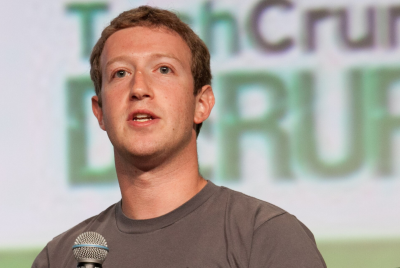
The extent of the damage became clear during an internal company meeting on 2 June, when chief technology officer Andrew Bosworth gave staff a direct assessment of where things stood. The severity of his remarks, delivered at a named internal meeting rather than through a prepared statement, signalled that the usual mechanisms for managing dissatisfaction were no longer sufficient.
Bosworth told employees that while the current period may not be the single worst of his 20 years at the company, it is close. He pointed to the Cambridge Analytica scandal, in which an external political consultancy harvested personal data from approximately 87 million Facebook users during the 2016 US election cycle, as the only comparable low point. 'I can think Cambridge Analytica was probably the worst,' he said, before adding that workplace camaraderie is now 'probably one of the worst it's ever been.'
Meta CTO says employee morale at Mark Zuckerberg's company is probably the worst it has ever been pic.twitter.com/NN0UrfPt8q
— non aesthetic things (@PicturesFoIder) June 21, 2026
The Hackathon Nobody Wanted
In an attempt to lift spirits, Zuckerberg proposed a company-wide hackathon, a collaborative event intended to inject some energy into a workforce running on empty. It did not land. Employees viewed the proposal as disconnected from the pressures they were already working under, with several raising concerns about bandwidth and workload in internal discussions.
One employee made the frustration plain: 'I'm literally preoccupied with keeping the lights on for my team. I have no incentive to participate, let alone have the time to do so.' Another worker said they had no motivation to take on supplementary projects while the restructuring was still actively reshaping their role.
Meta has not publicly responded to Bosworth's remarks or outlined any further steps to address staff concerns. The company's AI infrastructure commitments, spanning multiple billion-dollar facilities across the US, show no sign of slowing, and further workforce adjustments have not been ruled out. With the conditions that produced the morale collapse still in place, the internal recovery Bosworth's remarks implicitly called for has no clear timeline.
© Copyright IBTimes 2026. All rights reserved.
- Recommended For You