

NATO Unveils £37bn Missile Project to Deter Russia as Europe Steps Up Defence Under Trump Pressure
NATO countries commit to a UK-led missile project to bolster European defence against Russia.
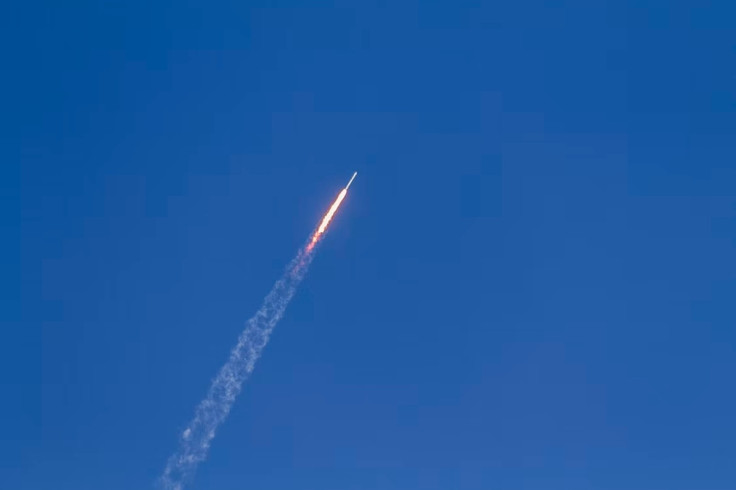
Twelve NATO countries, including the UK, have agreed to pour more than £37 billion into a new long-range missile system, a UK-led Deep Precision Strike project intended as a future cornerstone of Europe's defence against Russia.
The deal was unveiled at a NATO summit in Ankara that has become a test of Europe's willingness to boost its own military weight. It is Sir Keir Starmer's final summit as prime minister, and he arrived under pressure from US President Donald Trump over Britain's failure to set out a detailed plan for reaching the alliance's new defence spending target of 3.5 per cent of GDP by 2035.
What Deep Precision Strike Is Meant To Do
The programme, unveiled by Downing Street and discussed by around a dozen leaders on Wednesday, is designed to hit targets at around 200 miles with pinpoint accuracy, eventually reaching as far as 1,250 miles.
The system, often called Deep Strike in government briefings, is not expected to be ready until the 2030s. It is not expected to change the course of the war in Ukraine in the short term, but is a statement about the kind of Europe NATO leaders expect to be defending fifteen years from now.
Sir Keir framed the project as a way to strengthen Europe's own firepower within the alliance and to demonstrate it is not simply relying on Washington, saying it would 'help bring European allies together to keep NATO safe for years to come.'
Foreign Secretary Yvette Cooper linked it more directly to security fears, telling BBC Breakfast from Ankara it was 'part of a recognition that we're in a more dangerous world' and would help build 'a stronger Europe within a stronger NATO.'
Trump Pressure Shapes The Ankara Summit
The announcement comes against a backdrop of US frustration. Defence Secretary Pete Hegseth launched a six-month review of US troop presence in Europe in June, and Trump has repeatedly pushed European members to shoulder more of the financial and military burden.
Last year, alliance members agreed to raise defence and security spending to 5 per cent of GDP by 2035.
The UK has already committed £300 billion by 2030 under its Defence Investment Plan, and Sir Keir said he was 'determined' to keep the UK and its allies safe.
But he is still expected to face pushback from Trump over the absence of a clear roadmap to the 3.5 per cent target, at a moment when concrete plans matter as much as headline figures.
Rising Activity Around NATO Borders
Downing Street said NATO jets had been scrambled more than 700 times to intercept Russian aircraft near allied airspace, while Russian military activity around UK waters had risen by 30 per cent.
Cooper said the new missile capability would let the UK and its allies 'hit high value military targets and the logistical engines that drive armies,' and said the summit sent 'a clear message' to President Vladimir Putin that NATO is 'ready to defend our citizens' against Russia.
Ukraine's Long-Range Strikes Under Scrutiny
Ukrainian President Volodymyr Zelensky used his summit speech to press allies for more air defence systems to protect Ukrainian cities. Kyiv has meanwhile escalated its own long-range drone and missile strikes on Russian oil refineries and military sites, which it says have caused fuel shortages and power cuts inside Russia.
Downing Street pointed to this as evidence that long-range systems can be 'game-changing,' saying Ukrainian strikes on 'key logistics hubs' had hurt Russia's ability to sustain its offensive.
Kremlin spokesman Dmitry Peskov said Russia was watching the summit closely, insisted no new weapons could stop its campaign in Ukraine, and criticised pre-summit statements as 'confrontational' rather than open to 'constructive engagement and dialogue.' He said Moscow still preferred a political solution, though gave little sign of changing course.
© Copyright IBTimes 2026. All rights reserved.