

'Filthy Mood': White House Insiders Terrified Trump's Foul Outbursts Will Sabotage NATO Summit
At a summit meant to signal unity, NATO's biggest worry is not Moscow or Tehran, but the temper of the man leading its most powerful member.
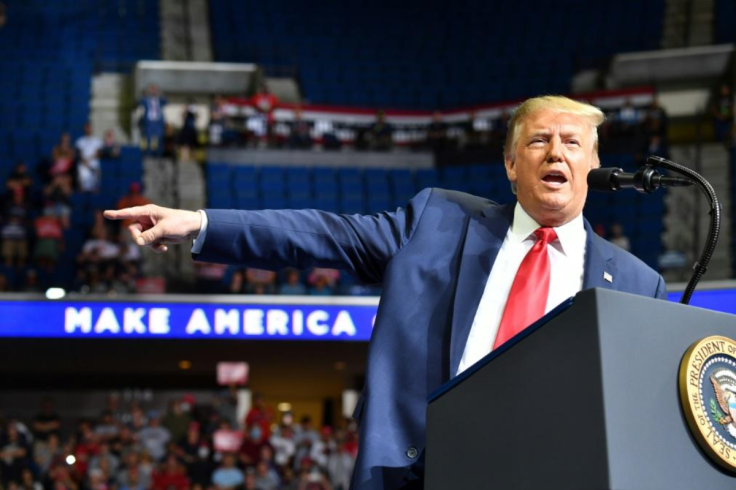
Donald Trump landed in Ankara late on Monday for a two-day NATO summit that officials privately fear could go badly off the rails, as the US president's increasingly foul mood and public outbursts threaten to overshadow talks with allies and leaders including Ukrainian President Volodymyr Zelensky and Syrian President Ahmed al‑Sharaa.
Anxiety inside NATO has been building for days as Trump has railed against alliance members over defence spending and questioned the value of the 75‑year‑old pact. His mood, described by multiple US officials to CNN as unusually dark, has sparked concern that he could derail discussions over the war in Iran, the reopening of the Strait of Hormuz and wider security issues with a fresh barrage of grievances or even threats to walk away from core commitments.
NATO Allies Brace for Donald Trump at Ankara Summit
Trump used his Truth Social platform on Thursday to deliver one of his most caustic broadsides yet at NATO partners, calling the US contribution 'ridiculous' and the relationship 'not reciprocal.' He posted a graphic claiming the US was providing $999 billion in NATO funding, compared with $90 billion from the UK and smaller sums from France, Italy and Poland.
'Ridiculous for the U.S.A. to continue along this one sided path when the relationship is not reciprocal. They were not there for us!!!' Trump wrote. According to the figures cited in the reporting, the US spent $980 billion on defence in 2025, accounting for roughly 60 per cent of total NATO military spending. Nothing in the documents provided confirms the $999 billion graphic as an official NATO figure, so those numbers should be treated cautiously.
NATO Secretary General Mark Rutte, who met Trump in the Oval Office last Wednesday, has been trying to ride out the storm. On Monday he said leaders needed to arrive in Ankara with clear plans to hit spending goals after Trump's online tirade, and he did not sugar-coat what the White House wants.
'President Trump fully expects that all allies will step up immediately and get on the path to 5% and do it with urgency,' Rutte said, dramatically upping the pressure on European capitals already scrambling to reach lower agreed targets.
In that Oval Office meeting, Trump's demands were framed less in terms of spreadsheets and more as a test of allegiance. 'Just be loyal. I just want their loyalty. We don't need their money; we don't need anything. We have the most powerful military in the world, by far, but I just want loyalty,' he told Rutte, according to accounts from the room. The remark underlined a long‑running tension inside the alliance, where European leaders insist NATO is a mutual security guarantee, not a personal loyalty club for any one president.
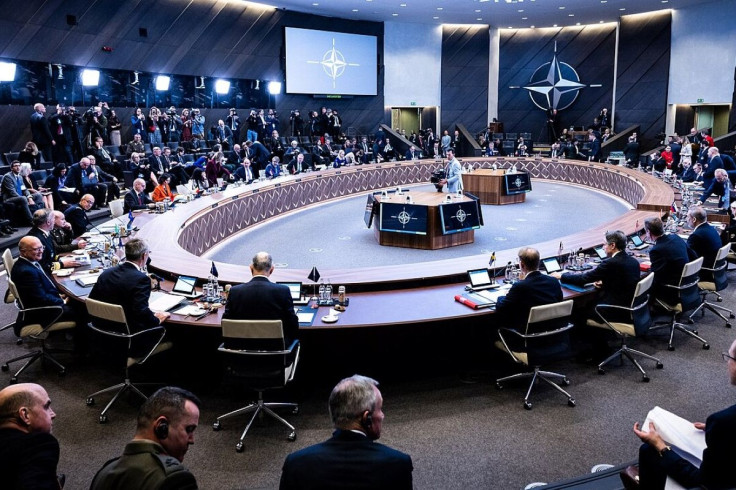
Donald Trump's 'Filthy Mood' Has Officials on Edge
Per senior American officials, many in Washington are reportedly worried the Ankara summit could 'turn sour' because of Trump's 'filthy mood.' They pointed to both his public complaints and sharper comments made behind closed doors in recent days. None of those unnamed briefings can be independently verified from the material available, so they should be read as attributed concerns rather than established fact.
Trump's ambassador to NATO, Matthew Whitaker, has effectively been running a pre‑summit warning campaign on US television, urging allies to give Trump visible wins. 'This Ankara summit is really the time for our allies to step up, and I know that that's what President Trump is expecting,' Whitaker said on Sunday, signalling that the White House wants rapid commitments, not vague promises.
European officials, for their part, have bristled at the lecturing. They point out that neither they, nor the US Congress, were consulted before Trump and Israeli Prime Minister Benjamin Netanyahu launched a war on Iran, despite the likely fallout for European security and energy supplies. That lack of consultation has fed a deeper unease about how decisions are being made in Washington and about the durability of US leadership inside NATO.

Senior American officials said that reopening the Strait of Hormuz, disrupted in the confrontation with Tehran, would be a central topic in Ankara. Yet those same officials were described as sceptical that European militaries could make a 'meaningful' contribution to the effort, a judgement that is likely to widen the perception gap between Washington and its partners.
Behind the scenes, Rutte has tried to manage Trump's temper as much as his policy concerns. In the Oval Office, he arrived armed with a chart that he dubbed 'the Trump trillion,' designed to show how European defence spending has risen sharply in recent years and to credit Trump for pushing allies to invest more.
'I know there have been isolated cases about which you are really disappointed but, generally speaking, your European allies have been there with you,' Rutte told him. It was part flattery, part damage control, and entirely aimed at stopping a combustible president from blowing up a summit that many in NATO see as pivotal.
Whether that strategy holds over two days in Ankara, with television cameras rolling and Trump's Truth Social account never far from his hand, is the question worrying diplomats from Brussels to Berlin. Nothing is confirmed about how he will behave once the meetings begin, so for now many inside the alliance are waiting, watching and quietly bracing for impact.
© Copyright IBTimes 2026. All rights reserved.