

NATO Leaders Meet in Ankara as Trump Brands Alliance Relationship 'Not Reciprocal'
US President Trump's criticism of NATO overshadows the Ankara summit, raising questions about the alliance's future and Europe's defence responsibilities.
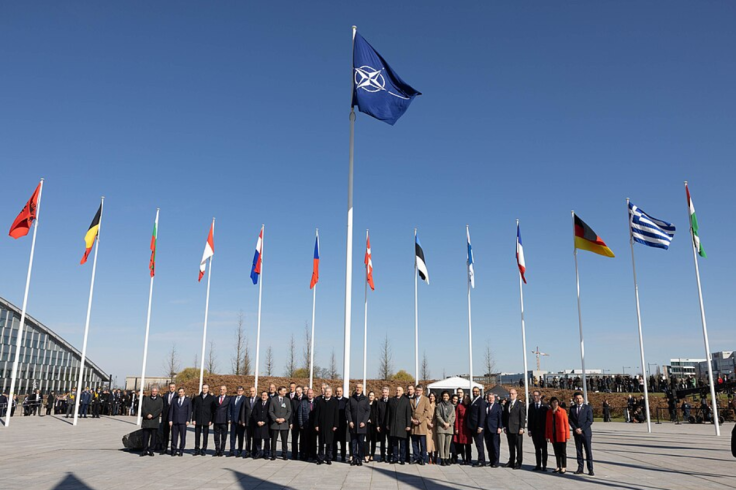
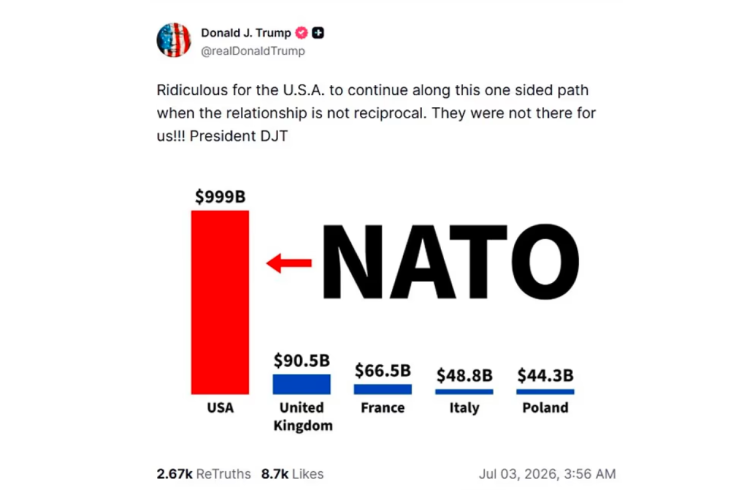
NATO leaders have arrived in Ankara for a two-day summit running 7-8 July, overshadowed by US President Donald Trump's latest broadside against the alliance. Trump wrote on Truth Social last week that it was 'ridiculous for the U.S.A. to continue along this one sided path when the relationship is not reciprocal,' adding 'they were not there for us!!!' By 'not reciprocal', Trump has pointed specifically to Europe's refusal to support US operations during the Iran conflict and to the gap between US and European defence spending — distinct grievances he has folded into a single complaint.
NATO Secretary General Mark Rutte takes to the stage on Tuesday for talks focused on defence investment, expanding Europe's defence industrial base, and long-term military support for Ukraine, including a pledge expected at this summit of roughly €70 billion (£60.5bn/$82bn) in military aid for Kyiv across 2026. The gathering follows a pledge last year to raise defence spending to five per cent of GDP, with European allies and Canada increasing defence investment by $139 billion (£103.8bn) in 2025 alone.
Trump's Frustration Over Iran Response
Trump's post included a chart comparing NATO members' defence spending, showing the United States investing far more than several other member states. His frustration stems largely from the Iran conflict: several European allies restricted the use of their bases for US forces during the war and declined to help reopen the Strait of Hormuz, a decision Trump has referenced repeatedly since.
He has also said he wants Europe to take the lead role in its own defence, and Washington has already begun scaling back its commitments on the continent as a result.
Troop Withdrawal Adds to the Strain
The dispute follows the Pentagon's announcement in May that it would pull around 5,000 troops from Germany. Pentagon spokesman Sean Parnell said the decision followed 'a thorough review of the Department's force posture in Europe and is in recognition of theater requirements and conditions on the ground.' Roughly 38,000 US troops remain stationed in Germany, and a 2024 defence law caps any further alliance-wide reduction at no fewer than 76,000 troops.
German Defence Minister Boris Pistorius described the move as expected rather than alarming, stressing that European nations needed to take on more responsibility for their own security. Senator Jack Reed, the ranking Democrat on the Senate Armed Services Committee, was less sanguine, saying the withdrawal 'suggests American commitments to our allies are dependent on the president's mood.'
The two assessments reflect different vantage points: Pistorius speaks as a government managing the drawdown on the ground, while Reed speaks from US legislative oversight concerned with the reliability of America's broader commitments, a divide that has shaped much of the debate ahead of Ankara.
NATO spokesperson Allison Hart said on X that the alliance was 'working with the U.S. to understand the details of their decision on force posture in Germany,' adding that the adjustment 'underscores the need for Europe to continue to invest more in defense.'
Formal Exit Remains Unlikely
A full US withdrawal from NATO faces a specific legal hurdle. Under Section 1250A of the National Defense Authorization Act, the president cannot suspend, terminate or withdraw from the North Atlantic Treaty without two-thirds Senate backing or a separate Act of Congress, a threshold considered unlikely given the numbers required.
Senator Thom Tillis, the top Republican on the Senate's NATO Observer Group, has said it is 'factually not true' that Trump can pull the US out of NATO without Congress, though a president 'can poison the well' and make the alliance 'functionally defunct' even without a formal exit. Ian Lesser of the German Marshall Fund echoed that distinction: 'I don't think the alliance is at a breaking point. But it is entering a period of profound adjustment.'
❝Here in Ankara, I expect nations to present clear, concrete and credible plans to reach the 5% goal.❞@SecGenNATO Mark Rutte previews the #NATOsummit in 🇹🇷 calling on Allies to deliver on last year's historic commitment to increase defence investment pic.twitter.com/GNtiNERTRW
— NATO (@NATO) July 6, 2026
Europe Weighs Its Options
Sophia Besch of the Carnegie Endowment said European governments have largely abandoned hope of restoring the alliance's old level of trust, focusing instead on managing the transition. 'The one thing they still dare hope for is greater predictability,' she said. 'They have accepted that the American commitment to Europe is changing; what they want is a more orderly version of the transition.'
European defence spending rose 62 per cent between 2020 and 2025. Even so, the International Institute for Strategic Studies estimates that replacing critical US capabilities, long-range strike, satellite assets, air defence— would cost roughly $1 trillion (£744bn) and take a decade or more.
© Copyright IBTimes 2026. All rights reserved.