'If Ukraine Burns, Your Moscow Will Burn Too': Zelensky's Explosive Warning to Putin After Deadly Russian Strikes
Zelensky signals a new phase of retaliation as Moscow faces growing drone strikes and Ukraine steps up its response to Russian attacks.
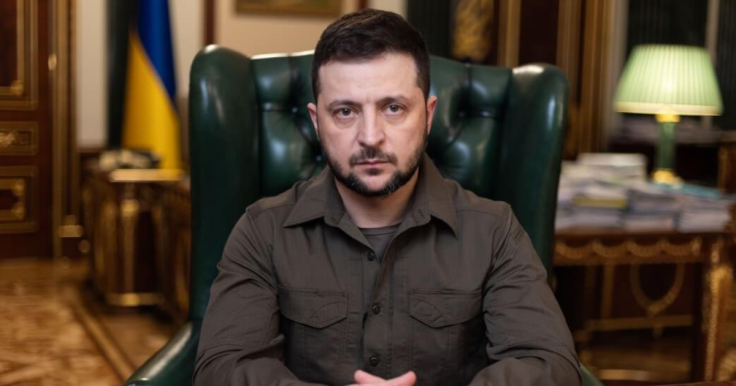
Ukrainian President Volodymyr Zelenskyy has issued one of his strongest warnings yet to Russia, declaring that 'if Ukraine burns, your Moscow will burn too' after a fresh wave of deadly Russian strikes.
The remarks signal Kyiv's growing willingness to retaliate against targets inside Russia, as drone attacks and cross-border strikes increasingly push the war beyond Ukraine's front lines.
Moscow Oil Refinery Strike Raises the Stakes
Reports of a Moscow oil refinery strike on Ukraine operation added weight to Zelenskyy's warning.
Ukrainian defence sources and international reporting indicated that drones struck Moscow-linked energy infrastructure again overnight, marking at least the second reported hit on the refinery in a short period. While damage assessments vary across sources, the symbolic impact is clear: Russia's capital is no longer immune to sustained drone pressure.
The strikes are part of a widening pattern of Russia-Ukraine drone attacks, where long-range unmanned systems are increasingly shaping battlefield psychology as much as physical damage.
Zelensky:
— Clash Report (@clashreport) June 18, 2026
If Ukraine burns, your Moscow will burn too.
If Putin does not want to end this war and wants to continue it, we will not sit quietly. We will respond. pic.twitter.com/3JYYakW83i
Kyiv-Pechersk Lavra Strike Retaliation Claim
One of the most sensitive elements in the escalation cycle is the reported link between Russian strikes on the Kyiv-Pechersk Lavra and Ukraine's response.
Zelenskyy suggested that recent actions against Moscow's infrastructure followed attacks on the historic Kyiv-Pechersk Lavra, a site with deep cultural and religious significance in Ukraine. While details of timing and attribution vary between reports, the narrative has become central to Kyiv's justification for retaliation.
This framing strengthens the perception of a Kyiv-Pechersk Lavra strike retaliation cycle, where symbolic targets are increasingly influencing operational decisions.
⚡ Zelenskyy: "We do not want this war and never have. (...) But if Ukraine burns, your Moscow will burn too." pic.twitter.com/d9y2tdITbe
— UNITED24 Media (@United24media) June 18, 2026
Drone Warfare Expands Across Borders
Alongside direct strikes, Ukraine has reported a steady increase in Russian drone activity along its northern border, including surveillance systems operating near Belarus.
Officials estimate a noticeable rise in intelligence drones since the start of the year, reinforcing concerns about Ukraine's air defense Russia border escalation.
At the same time, reports suggest Russia has developed multiple drone bases near its border with Belarus, raising fears that Belarusian airspace could be used as an operational corridor. This development adds a volatile layer to the already complex Belarus-Russia-Ukraine drone bases Ukraine dynamic.
Ukraine has responded by reinforcing its northern defenses with anti-tank trenches, concrete barriers known as 'dragon's teeth', and expanded barbed wire zones designed to slow potential armoured advances.
Zelensky:
— Polymarket Intel (@PolymarketIntel) June 18, 2026
If Ukraine burns, your Moscow will burn too.
If Putin does not want to end this war and wants to continue it, we will not sit quietly. We will respond.
(Footage shows oil refinery in Moscow on fire) pic.twitter.com/jlUZh62L56
Escalation Doctrine Takes Shape
Zelenskyy's comments mark a clearer articulation of what many analysts are now calling an emerging Zelensky war escalation statement in practice rather than theory.
He stressed repeatedly that Ukraine does not seek to expand the war, but will not remain passive in the face of continued attacks. The message was framed around a simple logic of response: if Ukrainian cities are hit, Russian territory can no longer be considered off-limits.
Zelensky: "If Ukraine burns, your Moscow will burn too"
— Visegrád 24 (@visegrad24) June 18, 2026
The latest attacks on Russia were a response to Russian strikes on Ukraine, in particular on the Kyiv-Pechersk Lavra.
“If Putin does not want to end this war, wants to continue, we will not sit quietly. We will respond.” pic.twitter.com/eXXvfFjo0M
Belarus Emerges as a Strategic Pressure Point
The Belarus border is becoming one of the most sensitive flashpoints in the war.
Ukrainian officials have described unusual activity in the region, raising concerns that Moscow is attempting to draw Minsk further into the conflict. While Belarus has not formally entered the war, its geographic and logistical position makes it a key factor in any future escalation scenario.
This uncertainty is now part of the broader strategic anxiety surrounding the conflict's possible expansion beyond Ukraine's existing frontlines.
Sanctions, Pressure, and Western Role
Beyond the battlefield, Zelenskyy has continued to call on Western allies to intensify pressure on Russia, particularly through sanctions targeting energy and defence sectors.
His argument is increasingly direct, suggesting that without stronger economic pressure, Russia will continue to escalate militarily. However, he also ties this diplomatic pressure back to battlefield realities, implying that sanctions alone cannot substitute for deterrence on the ground.
Moscow, Kyiv, and a Shifting War Boundary
The involvement of Moscow in repeated drone incidents signals a shift in how the war is geographically defined.
Once largely contained to Ukrainian territory, the conflict is now visibly extending into Russian infrastructure, particularly energy facilities. This includes repeated strikes on refinery-linked assets, which carry both economic and psychological impact.
Zelenskyy's framing of the situation reinforces this shift, suggesting that escalation inside Russia is a direct consequence of continued attacks on Ukraine.
© Copyright IBTimes 2026. All rights reserved.
- Recommended For You