Pentagon Requests More Than £158 Billion For Expanding Iran War Effort As White House Aides Doubt Congress Approval
A Massive Funding Request Amidst Political and Industrial Challenges

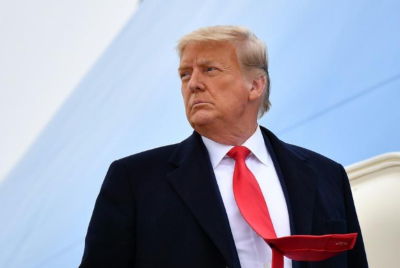
The Pentagon has asked the White House to approve a request to Congress for more than £158 billion ($200 billion) to fund Operation Epic Fury, an ask so large that some of President Donald Trump's own advisers privately doubt it can pass.
The figure, reported by the Washington Post on 18 March 2026 and confirmed by multiple sources familiar with the internal discussions, would dwarf the costs of the air campaign conducted over the past three weeks and instead prioritise the urgent scaling-up of precision munitions production.
The White House Office of Management and Budget raised objections during internal deliberations, arguing the total was too high, a senior administration official said. It remains unclear what figure the White House will ultimately send to Capitol Hill, though any package of that scale faces structural obstacles in the Senate and outright resistance from Democrats who have already tried, and failed, to stop the war entirely.
A Price Tag That Outpaces The War Itself
The request is not primarily about reimbursing the costs already incurred. It is about expanding the industrial capacity needed to sustain, and potentially deepen, the conflict. According to the Post's sources, the Pentagon has floated several different proposed funding levels over the past two weeks before landing on the more than $200 billion figure. Three people familiar with the matter confirmed to the Post that 'the Defense Department is seeking packages of that size.'
The war's actual direct costs, while enormous, are lower. The Pentagon briefed senators in a closed-door session on 11 March 2026 that the first six days of Operation Epic Fury had cost at least £8.9 billion ($11.3 billion), according to NBC News, which cited a source familiar with the classified briefing. The Pentagon spokesperson confirmed only that the department would not know the cost until the mission is complete.
Independent analysts at the Centre for Strategic and International Studies, drawing on the Pentagon's reported figures and congressional briefings — estimated the conflict had cost £13 billion ($16.5 billion) by its twelfth day alone. Senior CSIS adviser Mark Cancian, who led the analysis alongside research associate Chris Park, told the Washington Post that there was tremendous uncertainty in the estimates and that Congress wanted to know what the bill was.

CSIS noted that the heaviest early expenditure was on high-end precision munitions, Tomahawk cruise missiles at roughly £2.7 million ($3.5 million) each, and PAC-3 interceptor missiles at approximately £3.1 million ($4 million) each, deployed in enormous volumes during the opening phase of strikes.
By day four, CSIS analysts found that the military had transitioned to cheaper munitions such as JDAM-guided bombs, each costing under £79,000 ($100,000), bringing the daily burn rate down to an estimated £395 million ($500 million).
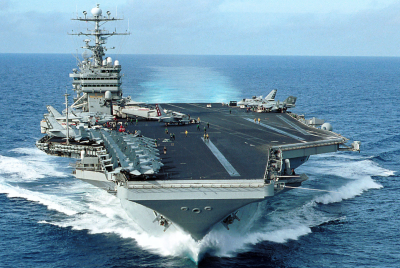
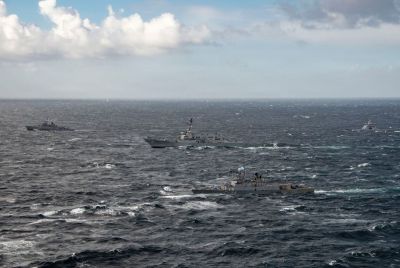
The pre-war military build-up, repositioning naval vessels and over 100 aircraft to the region, had already cost taxpayers an estimated £498 million ($630 million) before a single strike was launched, according to Elaine McCusker, the Pentagon's former acting comptroller and now a defence budget analyst at the American Enterprise Institute.
The Senate's 60-Vote Wall And The AUMF Battle
Republicans have signalled they support a supplemental funding request in principle, but they have not produced a legislative strategy capable of clearing the Senate's 60-vote threshold for new spending bills.
Democrats, for their part, have made clear they view the funding vote as a direct proxy for the war's legitimacy. Senator Chris Van Hollen of Maryland stated bluntly that 'the best way to end this war, protect our troops, save civilian lives, and rein in a lawless administration is to cut off funding.'
Senator Adam Schiff of California told TIME on 18 March that Democrats were preparing to force a series of procedural war powers votes capable of grinding Senate business to a halt, using resolutions that bypass the 60-vote threshold because they are classified as 'privileged' measures. 'We hope, by forcing these votes, we can force some accountability,' Schiff said.

The political arithmetic is not straightforward for Republicans either. The war was launched without a congressional authorisation for the use of military force, or AUMF — the legal mechanism by which Congress formally sanctions armed conflict.
A war powers resolution that would have blocked further strikes without such an authorisation failed in the Senate on 5 March by 47 votes to 53. Senator Rand Paul of Kentucky was the only Republican to vote in favour; Senator John Fetterman of Pennsylvania was the only Democrat to vote against. That same week, the House rejected a companion resolution 212 to 219.
Industrial Production Limits That Money Cannot Quickly Fix
The Pentagon's£158 billion ($200 billion) ask is, at its core, a munitions replenishment and industrial expansion programme. Deputy Defence Secretary Steven Feinberg, who has spent much of the past year focused on the US defence industrial base, led the internal effort to assemble the various funding packages. Officials said the proposals aim to address shortages in precision munitions and accelerate output across the defence supply chain.
But both the Washington Post's sources and independent analysts have been blunt: cash alone will not solve the problem quickly. Elaine McCusker of the American Enterprise Institute told the Post directly: 'Just throwing lots of money into the industrial base doesn't necessarily get you things sooner, but you're definitely not going to get it sooner if you don't.'
The constraint is not financial, it is physical. Expanding production requires trained workers, factory space, and raw materials that take months or years to bring online, regardless of what Congress appropriates.
The CSIS analysis flagged a specific vulnerability that the supplemental request does not directly address: air defence interceptor stockpiles. Iran launched more than 2,000 drones and approximately 500 ballistic missiles in the opening days of Epic Fury, according to CSIS figures.
Defending against those attacks consumed large quantities of THAAD and Patriot interceptors, systems that can cost up to £28 million ($36 million) per missile in the case of SM-3 Block IIA interceptors, and which take months to manufacture even at accelerated rates.
The cost asymmetry is severe: Iran spent an estimated £55 million ($70 million) on 2,000 drones that forced the United States to expend an estimated £1.6 billion ($2 billion) or more in interceptors, a 28:1 cost ratio that experts say Iran can exploit indefinitely.
For context, by December 2025, Congress had approved approximately £149 billion ($188 billion) in total for the war in Ukraine, a conflict spanning nearly four years. The Pentagon is now asking for more than that amount in a single request, for a war not yet three weeks old, without having sought a single congressional vote authorising it.
We're only three weeks into this war of choice, imposed on both Iranians and Americans.
— Seyed Abbas Araghchi (@araghchi) March 19, 2026
This $200b is the tip of the iceberg. Ordinary Americans can thank Benjamin Netanyahu and his lackeys in Congress for the trillion-dollar "Israel First tax" that's about to hit U.S. economy. pic.twitter.com/a2dsMQh3fK
Iranian Foreign Minister Abbas Araghchi responded to the Post's reporting by posting on social media that £158 billion ($200 billion) was 'the tip of the iceberg.'
A president who campaigned on ending America's foreign military adventures is now asking a divided Congress to write the largest single war cheque in modern history, for a conflict he started without their permission, on a timeline nobody can define, at a cost nobody can fully calculate.
© Copyright IBTimes 2026. All rights reserved.
- Recommended For You