JD Vance Tells Air Force Grads They Can't Boo Him Before Urging Americans to Embrace AI Despite Fears
JD Vance addresses AI concerns with humour during Air Force Academy commencement speech
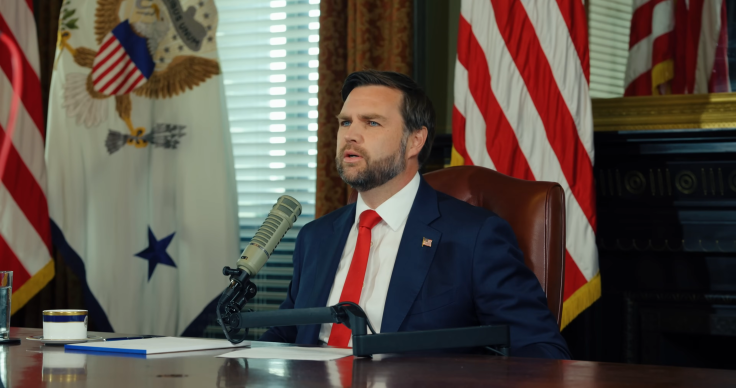
Artificial intelligence may be transforming everything from workplaces to battlefields, but it was a light-hearted joke from Vice President JD Vance that captured attention during a major graduation speech this week.
Speaking to Air Force Academy graduates, Vance acknowledged growing public unease surrounding AI before joking that his audience could not boo him. The remark quickly sparked discussion online, particularly as concerns continue to mount over how rapidly advancing technology could reshape jobs, society and military operations in the years ahead.
JD Vance Opens With a Joke About AI Critics
Addressing graduates during the Air Force Academy commencement ceremony, Vance wasted little time acknowledging the increasingly tense public debate surrounding artificial intelligence.
The Vice President referenced recent graduation ceremonies where business leaders discussing AI reportedly received negative reactions from audiences worried about the technology's future impact.
'This is the only commencement speech that I'm giving this year,' Vance told graduates. 'I've watched a few highlights of graduation speeches where this or that corporate leader will discuss artificial intelligence, AI, and be met with literal boos.'
He then delivered the comment that quickly attracted attention online.
'Now, you can't boo me. I'm the Vice President of the United States.'
Although delivered with humour, the remark immediately generated discussion across social media platforms, where critics and supporters debated both the joke itself and the broader message behind it.
Vance went on to acknowledge that many Americans remain concerned about how AI could affect employment, social interactions and economic opportunities.
He described those concerns as understandable rather than irrational, signalling that public scepticism towards emerging technologies is growing across political and demographic lines.
Why AI Has Become Such a Divisive Issue
The Vice President's comments arrive during an increasingly heated national debate over artificial intelligence regulation and oversight.
Technology companies continue to invest billions into AI development, while critics warn that the technology could disrupt labour markets, increase misinformation and create new ethical challenges.
Environmental concerns have also become part of the conversation. Large-scale data centres powering AI systems have drawn criticism in some communities over energy consumption, water use and local environmental impacts.
At the same time, governments worldwide are struggling to determine how much oversight should be placed on rapidly evolving AI systems.
Recent reports have highlighted disagreements within political circles over whether stronger regulations are needed or whether restrictions could slow innovation and weaken competitiveness against countries such as China.
Against that backdrop, Vance's remarks reflected an attempt to reassure audiences that technological change should be embraced rather than feared.
However, the speech also revealed that even supporters of AI recognise the technology presents serious challenges that require careful management.
The Vice President Focuses on AI and Warfare
While public debate often centres on jobs and automation, Vance argued that the military implications of artificial intelligence concern him most.
'The thing I worry about most with AI is how it will change warfare,' he told graduates.
Referencing comments made by Pope Leo XIV, Vance stressed the importance of ensuring that critical moral decisions remain in human hands rather than being delegated entirely to machines.
He praised the Pope's warning against allowing digital technologies to replace human judgement in matters involving ethics and responsibility.
Vance then connected those concerns directly to the graduating cadets, many of whom will eventually serve in military leadership positions.
According to the Vice President, future conflicts will almost certainly involve increasingly sophisticated AI systems. However, he argued that human decision-makers must remain accountable for how those technologies are used.
'AI will inevitably change warfare,' he said.
The message formed the central theme of his speech, balancing optimism about innovation with caution about its potential consequences.
A Message About Technology and Responsibility
As the speech progressed, Vance expanded on what he described as a uniquely American approach to military service.
He argued that technological superiority alone is not enough and that ethical decision-making remains essential regardless of how advanced military capabilities become.
'You are the ones who lead on the battlefield,' Vance told graduates. 'You are the ones who ensure that our lethality in war, which is amazing and necessary, also coexists with our heart and with our conscience.'
The remarks reflected a broader effort to frame artificial intelligence not simply as a technological challenge but as a moral one.
© Copyright IBTimes 2026. All rights reserved.
- Recommended For You