

'His Mother, Diana, Liked the Mail': Former Daily Mail Editor Paul Dacre Mocks Prince Harry After Court Defeat
Dacre claimed Princess Diana 'liked the Mail' and used the comparison to criticise Harry's legal battle against the publisher.
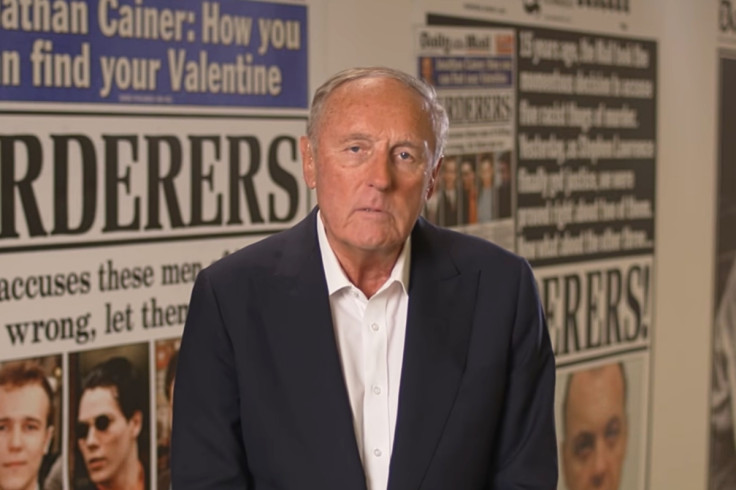
Prince Harry and six other claimants have lost their High Court case against Associated Newspapers after a judge dismissed allegations that the publisher of the Daily Mail and Mail on Sunday relied on information obtained through unlawful methods. Former Daily Mail editor Paul Dacre hailed the judgment as an 'overwhelming victory' for the publisher and used the moment to launch a scathing attack on the Duke of Sussex.
Claimants, including Prince Harry, Sir Elton John, David Furnish, Baroness Doreen Lawrence, actress Sadie Frost and former Liberal Democrat MP Simon Hughes, had failed to produce sufficient evidence to support allegations that Associated Newspapers had unlawfully gathered information for articles published over many years.
In his judgment, the judge stressed that suspicion alone was not proof and rejected the claimants' case. He also dismissed allegations that former Daily Mail editor Paul Dacre and two other senior executives had misled the Leveson Inquiry, describing those accusations as 'extremely serious' and saying the way they had been pursued was open to criticism.
Associated Newspapers, which had consistently denied the allegations, described the decision as an 'overwhelming victory.'
Paul Dacre on Prince Harry's Loss
Dacre opened his video by referring to legal claims brought around four years ago by Prince Harry and other claimants against Associated Newspapers, the publisher of the Daily Mail and Mail on Sunday.
He said the claimants had accused the newspaper of using unlawful information-gathering methods, including placing listening devices in homes, cars, cafés and landline telephones. Dacre described those allegations as 'lurid and preposterous,' adding that some related to events that allegedly happened more than 30 years ago.
He then celebrated what he called a major victory for the newspaper, saying the High Court had dismissed all 97 claims. According to Dacre, the ruling represented 'an overwhelming vindication' of the Mail's journalism.
Dacre Refers to Prince Harry's Memoir
Dacre criticised the Duke's decision to pursue privacy claims while also publishing deeply personal details about his own life in his memoir. He referred to Harry's discussion of his military service, drug use, and personal relationships, arguing that someone who had voluntarily revealed so much about himself and his family was in a weak position to complain about invasions of privacy.
Dacre used several sarcastic remarks to make that point, including saying Harry had 'aired' too much of his family's private life.
He then turned to Prince Harry's late mother, saying 'The bitter irony is that his mother, Diana, liked the Mail. We were her paper. We took her side in her acrimonious breakup with Charles. She and I would speak and meet. The Mail's superb royal reporter was her friend and confidant.' Dacre used those comments to argue that Princess Diana had maintained a positive relationship with the newspaper, contrasting that with Prince Harry's legal action against Associated Newspapers.
Dacre argued that the lawsuit itself should never have reached trial. He claimed it had cost more than £50 million and consumed significant court resources. He also questioned the conduct of some members of the legal profession for allowing the case to proceed.
Expanding beyond the court case, Dacre framed the judgment as a victory for press freedom, arguing that the legal action formed part of an effort to weaken the British press.
Daily Mail's Investigative Journalism Exposed Andrew
Dacre also defended the Mail's investigative journalism by citing previous reporting. He said allegations involving Peter Mandelson and Jeffrey Epstein that had been raised during the case were rejected by the court, while also arguing that the newspaper's earlier investigations had helped expose political wrongdoing involving Mandelson and publicise the now well-known photograph of Prince Andrew with Virginia Giuffre at Ghislaine Maxwell's home.
According to Dacre, those stories demonstrated why a free press remained essential, arguing that major public interest reporting was only possible because newspapers were able to investigate without excessive restrictions.
© Copyright IBTimes 2026. All rights reserved.