'Prince Harry Is Still in the Lockdown Mindset': Expert Exposes Hidden Battle of Egos Over Archie and Lilibet's Faces
Royal commentator critiques Meghan Markle's Instagram posts of Archie and Lilibet.
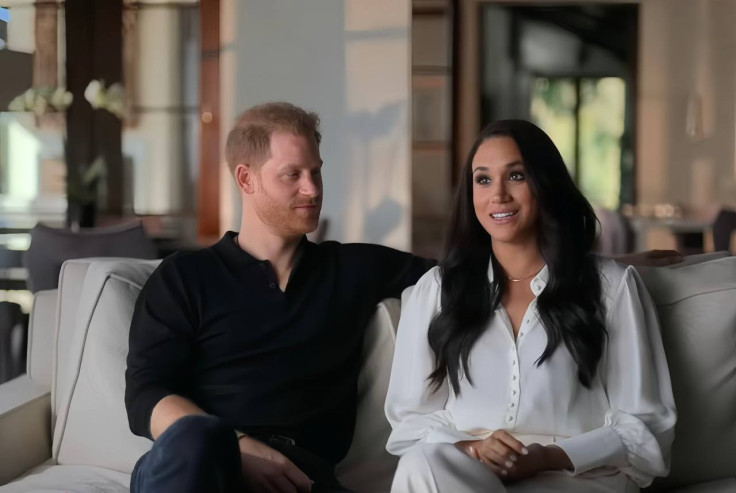
Prince Harry is 'still in the lockdown mindset' over how much of his children's lives should be shared online, a royal commentator has claimed, as scrutiny intensifies over Meghan Markle's decision to post blurred images of Archie and Lilibet on Instagram.
The news came after Meghan shared a birthday tribute for Princess Lilibet, who turned five last week, only for the carefully cropped and obscured images to trigger yet another round of debate about the Sussex children's privacy. In case you missed it, the couple have long said they want to protect Prince Archie, seven, and Princess Lilibet, five, from the intense public glare that defined Harry's own childhood. Yet Meghan's attempts to celebrate milestones while hiding their faces have left critics and some royal watchers accusing the pair of trying to have it both ways.
One of the more pointed critiques came from Jane Barr, a US-based royal commentator who runs the Substack newsletter From Berkshire to Buckingham. Barr argues that Meghan Markle is sending mixed messages on Instagram and that Prince Harry is the driving force behind what she sees as an awkward halfway house on privacy. In her view, the couple 'need to pick a lane' when it comes to whether the children are visible public figures or essentially off-limits.
Prince Harry 'Still in the Lockdown Mindset'
For context, Harry and Meghan have long spoken about the damage caused by media intrusion and their decision to walk away from royal life. Barr believes that instinct hardened during the pandemic, when the family lived behind high gates in California and Harry's suspicion of cameras set like concrete.
'The strong sense I get is that Harry and Meghan were both all about strict privacy when they married,' she writes. Meghan, she suggests, 'probably enthusiastically agreed' their children should be shielded, but never felt it as deeply as Harry.

Her theory is sharp and not especially gentle. Meghan is cast as someone who 'courted fame her entire life', at ease with visibility and the machinery of celebrity, while Harry is portrayed as trying to build a fortress around his family. What we see online, Barr argues, is the compromise: Meghan posts family moments, but Archie and Lilibet's faces are blurred, angled away or cropped out.
She contrasts this with what she calls the 'typical' US celebrity pattern on Instagram, where parents initially hide their children's faces, sharing only a baby foot or a silhouette, then gradually move to clear photos as they relax. Meghan, in Barr's view, is stuck in an awkward middle ground, trying to celebrate her children and protect them simultaneously, and being hammered from both directions for it.
A Battle of Egos
The latest flashpoint was Lilibet's fifth birthday. Royal watchers, who track these things with almost forensic intensity, had been waiting to see whether Meghan would mark the day publicly, and when she did, criticism quickly followed, with social media users and commentators questioning why the Sussexes spotlight the children's existence while refusing to show their faces.
According to Barr, this isn't just a branding issue, it is personal. 'So I think that Harry is still in the lockdown mindset while Meghan has majorly moved on,' she writes. In her analysis, Harry sees rigid privacy as essential protection, while Meghan operates in what Barr calls a 'world of sharing', where not posting at all would feel unnatural, even professionally risky.
Barr's suggestion of a 'battle of egos' is blunt, but it does speak to the tension many observers sense: a prince who grew up as a press target and a former actress who built a career in part on being seen. One insists on a digital drawbridge. The other occasionally lets it down, then yanks it back up mid-photo. No wonder the result looks odd.
There is, of course, no official Kensington Palace–style press office for the Sussexes any more, and no formal comment from their team on this specific criticism. Their broader position has been consistent: they say they will engage with media and social platforms on their own terms and at a pace that feels safe for their children.
That stance has not insulated them from the usual pile-ons. Supporters argue that they are entitled to share heavily edited glimpses of family life without surrendering full control. Critics accuse them of playing games with scarcity and mystery, keeping public interest high while claiming to loathe the attention. Both sides are convinced they can see through the strategy; it is not clear there even is a cohesive strategy.
Barr takes what she sees as a pragmatic line. If the children's faces are to remain hidden, she argues, then posts about them should only appear when they serve a wider purpose, rather than placing Archie and Lilibet at the centre of the story. At present, she contends, the kids are the focal point, even when their faces are blurred, and that is exactly the muddle Harry once vowed to escape.
Behind the noise over one Instagram birthday post lies a familiar theme in the Sussex saga: a couple who left the strict rules of royal life behind, still working out new rules of their own, in full view of the people they most want to keep at arm's length.
© Copyright IBTimes 2026. All rights reserved.
- Recommended For You