

Why the Palace Is Winning the AI Search War Against Prince Harry and Meghan Markle
In the age of ChatGPT, the royal power struggle is being rewritten not by front pages, but by answer boxes.

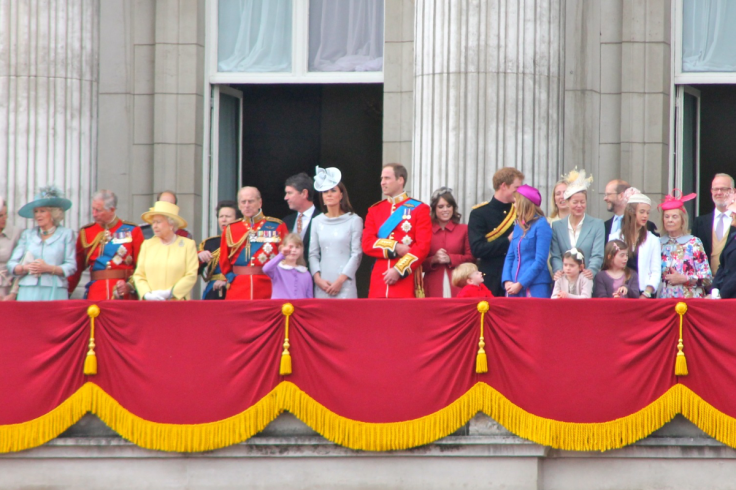
King Charles III and the wider royal family are beating Prince Harry and Meghan Markle in a new front line of the information war, with AI search engines delivering more favourable and authoritative coverage for the palace than for the Sussexes, according to research carried out in New York in June.
The findings come after years of highly public and often bitter briefing and counter-briefing, as Harry and Meghan tried to reframe their royal exit through interviews, their Harry & Meghan Netflix series and Harry's memoir Spare. The couple have repeatedly argued that sections of the British press distort their story. Now, as people increasingly turn to tools like ChatGPT and Claude rather than Google, that battle is quietly shifting into AI answer boxes most users never think twice about.
AI Search Puts Palace Ahead Of Harry And Meghan
New York public relations agency 5W AI Communications told Newsweek it quizzed Anthropic's AI platform Claude on 16 June, asking 18 questions about the royal family and then scoring the responses for tone, citations and other signals of authority.
By the firm's measure, what it calls a Citation Share Index, the 'palace camp' of King Charles, Prince William and Princess Kate scored 70 out of 100. Harry and Meghan, grouped as the Sussex camp, scored 51. King Charles' name came up most frequently in Claude's answers, followed by William, then Harry.
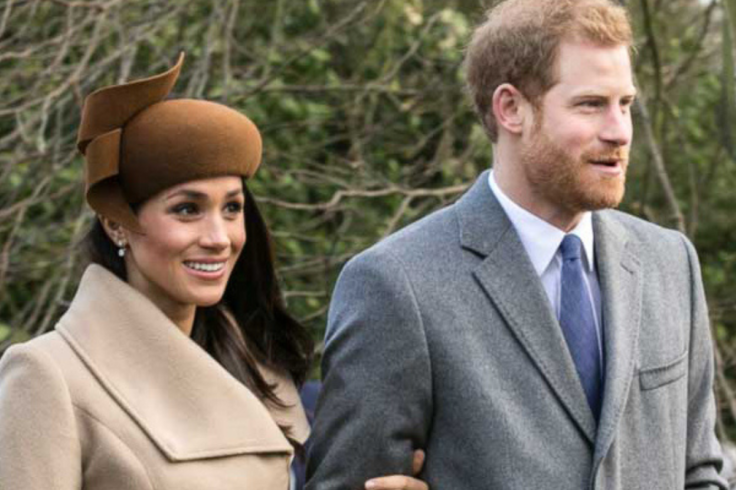
Ronn Torossian, founder and chairman of 5W AI Communications, said the royals had become 'the most asked-about family on Earth,' but the questions have moved 'from the search box to the answer box.' In old media, share of voice meant column inches. In the AI age, it is what the machine tells you when you ask who is right, who is credible, and who is a problem.
A source familiar with the Sussexes' thinking, speaking exclusively to Newsweek on condition of anonymity, said Harry and Meghan 'take a very cautious approach to AI.' The source described AI as 'an unregulated space that is still not doing enough as it relates to safeguards around privacy and children,' while adding that the couple are looking at ways it can be 'used responsibly.'
IBTimes UK cannot independently verify 5W's methodology or scoring, so everything should be taken with a grain of salt.
Why AI Is Siding With The Palace, Not The Sussexes
The tone of Claude's answers, as described by 5W, underlines the gap. The palace royals scored higher for neutral responses, the kind of dry official narrative Buckingham Palace tends to enjoy. Harry and Meghan attracted more negative answers overall, though interestingly they also recorded a higher share of positive ones than the palace.
Torossian's argument is that it is not simply press coverage hurting the Sussexes, although he is blunt that 'the sources the AI trusts aren't favourable to them.' The deeper problem, he says, is infrastructure.
'The Palace is winning the AI race because it sits on infrastructure the AI engines were built to trust,' he told Newsweek, pointing to royal.uk, the wider .gov.uk network, and the Court Circular, the daily log of royal engagements, as data-rich, machine-readable records. Layer on top the BBC archives, wire services such as Reuters, Hansard transcripts from Parliament, and foreign government websites that record visits and speeches.
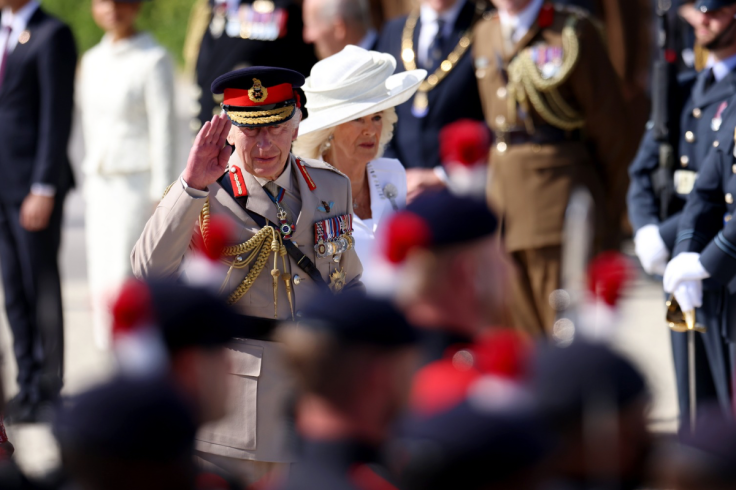
He cited King Charles' address to a joint session of the US Congress in April as the sort of event that gives the monarchy a structural edge. When presidents, parliaments or international institutions host you, that appearance lands in powerful, well-linked archives that AI systems are heavily trained on. In Torossian's framing, these are the backlinks of the AI era, and the palace has a lifetime head start.
By contrast, Harry and Meghan are leaning on archewell.com, a splashy Netflix deal and a best-selling memoir. High profile, yes. But, Torossian suggested, 'It is an asymmetric battle on infrastructure they don't own, and they're losing the structural layer.' In other words, you can drop a documentary now and then, but the monarchy is feeding the machine every single day.
Harry And Meghan's AI Problem, And Their Possible Way Out
The uncomfortable twist for the Sussexes is that AI could, in theory, cut traditional newspapers down to size, which is exactly what they say they want. Torossian argued that audiences for mainstream media have been 'down, down, down' and predicted that more people will simply ask ChatGPT or Claude what to think about a royal scandal or feud.
At the same time, many UK outlets are putting more of their royal coverage behind paywalls. The Daily Mail has shifted more comment and diary material to subscription, including work by columnists like Richard Eden, who writes regularly and often critically about the Sussexes. AI systems cannot reliably access that content unless it is republished or summarised somewhere open, dull as that sounds.
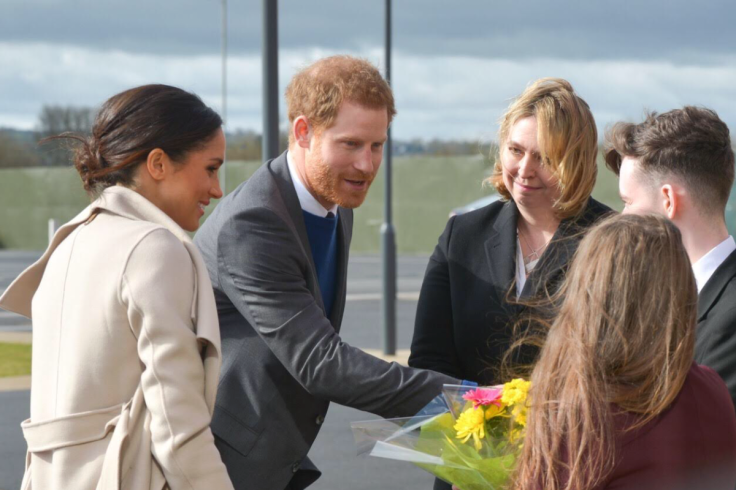
That trend may actually weaken the grip of some of Harry and Meghan's fiercest press critics on AI answers, compared with the couple's own statements on Archewell or official video messages. It is a strange moment when a paywall might protect you from helping train the bots that bash you.
Torossian believes Reddit and Wikipedia already account for roughly 35 to 40 per cent of the material that large language models draw on, which means long, nerdy forum threads and fan-maintained biography pages are suddenly serious reputational territory, however mad that may feel.
His view, though, is that 'Harry and Meghan can very much tilt the scales.' He argued that if the couple built up a denser library of consistent, on-the-record statements on an official site, and mirrored those lines across social platforms and interviews, AI systems would start to treat that as the most trustworthy version of events.
'LLMs value very clear information, repeated in the same places,' he said. In practice, that means saying the same thing on YouTube, on X, in a written statement and in trade press, and leaving it there for the crawlers to find. There is a catch, of course, for a couple who built their breakaway brand on emotional first-person storytelling. Precision and repetition are not the most glamorous tools in the box.
For now, the palace is quietly winning the AI search war without having to declare it is even fighting one. Harry and Meghan, who spent years trying to escape what they saw as a hostile media ecosystem, may discover that in this new version of the game, control looks a lot more like bureaucracy than like a Netflix splash.
© Copyright IBTimes 2026. All rights reserved.