Over 57 Million Americans Trapped in 'Disposable Jobs' as Major US Employers Slash Job Security
The quiet dismantling of the American middle class is being engineered through third-party staffing agencies and temporary contracts

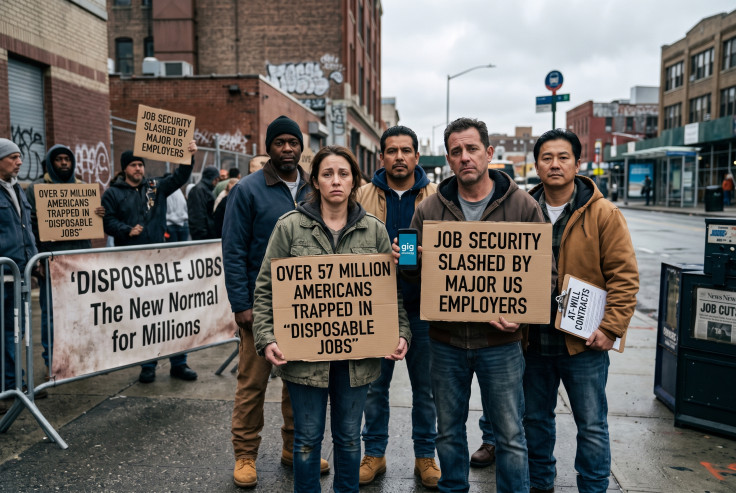
A recent nationwide survey conducted by a leading US labour economist reveals that more than 57 million American workers are currently trapped in disposable jobs lacking security or career progression. The startling data published this week exposes how major corporations systematically deny basic employment commitments to over a third of the country's workforce.
In case you missed it, corporate America has spent the last decade quietly replacing traditional salaried positions with precarious contracting roles. This structural shift has fundamentally altered the employment landscape across the Atlantic, leaving millions vulnerable to sudden dismissal without safety nets.
The comprehensive study draws from a late 2022 survey of more than 6,000 individuals alongside nearly 100 direct interviews with workers, employers, and policymakers. These findings form the backbone of the newly released book Disposable Workers and the Transformation of Employment, which dissects the hidden underbelly of the modern economy.
The Rise of the Hidden Workforce
The author of the study defines this growing class of precarious labour through three distinct categories of 'vulnerable employment' across the nation. The most prominent group consists of contractors who are officially employed by staffing firms while spending their days working directly at a client site.
Temporary office staff, building cleaners, and security guards make up the bulk of this specific demographic. The data indicates that these third-party contractors alone account for a staggering 13 per cent of the entire national workforce.
While many of these subcontracted individuals endure poor compensation and erratic schedules, the bracket also includes highly paid professionals like travel nurses. Regardless of their hourly rate, the defining feature of their employment remains a total absence of long-term security.
It paints a rather grim picture of an economic system designed to protect corporate margins at the expense of human stability. One cannot help but wonder if this ruthless efficiency will eventually break the very foundation of the American middle class.
Even major snack conglomerates rely on this disconnected labour force to test the addictiveness of their popular consumer products. The people hired to taste crisps for companies like PepsiCo are frequently brought on as external contractors rather than full employees.
This setup allows multibillion-dollar empires to reap the benefits of dedicated human labour without shouldering the burdens of healthcare, pensions, or redundancy pay. The worker absorbs all the risk, while the host corporation enjoys maximum flexibility and plausible deniability when things go wrong.
A Fractured Economic Landscape
The sheer scale of the issue becomes apparent when looking at the raw numbers provided in the economic analysis. Out of a total workforce of 162 million people, nearly 57 million are currently navigating this precarious reality.
That means one in three American workers wakes up every morning knowing their livelihood could vanish by the afternoon without warning. The psychological toll of living pay cheque to pay cheque under these volatile conditions is a detail the raw data can only hint at.
When you walk into a residential building, the concierge greeting you at the desk is likely employed by an unseen management agency. They wear the uniform of the property but hold none of the legal rights associated with standard employment there.
This deliberate distancing tactic is not an accident of the free market. It is a carefully engineered legal strategy designed to slash overhead costs and circumvent traditional labour protections.
Some might call it a necessary evolution of modern business agility in a fiercely competitive global market. Others would rightfully argue that this mad reality strips hard-working people of their basic dignity and economic agency.
The author interviewed dozens of policymakers to understand how legislation has failed to keep pace with these corporate loopholes. The consensus suggests that current labour laws are woefully ill-equipped to handle an environment where the actual employer is completely obscured.
Without urgent regulatory intervention, the trajectory points toward a future where secure employment becomes a luxury reserved for the corporate elite. The middle tier of the job market is effectively being hollowed out and replaced with temporary gigs.
If companies continue to treat human beings as disposable assets, the societal fallout will inevitably spill over into housing crises and public health emergencies. We are already witnessing the early tremors of a workforce pushed entirely to the brink of exhaustion.
© Copyright IBTimes 2026. All rights reserved.
- Recommended For You