Tyler Robinson Trial Updates: Accused Assassin Demands Death Penalty Be Taken Off the Table
A single bullet, a deeply guarded romance, and a fight for life in a politically charged courtroom

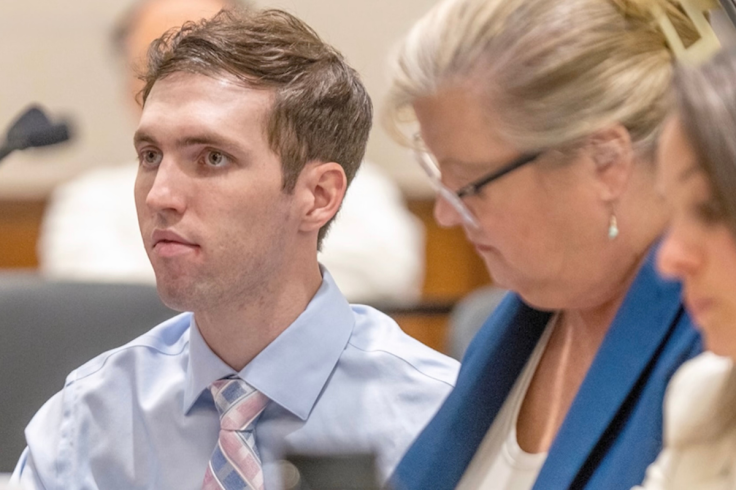
The alleged assassin of conservative activist Charlie Kirk desperately wants his potential execution blocked, claiming prosecutors cannot prove the September 2025 shooting endangered anyone else. Tyler Robinson, the 23-year-old accused of fatally shooting the 31-year-old pundit during a Turning Point USA event at Utah Valley University, formally requested that the death penalty be removed in a 41-page legal brief filed on Tuesday.
The news came after a weeklong preliminary hearing in July, where the state allegedly failed to demonstrate that the sniper-style attack created a widespread threat to the surrounding crowd. Robinson, a Utah native who has yet to enter a formal plea to the aggravated murder charge, faces the ultimate punishment only if the state can establish this highly specific aggravating factor.
A Question of Collateral Risk
Prosecutors aggressively maintain that the single shot fired from a campus rooftop, which struck Kirk directly in the neck, inherently put terrified bystanders' lives on the line. However, Robinson's legal team fiercely argues that a mere possibility of collateral damage is not enough to warrant execution, insisting the state must prove a 'high probability' of risk.
According to the defence's extensive filing, the government has spent over ten months trying to build a capital case but has 'overwhelmingly failed' to meet its rigorous burden of proof. 'The facts and the law require this Court to strike the sole aggravating factor,' the attorneys wrote, effectively challenging the legal foundation of the prosecution's death penalty pursuit.
If the presiding judge agrees to strip away this specific aggravating circumstance, the threat of lethal injection vanishes from the case entirely. This intense procedural battle forces the court to confront whether a highly targeted political assassination, however shocking, legally constitutes a mass-casualty threat under established Utah law.
The legal brief heavily stresses that Robinson was supposedly entirely focused on Kirk, noting that absolutely no one else was injured by gunfire on that fateful afternoon. His lawyers explicitly claim prosecutors must demonstrate that the shooter was consciously aware of a massive collateral risk, rather than simply firing a weapon in a chaotic public space.
The Victim-Targeting Enhancement
Beyond the capital punishment debate, prosecutors previously filed a controversial victim-targeting enhancement against Robinson last September. They allege the young suspect deliberately hunted Kirk because of the victim's prominent political movement, which staunchly opposed transgender rights and same-sex marriage.
Kirk was widely known for his unapologetic, often polarising conservative stances, which investigators claim stood in stark contrast to the accused shooter's deeply guarded personal life. Following Robinson's high-profile arrest, police records ultimately revealed that the suspect was in a serious romantic relationship with his transgender roommate, Lance Twiggs.
To prove this alleged ideological motive, the state has relied heavily on a single text message Robinson purportedly sent to Twiggs stating, 'I had enough of his hatred.' Defence lawyers utterly rebuked this narrative in their latest brief, accusing the prosecution of weaponising the suspect's sexuality to distract from a glaring lack of concrete evidentiary support.
'In the face of the absence of evidence, the State focuses on Mr. Robinson's sexuality and Mr. Twiggs' gender identity,' the legal team argued in the newly reviewed documents. They noted that while Kirk was undeniably viewed as expressing intolerance on those specific topics, assuming a direct murderous motive from a roommate's gender identity is legally dangerous speculation.
The defence firmly insists that an accused killer's private romantic life is absolutely not 'an evidentiary substitute for proof' of a targeted, politically motivated hate crime.
The prosecution must now convince a judge that a single bullet fired into a crowd justifies state execution, while simultaneously proving the shooter's private love life dictated his political targets. However, these specific prosecutorial claims cannot be independently verified, so take everything lightly until the court formally rules on the matter.
© Copyright IBTimes 2026. All rights reserved.
- Recommended For You